





RED ALGAE
Red algae is a marine ingredient prized for its hydrating, anti-aging and regenerating properties. Rich in minerals, vitamins and antioxidants, it helps revitalize the skin, while promoting collagen production. It also protects the skin from external aggressions and maintains its elasticity, thus contributing to smoother and visibly younger skin.
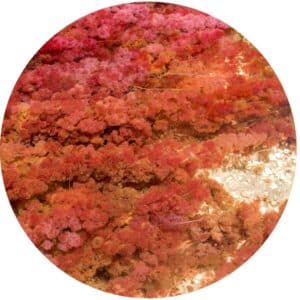

RED ALGAE: Antioxidant, Hydrating, Firming
MARINE ACTIVE ⎪ CELLULAR REINFORCEMENT & DEEP HYDRATION
Red algae offers multiple health and beauty benefits thanks to its exceptional richness in marine minerals and antioxidants.
This family of seaweeds provides protective and regenerative properties particularly valued in natural cosmetics.
Its bioactive compounds support skin hydration and contribute to cellular protection against oxidative stress.
Women find it a valuable ally to help with hormonal changes that affect their skin's quality.
What is red algae? Definition and origin
Red algae refers to a diverse group of marine algae belonging to the phylum Rhodophyta, comprising over 6,000 recorded species.
These photosynthetic organisms are distinguished by their content of red pigments, notably phycoerythrin, which gives them their characteristic color.
They thrive mainly in temperate and tropical waters, from intertidal zones down to 200 meters deep.
Their ability to adapt to varied marine environments allows them to accumulate a remarkable concentration of minerals and trace elements.
Among the most valued species are Chondrus crispus (Irish moss), Palmaria palmata (dulse), and various Porphyra species.
These algae are sustainably harvested along the Atlantic and Pacific coasts, where they form an essential marine ecosystem.
Red algae composition: Active ingredients
Red algae concentrates a synergy of bioactive compounds that explain its multiple applications in natural health and cosmetics.
- Carrageenans: hydrating polysaccharides with film-forming properties
- Phycoerythrin: antioxidant pigment specific to red algae
- Marine minerals: iodine, magnesium, calcium, potassium, iron
- Vitamins: vitamin C, B vitamins, vitamin K
- Amino acids: taurine, alanine, glycine
- Marine polyphenols: antioxidant compounds specific to the marine environment
- Oligosaccharides: complex sugars with prebiotic effects
What are the benefits of red algae?
The benefits of red algae revolve around its hydrating, protective, and remineralizing properties.
Its richness in marine active ingredients makes it a prime ingredient for supporting skin vitality and the body's mineral balance.
Carrageenans form a natural protective film that maintains skin hydration for over 8 hours according to dermatological studies.
Phycoerythrin neutralizes up to 85% of free radicals responsible for premature aging.
- Intense hydration: maintaining the skin barrier and preventing dehydration
- Antioxidant protection: neutralizing free radicals and protecting against environmental stress
- Remineralization: providing bioavailable minerals essential for cellular metabolism
- Soothing action: reducing skin irritations and redness
- Elasticity support: preserving skin's suppleness and firmness
- Microbiome regulation: maintaining the balance of skin flora
Key points:
- Long-lasting hydration thanks to carrageenans
- Powerful antioxidant protection with 85% effectiveness
- Naturally bioavailable mineral richness
- Soothing action on sensitive skin
- Support for skin microbiome balance
How to use red algae
Red algae comes in various forms depending on the desired use: liquid extracts, dried powders, capsules, or integration into cosmetic formulas.
For food supplements, a dose of 500 mg to 1 g per day is generally recommended.
For topical application, red algae extracts are preferably used in the morning to protect the skin throughout the day.
Incorporating it into a regular skincare routine optimizes its hydrating and protective benefits.
⚠️ Note: People with iodine hypersensitivity should adjust the dosage and seek advice from a healthcare professional.
Precautions for using red algae
Side effects of red algae
Red algae generally shows excellent tolerance in external and internal use at recommended dosages.
Hypersensitivity reactions can exceptionally occur in people allergic to seafood products.
The natural iodine content can cause thyroid disorders in case of excessive consumption or in predisposed individuals.
Monitoring is recommended for those with a history of thyroid issues.
⚠️ Pregnant and breastfeeding women should limit their consumption of iodine-rich algae.
Medical advice is recommended before any prolonged supplementation.
Frequently asked questions about red algae
Here are the most common questions regarding this multi-beneficial marine active ingredient.
What are the benefits of Red Algae for mature skin?
Red algae provides deep hydration and antioxidant protection particularly beneficial for mature skin.
Its minerals support cell renewal and help preserve skin elasticity.
Is red algae suitable for sensitive skin?
Its natural composition and soothing properties make red algae a well-tolerated ingredient for sensitive skin.
It helps reduce irritation and strengthen the skin's protective barrier.
Can red algae be used during pregnancy?
In external cosmetic use, red algae presents no particular contraindication during pregnancy.
For oral consumption, it is best to consult a healthcare professional due to its iodine content.
How long does it take to see the first effects?
The hydrating benefits of red algae are apparent from the first applications in cosmetics.
For remineralizing effects in supplementation, regular use over 4 to 6 weeks is generally necessary.
Can red algae interact with certain medications?
Its natural richness in iodine can potentiate the effect of thyroid treatments.
People on anticoagulants should also be vigilant due to the vitamin K content of some red algae species.
Sources
Red algae is one of the most studied marine active ingredients for its effects on hydration, skin barrier, and anti-aging. Numerous scientific publications highlight its protective, restorative, and soothing role, particularly on sensitive skin or skin prone to hormonal imbalances (water retention, inflammation, sagging).
- 100% Pure – 4 Ways Red Algae Benefits Your Skin: deep hydration, plumping effect, UV protection via mycosporine-like amino acids, brightening action thanks to natural vitamin C.
➤ https://www.100percentpure.com/blogs/feed/4-ways-red-algae-benefits-your-skin - NCBI (PMC) – Beneficial Effects of Marine Algae-Derived Carbohydrates for Skin
Hydration, protective film, anti-aging, strengthening of the skin barrier.
ncbi.nlm.nih.gov
➤ https://www.ncbi.nlm.nih.gov/pmc/articles/PMC6266229/ - L’Oréal Paris – Red Algae Extract Antioxidant Skincare Benefits ➤https://www.lorealparisusa.com/ingredient-library/red-algae