

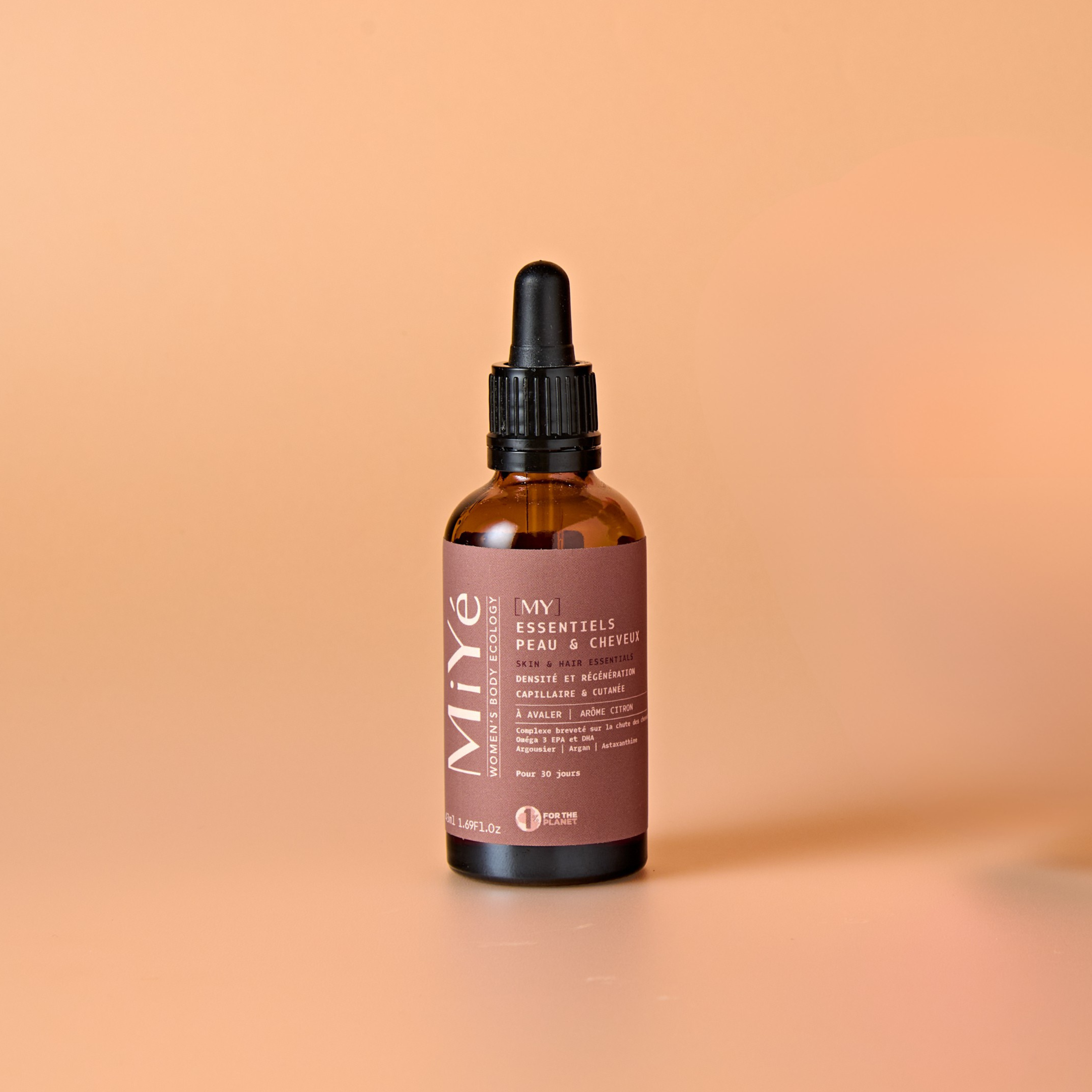




YARROW MILLEFEUILLE
Supports digestion
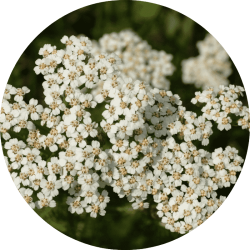

YARROW MILLEFEUILLE
REGULATES ⎪ RELIEVES ⎪ DECONGESTS
The benefits of yarrow extend from skin healing to feminine balance, making this medicinal plant a valuable ally for natural health.
This perennial herb, known for its anti-inflammatory and astringent properties, has supported women for millennia in their intimate imbalances.
Rich in active compounds such as flavonoids and tannins, yarrow acts on several body systems thanks to its targeted mechanisms of action.
Its traditional use today finds confirmation in modern research into its therapeutic properties.
What is yarrow? Definition and origin
Yarrow (Yarrow achillea millefolium) is a perennial herbaceous plant of the Asteraceae family, easily recognizable by its finely cut leaves and its umbels of small white flowers.
Its name comes from Greek mythology, Achilles having used this plant to treat the wounds of his soldiers during the Trojan War.
Native to Europe and Asia, it has become naturalized throughout the world and grows spontaneously in meadows, roadsides and wastelands.
This hardy plant can reach 60 centimeters in height and flowers from June to October.
Nicknamed “carpenters’ herb” or “Venus’s eyebrow”, yarrow has been part of the traditional European pharmacopoeia for more than 3000 years.
The flowering aerial parts constitute the plant drug used in herbal medicine, ideally harvested at the start of flowering to concentrate the active ingredients.
Composition of yarrow: active ingredients
The therapeutic richness of yarrow is explained by its complex biochemical composition, dominated by several families of synergistic active compounds.
- Flavonoids (0.1 to 1%) : apigenin, luteolin, quercetin with anti-inflammatory and antioxidant properties
- Essential oil (0.2 to 1.4%) : chamazulene, β-caryophyllene, camphor responsible for the anti-inflammatory activity
- Condensed tannins (2 to 4%) : proanthocyanidols conferring astringent and healing properties
- Sesquiterpene lactones : acillin and millefine with specific anti-inflammatory effects
- Phenolic acids : chlorogenic acid, caffeic acid with antioxidant properties
- Coumarins : umbelliferone and scopoletol with spasmolytic effects
- Alkaloids : achillein and stachydrin in small quantities
What are the benefits of yarrow?
Yarrow deploys its benefits thanks to the synergistic interactions between its active compounds, acting mainly on the inflammatory, circulatory and female reproductive systems.
Flavonoids inhibit cyclooxygenase and lipoxygenase, reducing the production of inflammatory mediators, while tannins tighten tissues through astringency.
This combined action explains the traditional effectiveness of the plant on female disorders, healing and circulatory problems.
Sesquiterpene lactones enhance the anti-inflammatory effect by modulating the local immune response, creating a favorable environment for tissue regeneration.
- Regulation of menstrual cycles : promotes flow balance and soothes premenstrual tension
- Anti-inflammatory properties : reduces skin and mucous membrane inflammation thanks to chamazulene
- Accelerated healing : stimulates cell regeneration and the formation of new tissue
- Astringent action : tightens tissues and promotes natural hemostasis
- Digestive relief : soothes intestinal spasms and facilitates digestion
- Circulatory support : tones blood vessels and improves microcirculation
- Antioxidant properties : protects cells from oxidative stress thanks to polyphenols
- Antimicrobial action : inhibits the growth of certain skin pathogens
Key points:
- Naturally regulates female cycles
- Accelerates skin healing
- Reduces inflammation by 40% according to some studies
- Soothes spasmodic digestive disorders
- Strengthens vascular resistance
Tips for using yarrow
Yarrow is mainly consumed in the form of infusion, mother tincture or standardized extracts, with dosages adapted to each dosage form.
For infusion, use 1 to 2 teaspoons of dried plant per cup of boiling water, let steep for 10 minutes.
The standard treatment lasts 3 weeks with a one-week break, renewable as needed.
For menstrual disorders, start taking 5 days before your period and continue for its entire duration.
For external use, prepare a concentrated decoction (2 tablespoons for 250ml of water) for healing compresses or soothing sitz baths.
Apply 2 to 3 times a day to the affected areas.
⚠️ Note : respect the recommended dosages because an overdose can cause headaches and digestive problems.
Precautions for using yarrow
Side effects of yarrow
Yarrow generally presents excellent tolerance to usual therapeutic dosages.
Some sensitive people may develop allergic skin reactions, particularly those allergic to plants in the Asteraceae family.
Prolonged use or high doses may cause headaches, dizziness or mild digestive problems.
These effects generally disappear when you stop taking it or reduce your doses.
⚠️ The plant is contraindicated during pregnancy and breastfeeding due to its uterotonic properties.
Avoid sun exposure after skin application because certain compounds can be photosensitizing.
Frequently asked questions about yarrow
Questions about this ancestral medicinal plant mainly concern its practical use and its effects on women's health.
What are the benefits of yarrow for painful periods?
Yarrow acts on painful periods thanks to its antispasmodic and anti-inflammatory properties, reducing excessive uterine contractions.
The coumarins it contains have a relaxing effect on the smooth muscles of the uterus.
Its regulatory action on cycles also helps reduce the intensity of premenstrual syndrome and naturally balance irregular menstrual flows.
A 3 month course generally shows the best results.
How to use yarrow to heal a wound?
Prepare a concentrated decoction by boiling 3 tablespoons of dried plant in 250ml of water for 15 minutes.
Leave to cool and apply as a sterile compress to the cleaned wound, 3 times a day.
Acillin and tannins accelerate clotting and promote the formation of new tissues.
This method is suitable for small superficial wounds; consult a healthcare professional for larger wounds.
Can yarrow help with digestive problems?
The antispasmodic and bitter properties of yarrow effectively relieve functional digestive disorders, bloating and intestinal cramps.
An infusion after meals facilitates digestion and soothes mild intestinal inflammation.
Its bitterness also stimulates the production of gastric juices, improving the assimilation of nutrients.
Avoid if you have a gastric ulcer as the bitterness can worsen the acidity.
How long does it take to feel the effects of yarrow?
The anti-inflammatory and healing effects usually appear within 48 to 72 hours after the start of treatment.
For menstrual disorders, allow 2 to 3 cycles to observe a significant improvement.
The digestive action manifests itself more quickly, often from the first infusion taken after a meal.
Regularity of use determines the long-term effectiveness of this medicinal plant.
Can yarrow be combined with other medicinal plants?
Yarrow blends harmoniously with other plants with complementary properties, particularly lady's mantle and sage for feminine disorders.
This synergy strengthens natural hormonal balance without negative interactions.
For healing, the association with calendula or centella asiatica optimizes tissue regeneration.
Always respect individual dosages and consult a herbalist for complex mixtures.
Sources
French Pharmacopoeia, 11th edition.
Monograph Achillea millefolium L.
National Agency for the Safety of Medicines and Health Products.
European Medicines Agency.
Assessment report on Achillea millefolium L., herba.
Committee on Herbal Medicinal Products, 2016.
Wichtl M, Anton R.
Therapeutic plants: Tradition, medicinal practice, science and therapeutics. 2nd edition.
Tec & Doc Lavoisier, 2003.