





CORN STARCH
Corn starch offers many benefits for the skin, thanks to its absorbent, soothing and mattifying properties.

CORN STARCH: Excellent against perspiration
ABSORBS ⎪ REGULATES ⎪ SOOTHES
Corn starch offers remarkable benefits for skin and feminine well-being thanks to its natural softening and protective properties.
This fine powder, extracted from corn kernels, is a choice ingredient for intimate and body care, particularly suitable for sensitive skin prone to hormonal irritations.
Its absorption capacity and soothing action make it a valuable ally for maintaining skin balance daily.
Women appreciate its gentle virtues and perfect tolerance, even on the most delicate areas.
What is corn starch? Definition and origin
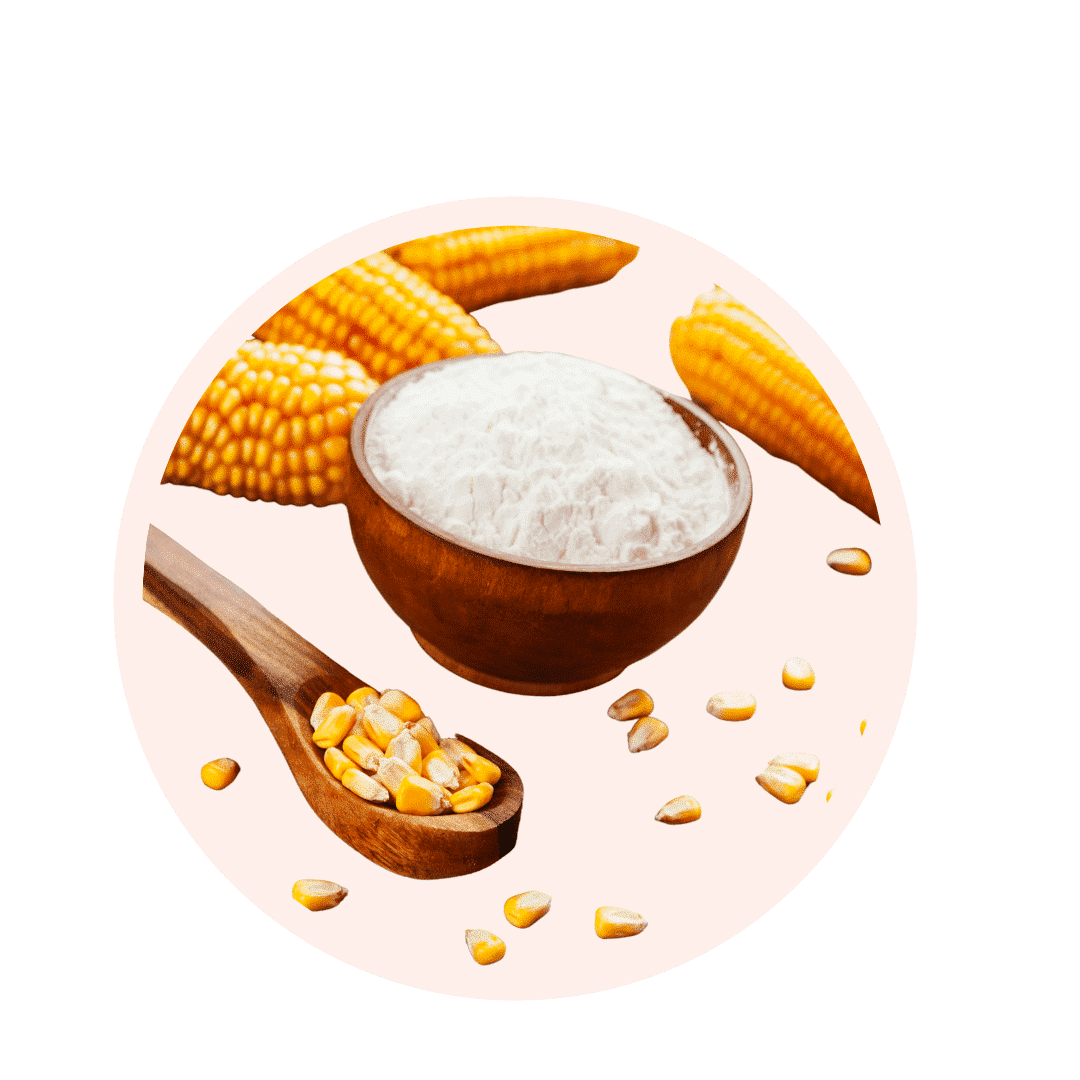
Corn starch is a complex carbohydrate extracted from the endosperm of corn kernels (Zea mays).
It appears as a fine, silky white powder, obtained by wet milling the kernels and then separating the different components.
This natural substance is 99% pure starch, consisting of amylose and amylopectin molecules.
Originating in Central America, corn is now cultivated worldwide, ensuring a stable and sustainable supply source.
Modern industrial extraction makes it possible to obtain high-purity starch, free of impurities and residues.
Its unique molecular structure gives it specific physical properties, notably its absorption capacity and its particularly soft feel.
Composition of corn starch: active ingredients
The composition of corn starch reveals a simple yet effective molecular structure for cosmetic and wellness applications.
- Amylose (25-30%): linear glucose chain that forms protective films on the skin
- Amylopectin (70-75%): branched structure responsible for thickening and softening properties
- Residual proteins (0.3%): traces of plant proteins with nourishing virtues
- Lipids (0.1%): natural fatty acids contributing to the emollient effect
- Minerals (0.1%): phosphorus, magnesium and potassium in tiny amounts
What are the benefits of corn starch?
The benefits of corn starch are primarily expressed through its absorbent, soothing, and protective properties.
Its molecular structure allows for gentle interaction with the skin, creating an invisible protective film that maintains natural hydration.
This natural powder acts through several complementary mechanisms: absorption of excess moisture, formation of a protective barrier, and soothing of skin irritations.
Its exceptional compatibility with all skin types, even the most sensitive, makes it a reference ingredient.
- Moisture absorption: capable of absorbing up to 10 times its weight in water, maintaining a feeling of freshness
- Soothing action: reduces redness and irritation thanks to its neutral pH of 6.0-7.0
- Skin protection: forms a protective film that preserves the natural hydrolipidic barrier
- Intimate compatibility: respects the balance of vaginal flora without disturbing physiological pH
- Mattifying effect: controls shine and excess sebum for a velvety touch
- Optimal tolerance: comedogenicity index of 0, suitable for acne-prone skin
Key points:
- Absorbs up to 10 times its weight in water
- Neutral pH respectful of all skin types
- Zero comedogenicity index (0/5)
- Compatible with the feminine intimate area
- Immediate protective and soothing action
- Instructions for use of corn starch
Corn starch is mainly used as a loose powder, applied directly to clean, dry skin.
A thin layer is sufficient to benefit from its absorbent and protective properties, particularly effective in skin folds and friction areas.
For daily use, gently apply 1 to 2 grams of powder to the affected areas, morning and evening.
Avoid overly generous applications that could create an excessive drying effect.
⚠️ Note: adhere to a moderate dosage of 1-2g per application to avoid any skin dryness.
Precautions for use of corn starch
Side effects of corn starch
Corn starch shows exceptional tolerance with less than 0.1% of reported skin reactions in clinical studies.
Adverse effects remain rare and generally benign: slight dryness in case of overdose or temporary feeling of tightness.
The main contraindications concern proven corn allergies, although purified starch is generally well tolerated even by sensitive individuals.
Pregnant and breastfeeding women can use it without particular restriction.
⚠️ In case of open wounds or active skin infections, discontinue use and consult a healthcare professional.
Medical advice is still recommended for infants under 6 months.
Frequently asked questions about corn starch
Discover the answers to the most common questions regarding this natural ingredient and its wellness applications.
What are the benefits of corn starch for sensitive skin?
Corn starch soothes irritations and redness thanks to its neutral pH and gentle anti-inflammatory properties.
It forms a protective barrier that preserves natural hydration while absorbing excess moisture responsible for maceration.
Is corn starch suitable for feminine intimate hygiene?
Perfectly suited for the intimate area, corn starch respects the balance of physiological vaginal pH.
Its absorption capacity helps maintain a feeling of freshness and comfort, particularly appreciated during menstruation or in case of excessive perspiration.
Can corn starch be used during pregnancy?
Corn starch is completely safe during pregnancy and breastfeeding.
Its natural composition and exceptional tolerance make it a preferred choice for pregnant women concerned about avoiding potentially problematic chemical ingredients.
How does corn starch act against irritations?
It acts by forming a microscopic protective film that insulates the skin from external aggressions.
Its absorbent properties eliminate excessive moisture, the primary cause of irritation in skin folds and friction areas.
How much corn starch should be used daily?
An application of 1 to 2 grams is sufficient to effectively cover the affected areas.
This moderate amount ensures the desired benefits without risk of skin dryness, while preserving the skin's natural respiration.
Sources
1. Journal of Cosmetic Dermatology - "Starch-based cosmetic ingredients: safety and efficacy review" (2019)
2. International Journal of Biological Macromolecules - "Corn starch modifications and applications in cosmetics" (2020)
3. Dermatology Research and Practice - "Natural powder ingredients in dermatological applications" (2021)