






CALCIUM BISGLYCINATE
Calcium bisglycinate offers optimal absorption and excellent digestive tolerance, the reference form for preserving bone density without discomfort.
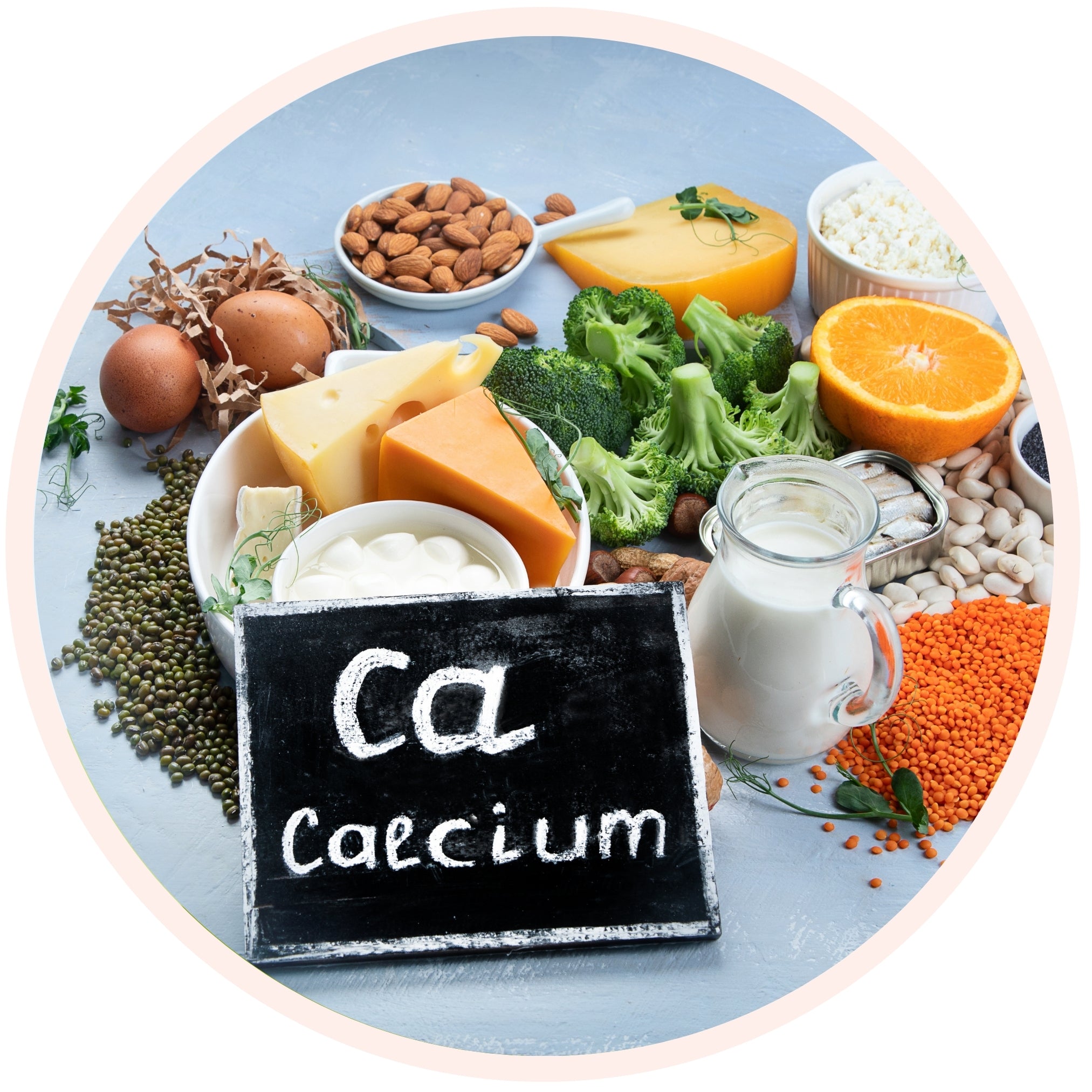
CALCIUM BISGLYCINATE
STRENGTHENS ⎪ PRESERVES ⎪ SUPPORTS
Calcium bisglycinate is a chelated form of calcium, linked to two glycine amino acids, offering significantly greater bioavailability and digestive tolerance than calcium carbonate or citrate.
This active ingredient represents a significant advance in calcium supplementation, particularly suitable for women whose bone needs are increased during hormonal transitions.
It works by ensuring an effective supply of calcium directly assimilated by the body, thus supporting bone density, muscle function and many essential physiological processes.
Its chelated form allows it to be absorbed without requiring stomach acid, making it effective at any time of the day.
What is calcium bisglycinate ? Definition and origin
Calcium bisglycinate is an organic salt resulting from the bond of the calcium ion with two molecules of glycine, the simplest and most abundant amino acid in the body.
This chelation creates a stable complex which protects the calcium from absorption inhibitors present in the diet (phytates, oxalates).
Developed based on advances in nutritional chemistry in the 1980s and 1990s, calcium bisglycinate belongs to the family of chelated amino acid minerals, whose superior effectiveness to inorganic salts is now well documented.
Glycine, in addition to serving as a vector, brings its own benefits: it participates in the synthesis of collagen and promotes the quality of sleep.
Calcium is the most abundant mineral in the human body, accounting for approximately 1 to 1.2 kg in an adult.
Nearly 99% of this capital is found in bones and teeth, the rest circulating in the blood to ensure muscle contraction, coagulation and nerve transmission.
Its needs increase significantly at menopause, due to the reduction in intestinal absorption of calcium linked to the drop in estrogens and the reduction in active vitamin D.
Calcium bisglycinate supplementation represents one of the best tolerated solutions to cover these increased needs.
Composition and active ingredients
Calcium bisglycinate is distinguished from other forms of calcium by its unique chelated structure:
- Elemental calcium (approximately 20% of the molecular mass) directly assimilable
- Two glycine molecules serving as vectors and providing their own benefits
- Stable chelated structure resistant to food inhibitors (phytates, oxalates)
- Absorption independent of gastric pH, effective even without sufficient acidity
- Glycine cofactor for the synthesis of bone and skin collagen
- Excellent gastrointestinal tolerance compared to calcium carbonate
What are the benefits of calcium bisglycinate ?
Calcium bisglycinate primarily acts on bone health, but its benefits go far beyond this area alone.
The glycine which composes it contributes to the synthesis of type I collagen (main organic component of bone), making it an active ingredient with dual action on the bone matrix.
In women in perimenopause and menopause, it constitutes an adapted response to the acceleration of bone remodeling induced by the drop in estrogens.
Its excellent tolerance makes it a more comfortable daily ally than calcium carbonate, often responsible for bloating and constipation.
- Maintains and strengthens bone mineral density
- Reduces the risk of osteoporosis-related fractures
- Supports muscle function, including prevention of cramps
- Participates in nerve transmission and cardiac regulation
- Contributes to normal blood clotting
- The associated glycine supports the synthesis of bone and skin collagen
- Promotes the quality of sleep via the relaxing action of glycine
- Better absorbed than carbonated forms, especially in the elderly
- Effective without requiring gastric acidity (ideal under PPI)
Key points:
- Higher bioavailability form of calcium (chelated)
- Excellent digestive tolerance, without bloating or constipation
- Double action via glycine: absorption vector and support for collagen
- Particularly suitable for women in perimenopause, menopause and seniors
- Effective regardless of gastric acidity
Directions for use
Calcium bisglycinate is used as a food supplement at dosages generally between 500 and 1,000 mg of elemental calcium per day, divided into 2 doses to optimize absorption.
It is recommended not to exceed 500 mg of elemental calcium per intake, as absorption beyond this threshold becomes less effective.
For optimal use, systematically combine it with vitamin D3 (essential for intestinal absorption of calcium) and vitamin K2 (which directs calcium towards the bones rather than towards the arteries).
Taking with meals slightly improves tolerance without reducing bioavailability.
⚠️ Note: Avoid excessive calcium supplementation (> 2,000 mg/day) associated with cardiovascular risks. Consult a doctor in case of hypercalcemia or calcic renal lithiasis.
Precautions for use
Adverse effects
Calcium bisglycinate is one of the best digestively tolerated forms of calcium.
Unlike calcium carbonate, it does not or very rarely causes bloating, gas or constipation.
⚠️ Contraindicated in cases of hypercalcemia, sarcoidosis or calcic renal lithiasis. Interacts with certain medications (tetracyclines, bisphosphonates, levothyroxine) space doses at least 2 hours apart. Consult a doctor in the event of kidney disease.
Frequently asked questions
Why choose calcium bisglycinate rather than carbonate ?
Bisglycinate is better absorbed (independently of gastric acidity), better tolerated digestively and provides the added benefits of glycine. Carbonate remains less expensive but requires sufficient gastric acidity.
At what dose should I take calcium bisglycinate ?
Needs vary depending on age and dietary intake, generally between 500 and 1,000 mg of elemental calcium per day. In practice, two doses of 500 mg maximum are recommended.
Is calcium alone enough to protect bones ?
No. It must be combined with vitamin D3 (which allows its absorption) and vitamin K2 (which directs calcium towards the bones and not towards the arteries).
Is calcium bisglycinate suitable for people taking PPIs ?
Yes, it is even one of the rare forms of calcium effective in these patients, because its absorption does not depend on gastric acidity, unlike carbonate.
Does glycine have its own effects ?
Yes. Glycine is an amino acid with relaxing properties that promotes quality sleep. It also participates in the synthesis of collagen, offering additional benefits for the skin and bones.
Sources
- Journal of the American College of Nutrition "Calcium bioavailability of calcium carbonate and calcium bisglycinate chelate" (2003)
- Osteoporosis International “Calcium supplementation and bone health: a review” (2015)
- Nutrients “Calcium, vitamin D and K2 in bone metabolism” (2021)