



TURMERIC
Turmeric and its curcumin modulate inflammation in depth, an age-old active ingredient validated by modern science, particularly valuable during hormonal transitions.
TURMERIC
SOOTHES ⎪ PROTECTS ⎪ REGENERATES
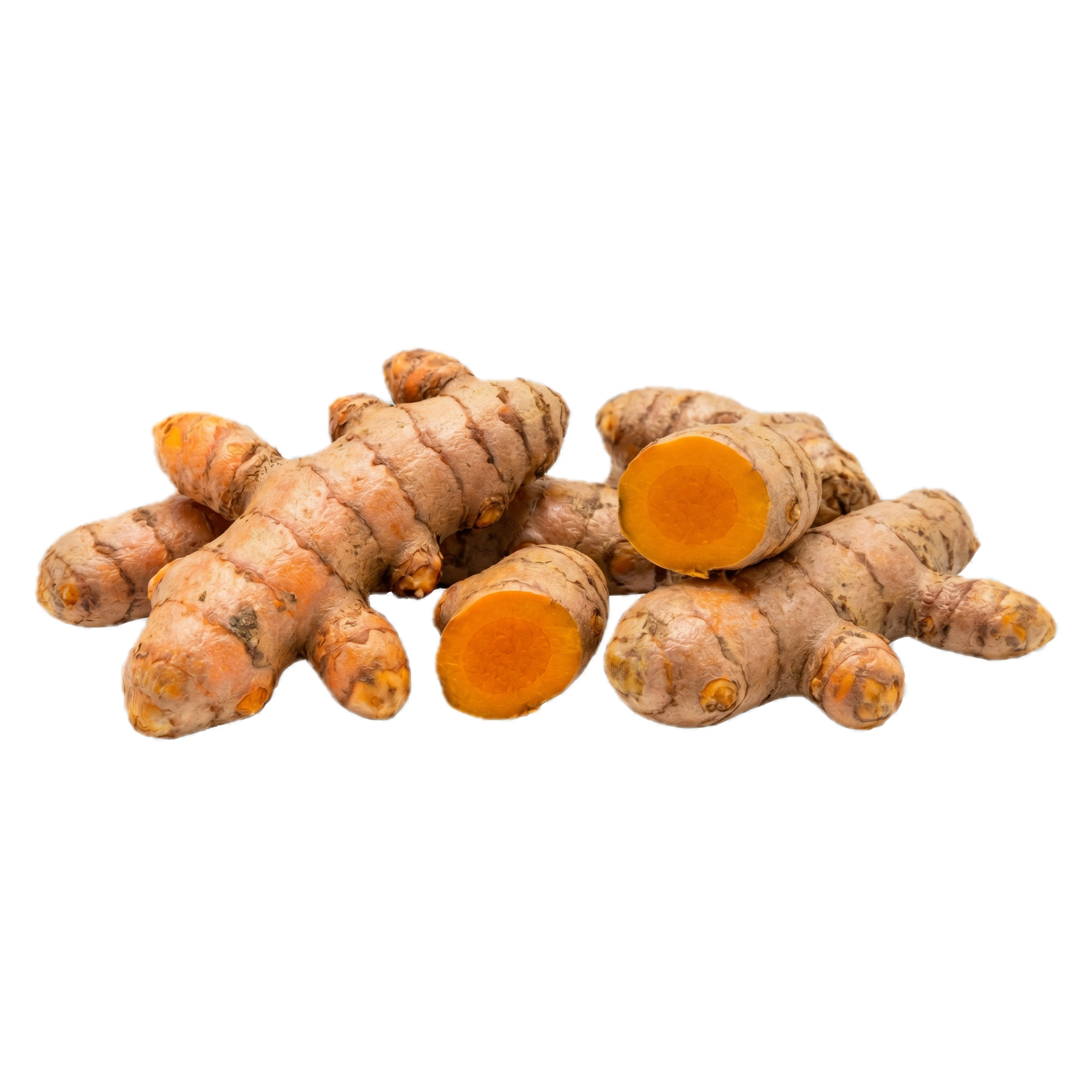
Turmeric (Curcuma longa) is a rhizomatous plant native to South Asia, used for over 4,000 years in Ayurvedic medicine and traditional cooking.
Its main active ingredient, curcumin, is today one of the most studied natural compounds in the world for its anti-inflammatory, antioxidant and protective properties.
It acts in depth to modulate chronic inflammatory processes, neutralize free radicals and support digestive, joint and liver health.
Its benefits extend to overall cellular protection, support of immunity and improvement of daily joint comfort.
What is turmeric? Definition and origin
Turmeric is a plant of the Zingiberaceae family, cultivated mainly in India, China and Southeast Asia.
Its dried and powdered rhizome is the origin of the golden yellow spice which colors curry and a therapeutic ingredient of remarkable power.
Curcumin, the main polyphenol of turmeric (2 to 8% of the dry rhizome), is responsible for the characteristic color and most of the biological properties of the plant.
It acts on numerous molecular pathways simultaneously, notably by inhibiting NF-κB, the main regulator of inflammatory processes in the body.
Millennia of Ayurvedic medical tradition preceded the hundreds of modern clinical studies that today confirm its effectiveness on inflammation, the liver, joints and the digestive system.
India, the world's largest producer, consumes it daily in its diet, which could partly explain the lower incidence of certain chronic inflammatory diseases in this population.
The main challenge of curcumin lies in its naturally low bioavailability: poorly soluble in water and quickly metabolized, it requires specific formulations to be effectively assimilated.
Combinations with piperine (black pepper) or advanced lipid technologies (phytosomes, nanoparticles) significantly increase its absorption.
Composition and active ingredients
Turmeric contains a family of polyphenolic pigments called curcuminoids, the three main ones of which are:
- Curcumin (major curcuminoid, ~75%) main anti-inflammatory and antioxidant active ingredient
- Demethoxycurcumin (~20%) additional anti-inflammatory activity
- Bisdemethoxycurcumin (~5%) specific antioxidant properties
- Essential oils (turmerone, atlantone) with digestive and neuroprotective properties
- Polysaccharides supporting immunity and gut health
- Associated piperine (black pepper) increasing curcumin absorption by 2,000%
What are the benefits of turmeric?
Turmeric acts as a natural modulator of inflammation, intervening at several levels of the inflammatory cascade.
Unlike conventional anti-inflammatories, it modulates inflammation without blocking the protective prostaglandins of the gastric mucosa, thus offering an action profile that is more respectful of the body.
In women in perimenopause and menopause, it is of particular interest in the face of low-grade inflammation often associated with hormonal fluctuations, joint pain and cognitive decline.
Its liver protection is also valuable during periods of hormonal rebalancing, the liver playing a central role in estrogen metabolism.
- Reduces chronic inflammation by inhibiting the NF-κB and COX-2 pathways
- Relieves joint pain and stiffness linked to inflammation
- Protects the liver and supports its detoxification functions
- Improves digestive comfort and reduces bloating
- Neutralizes free radicals thanks to its powerful antioxidant properties
- Supports cardiovascular health by reducing LDL cholesterol oxidation
- Contributes to neurological protection and cognitive support
- Strengthens immune defenses
- Helps regulate blood sugar and insulin sensitivity
- Supports skin health with its anti-inflammatory and healing properties
Key points:
- One of the most scientifically documented natural anti-inflammatory active ingredients
- Multi-target action on inflammation pathways (NF-κB, COX-2, cytokines)
- Bioavailability must be optimized (piperine or lipid formulation)
- Validated digestive, hepatic, joint and cognitive benefits
- Particularly suitable for women facing inflammation linked to hormonal transitions
Directions for use
Turmeric is used as a food supplement at dosages generally between 500 and 1,500 mg of extract titrated in curcuminoids per day.
Always favor standardized extracts (minimum 95% curcuminoids) rather than simple rhizome powder, whose concentration of active ingredients is too low for a therapeutic effect.
For optimal use, choose a formulation combining curcumin and piperine (black pepper extract with 95% piperine) or a fat-soluble form (phytosome, micelles) to maximize absorption.
A course of at least 4 to 8 weeks is recommended to observe the effects on joint inflammation and digestive comfort.
⚠️ Note: Turmeric in high doses can potentiate the effects of anticoagulants and antidiabetics. People suffering from gallstones should consult their doctor before use.
Turmeric at the heart of MiYé formulas
[MY] REBALANCING HYDRATING INTIMATE GEL 50ML
Designed to support intimate dryness, weakened mucous membranes, and recurring irritations, this gel incorporates turmeric as a soothing and antioxidant active ingredient, working in synergy with:
- Blue lily of the valley extract, which contributes to cellular longevity, suppleness, and elasticity of the mucous membranes.
- The pre- and probiotic complex, which supports the balance of the intimate microbiota and strengthens the skin barrier.
- Hyaluronic acid, which helps reactivate the natural hydration of the area and prolong comfort.
- Aloe vera, renowned for quickly soothing sensations of tightness and discomfort.
In this formula, curcumin provides its anti-inflammatory and protective dimension, helping to preserve sensitive tissues from the oxidative stress associated with hormonal fluctuations. It complements the hydrating and rebalancing action of the other active ingredients for comprehensive, deep, and long-lasting intimate comfort.
Fragrance-free formula, with a physiological pH. Hypoallergenic. Latex condom compatible. Also available in a 20ml size.
Precautions for use
Adverse effects
Turmeric has an excellent tolerance profile at usual supplementation doses.
Mild gastrointestinal effects (burning, nausea) may occur at high doses or on an empty stomach, generally avoided by taking the supplement with meals.
⚠️ Not recommended in case of obstruction of the bile ducts or gallbladder stones. Use with caution in case of anticoagulant (warfarin), antiplatelet or antidiabetic treatment. Consult a doctor before use during pregnancy.
Frequently asked questions
What is the difference between turmeric and curcumin?
Turmeric is the whole plant (powdered rhizome), while curcumin is its main polyphenolic active ingredient. An extract containing 95% curcuminoids is much more concentrated and effective than simple dietary turmeric powder.
Why combine turmeric and black pepper?
The piperine in black pepper inhibits the liver and intestinal enzymes that break down curcumin, increasing its absorption by 2,000%. Without this adjuvant, curcumin is very poorly bioavailable.
How long does it take to feel the effects of turmeric?
The effects on digestive comfort can be seen within 1 to 2 weeks. For joint pain or chronic inflammation, a course of 4 to 8 weeks is generally necessary.
Is turmeric compatible with pregnancy?
At current dietary doses, it does not pose a problem. On the other hand, extracts concentrated in curcuminoids are not recommended during pregnancy without medical advice, because curcumin can stimulate uterine contractions.
Can turmeric replace an anti-inflammatory medication?
It does not replace prescribed medical treatment, but it represents a relevant natural complement in a global approach to the management of chronic inflammation, with a digestive tolerance profile superior to NSAIDs.
Sources
- Journal of Medicinal Chemistry "Curcumin: biological and medicinal properties" (2018)
- Phytotherapy Research “Efficacy of curcumin in osteoarthritis management” (2016)
- Critical Reviews in Food Science and Nutrition "Curcumin and bioavailability: a review of clinical studies" (2021)