

Key takeaways
Dry skin during menopause is mainly linked to the drop in estrogen and progesterone, hormones that are essential for skin hydration, elasticity and density.
This hormonal decline leads to a decrease in sebum, a slowing of cell renewal and a progressive loss of collagen and hyaluronic acid, reducing the skin’s ability to retain water.
The most affected areas are the face, eye contour, neck, décolleté, hands and body, with frequent symptoms such as: tightness, flaking, more visible wrinkles, loss of radiance, redness and skin sagging.
A holistic approach combining a gentle, rich natural facial care routine (hyaluronic acid, ceramides, plant oils), adapted daily habits (internal hydration, lukewarm showers, sun protection) and, if needed, targeted supplements, helps to restore comfort, hydration and suppleness to menopausal skin.
Why does the skin become drier at menopause?
The skin dryness you feel at menopause is not a simple coincidence. It is directly linked to the hormonal changes your body is going through. During menopause, the sharp drop in estrogen and progesterone levels causes a true upheaval at the cellular level in both your epidermis and your dermis.
Estrogen receptors are particularly present in these two skin layers. This is why estrogen deficiency has such a deep impact on your skin. This hormonal decline slows cellular renewal and significantly reduces sebum production, which heightens the sensation of dryness.
Beyond simple dryness, the entire structure of your skin is affected. Hormonal ageing particularly affects the dermis, where a key element resides: collagen.

Estrogen plays an essential role in collagen synthesis by fibroblasts, the dermal cells responsible for producing this protein. At menopause, this production drops by around 2% per year, with a 30% loss in the five years following menopause. At the same time, the production of hyaluronic acid, a molecule capable of retaining up to 1,000 times its weight in water, decreases considerably. This double deficiency in collagen and hyaluronic acid directly affects skin hydration and your skin’s ability to retain water.
The decline in progesterone levels further aggravates the situation by weakening your skin’s hydrolipidic film. This protective film, composed of sweat, sebum and water, acts as a natural barrier. When it weakens, your skin loses its ability to limit water loss, thereby increasing dehydration.
As you age, your skin’s pH level also changes and metabolism slows down. This makes your epidermis more fragile and less able to regenerate effectively.
The effects of menopause on the skin of the face and body
Although menopause affects your skin as a whole, its effects vary depending on the area of your body. Each region has its own biological characteristics and responds differently to hormonal changes. This explains why symptoms can be very varied from one area to another.
Differences between the face, neck, hands and body
The face is often the most visibly affected area by the effects of menopause. Signs of skin ageing are particularly obvious here: your complexion loses its natural radiance, fine lines deepen and brown spots or discoloration may appear. The eye contour, which is especially delicate, undergoes increased skin sagging and more pronounced under-eye hollows, particularly in cases of fatigue. This area, which has relatively few sebaceous glands, is especially affected by skin thinning and loss of hydration.

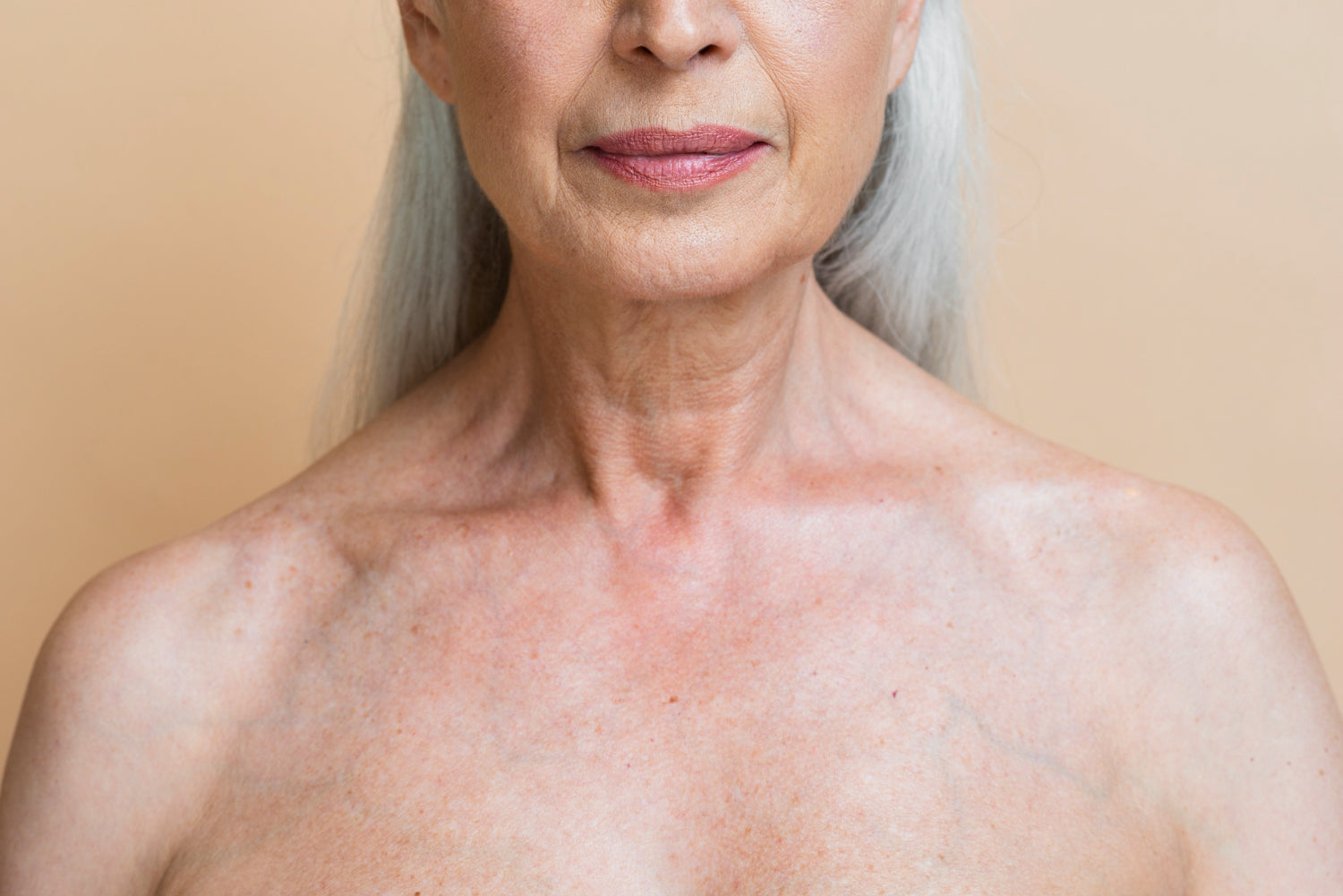
The neck and décolleté, extremely sensitive regions, are also highly exposed. Their thin skin, often insufficiently protected and exposed to the sun, reacts strongly to hormonal changes. Redness, irritation and dryness may gradually set in.
The hands, meanwhile, undergo marked changes. With fewer sebaceous glands and constantly exposed to external aggressions, they dry out, become cracked and lose their natural suppleness. The rest of the body is not spared: the skin becomes duller, less toned and shows general sagging, particularly visible on the arms, thighs and décolleté.
Changes in the dermis and epidermis
To understand these changes, it is essential to look at what happens in the deeper layers of the skin. In the dermis, located beneath the epidermis, significant modifications occur. The activity and number of fibroblasts decrease, reducing the skin’s ability to regenerate naturally. Collagen fibres, which are essential for firmness, become fewer, thinner and less effective at supporting the skin.
Hyaluronic acid, a key component for maintaining skin hydration, also drops sharply in concentration. These changes are accompanied by dilation of blood vessel walls and overall thinning of the dermis, which loses around 6% of its thickness every 10 years in a menopausal woman.
On the surface, in the epidermis, the changes are just as significant. The skin barrier, made up of lipids and sebum, becomes fragile due to a drastic reduction in sebum production. This increases the permeability of the epidermis, making it easier for moisture to evaporate and for external irritants to penetrate.
Although cellular renewal speeds up, the quality of this regeneration decreases. This makes the skin more sensitive and less able to defend itself against external aggressions.
Main discomforts observed
The discomfort you experience on a daily basis stems directly from these cellular changes. The most common include:
- Persistent tightness, especially after cleansing, with skin that peels or cracks.
- More pronounced wrinkles and fine lines, made worse by dehydration and loss of elasticity.
- Loss of radiance and a dull complexion, caused by slower cellular renewal and reduced blood circulation.
- Redness and sensations of discomfort or itching due to weakening of the skin barrier.
- Appearance of brown spots and uneven discoloration, particularly on sun-exposed areas.
- General skin sagging and reduced firmness, especially visible on the face, neck and décolleté.
Although these manifestations are unpleasant, they are neither definitive nor irreversible. Appropriate care can significantly reduce these effects and restore comfort and glow to your skin.
Preventing skin dryness: the right daily habits
To effectively fight skin dryness, it’s not enough to use the right products. Your daily habits and lifestyle play a key role in your skin health, especially during hormonal upheavals such as menopause. Adopting simple, consistent reflexes can significantly improve the condition of your epidermis and help maintain a strong skin barrier.
Essential habits to adopt
- Drinking enough water is the first essential step. Skin hydration starts from within. By drinking regularly, you help your body maintain the water balance of your skin cells. Experts recommend consuming between 1.5 and 2 litres of water per day to compensate for losses linked to hormonal changes.
- Avoiding harsh cleansers is equally important. During menopause, your skin barrier is more fragile. Choose gentle cleansers formulated for sensitive, dry skin, such as cleansing milks or oils enriched with lipids. These products preserve your hydrolipidic film while removing impurities. Cleanse your skin morning and night to prepare it to receive your hydrating care.
- Limiting hot showers is a piece of advice that is often overlooked. Very hot water accelerates evaporation of moisture from the surface of your skin, worsening dryness. It also strips the skin of its natural oils, making it drier and more irritated. Opt for lukewarm or cool showers and quickly apply an emollient care product after each shower to lock in moisture.
- Massaging the skin regularly is a simple but effective habit. A gentle massage, performed in circular motions with your fingers, improves microcirculation and helps your skin better absorb the hydrating and regenerating active ingredients in your products. Practised for a few minutes every evening, this ritual boosts the effectiveness of your routine while enhancing your sense of well-being.
Ingredients to look for on your labels
When choosing the best skincare products, pay attention to the following ingredients:
- Hyaluronic acid: Maintains optimal hydration by retaining water in your skin.
- Ceramides: Strengthen the skin barrier and ensure long-lasting hydration.
- Plant oils and butters (shea, argan, jojoba): Nourish and restore comfort to dry skin.
- Squalane: Mimics the skin’s natural lipids for light yet effective hydration.
- Vitamin C: A powerful antioxidant that stimulates collagen production and brightens the complexion.
- Vitamin E: Protects your skin and reinforces its natural barrier.
- Peptides: Improve firmness and reinforce your skin’s structure.
- Niacinamide: Soothes inflammation and boosts your epidermis’ natural defences.
Beyond topical care applied directly to your skin, dietary supplements also play an important role in combating the effects of menopause. These supplements specially formulated to support menopausal skin are rich in essential nutrients, and may include a menopause supplement that helps your body maintain optimal collagen production and improve skin hydration from within.
Complete routine to soothe and hydrate menopausal skin
MORNING ROUTINE
Gentle cleansing: cleanse the skin with a gentle, suitable cleanser.
Hydration & nourishment: This hydrating and nourishing facial duo (oil + emulsion) is ideal in the morning as it strengthens the skin barrier and improves deep hydration.
Symptoms: sensitive skin prone to dryness, tightness or flaking.
EVENING ROUTINE
Regenerating treatment: This formula, rich in natural oils and soothing actives, provides deep hydration.
Symptoms: sensitive skin, dry and dehydrated skin, redness, lack of radiance, uneven skin texture, excess sebum
Other symptoms of menopause
Menopause does not only affect the skin: it triggers a cascade of changes that affect the entire body, often in unpredictable and interconnected ways. These symptoms, caused by hormonal fluctuations, vary in intensity from one woman to another but deserve particular attention to preserve your overall well-being.
Dominant vasomotor symptoms
Hot flashes and night sweats affect around 75% of women. They manifest as sudden surges of heat in the face, neck and chest, followed by chills or excessive sweating, which can disrupt both daily life and sleep. These symptoms may also be accompanied by benign heart palpitations, caused by hormonal variations that influence vascular regulation.
Intimate and urinary issues
Vaginal dryness can lead to painful intercourse, known as dyspareunia, as well as reduced libido due to estrogen and testosterone deficiency, often worsened by fatigue. In addition, urinary incontinence may occur when the pelvic floor muscles lose tone, causing distressing leaks. It is essential to talk to your doctor to find appropriate solutions.
Various physical manifestations
You may experience joint and muscle pain, particularly noticeable in the morning or after a period of inactivity. Increased breast tenderness, headaches or more intense migraines, as well as abdominal weight gain linked to a slower metabolism, are also common. Among less-known symptoms are a dry mouth due to reduced saliva production, tingling or numbness in the extremities, heightened sensitivity to smells, dizziness, tinnitus or even fluctuating vision.
Psychological and cognitive symptoms
Mood swings, irritability, anxiety, depression or lack of motivation are often linked to the impact of hormones on the brain. You may also experience difficulty concentrating, impaired memory and chronic fatigue due to insomnia. These emotional states, affecting up to 45% of women, can ease with appropriate support.
Recognising these signs allows you to take action early. Solutions such as pelvic floor exercises, increased hydration or medical follow-up can help you navigate this period with greater serenity.
FAQ: Dry skin and menopause
Which natural ingredients such as hyaluronic acid or glycerin are most effective for hydrating dry skin during menopause?
Natural ingredients such as hyaluronic acid (of plant origin, capable of retaining up to 1,000 times its weight in water),
How can you naturally adapt your daily cleansing and moisturizing routine for menopausal skin?
For menopausal skin, it is essential to adopt a gentle, adapted routine:
- Gently cleanse your skin twice a day with a cleansing oil followed by a mild cleanser.
- Apply a hyaluronic acid serum to deeply hydrate, then a rich cream for day and night.
- Exfoliate once or twice a week to remove dead skin cells.
- Protect your skin with an SPF 30 or higher sunscreen.
Which foods and eating habits boost internal skin hydration during menopause?
To promote internal skin hydration during menopause, here are some tips:
- Drink between 1.5 and 2 litres of water per day.
- Eat water-rich foods such as watermelon, cucumber and melon.
- Add sources of omega-3 to your diet, such as salmon, sardines and flaxseeds.
- Feel free to include lemon balm in your infusions, known for its relaxing effects and beneficial properties for the skin.
- Favour antioxidants found in berries, citrus fruits and avocado.
- Include foods rich in vitamins C and E, such as green vegetables and nuts, to nourish your skin from within.
- Drink between 1.5 and 2 litres of water per day.
- Eat water-rich foods such as watermelon, cucumber and melon.
Does combination or oily skin at menopause require different moisturizers from dry skin?
Yes, combination or oily skin at menopause needs adapted moisturizers. Combination to oily skin should favour light, fluid textures that absorb quickly without weighing the skin down. In contrast, dry skin benefits more from rich, thick formulas to compensate for its lack of hydration.
SOURCES:
-
“Peau et ménopause” — Revue Genesis
How hormonal disruptions at menopause lead to skin dryness, wrinkles, loss of elasticity and altered texture. https://www.revuegenesis.fr/peau-et-menopause/ -
“Peau, ménopause et traitement hormonal de la ménopause” — Gyneco-Online
Description of dermal changes — decreased collagen, skin atrophy, reduced sebum and loss of elasticity. https://www.gyneco-online.com/node/2911 -
“Vieillissement cutané ménopausique” — EM-Consulte
Medical article detailing how the drop in estrogen affects dermal thickness, collagen and elasticity. https://www.em-consulte.com/article/8003/vieillissement-cutane-menopausique
![[MY] PERFECTING MOISTURIZER EMULSION 40ML](http://www.miye.care/cdn/shop/files/Visuels_shop_84.png?v=1773305060&width=1000)
![[MY] SKIN & HAIR ESSENTIALS](http://www.miye.care/cdn/shop/files/Visuels_shop_89.png?v=1773306175&width=1000)
![[MY] REGENERATING OIL 30ML](http://www.miye.care/cdn/shop/files/151_1.webp?v=1775138766&width=600)
![[MY] MIXOLOGY PACK](http://www.miye.care/cdn/shop/files/154.webp?v=1775138370&width=600)
![[MY] SKIN REGENERATION PACK](http://www.miye.care/cdn/shop/files/155.webp?v=1775138438&width=600)
Share:
Why do we talk about the "big belly syndrome" in women ?
Bloated and hard stomach : understanding and relieving these digestive problems