




SUMMARY
- What exactly is a postbiotic?
- Postbiotics, probiotics and prebiotics: what are the differences?
- How do postbiotics work in your body?
- The benefits of postbiotics for women's health
- Postbiotics and hormonal balance: the key role of the estrobolome
- Postbiotics and skin: a new frontier in cosmetics
- Where can you find postbiotics naturally?
- Dietary supplements: what to look for before buying
- Frequently asked questions about postbiotics

Key Takeaways
Postbiotics are compounds derived from non-living bacteria (metabolites or fragments) that are beneficial to health
They differ from probiotics (live organisms) and prebiotics (fibers) but work in a complementary way
They strengthen the intestinal barrier, reduce inflammation and balance the microbiota
They support digestion, immunity and hormonal balance, particularly in women
They are more stable and better tolerated, and can be produced through diet or taken as a supplement
What exactly is a postbiotic?
According to the definition of the ISAPP (International Scientific Association for Probiotics and Prebiotics) (2022), a postbiotic is a preparation of inanimate microbial components or metabolites produced by living microorganisms, which, when administered in adequate amounts, confers a health benefit on the host.
This clarification clearly distinguishes postbiotics from probiotics (live cells) and prebiotics (fermentable substrates that promote microbial growth).
The main types of postbiotics: metabolites and cell fragments
There are two main categories:
Metabolites: short-chain fatty acids (SCFAs) such as acetate (≈60%), propionate (≈20%) and butyrate (≈15%), as well as antimicrobial peptides or immune signalling molecules. Around 95% of these SCFAs are absorbed by the host and contribute to a 25% reduction in intestinal permeability markers (Gut review, 2021).
Cell fragments: partially degraded bacterial walls, surface proteins or polysaccharides that remain biologically active despite the inactivation of the producing cells.
| Type | Examples | Main mechanism |
|---|---|---|
| SCFAs (short-chain fatty acids) | Butyrate, acetate, propionate | Colonocyte nutrition, reduction of intestinal permeability |
| Bioactive peptides | Antimicrobial peptides, bacteriocins | Pathogen limitation, immune modulation |
| Cell fragments | Bacterial walls, LPS, peptidoglycan | TLR receptor activation, innate immunity regulation |
| Enzymes and vitamins | B vitamins, K2, digestive enzymes | Improved nutrient absorption |
| Exopolysaccharides (EPS) | Bacterial polysaccharides | Mucosal barrier reinforcement, indirect prebiotic properties |
Both forms are at the heart of research in immunology, nutrition and digestive health, with over 200 studies published since 2018.
Postbiotics, probiotics and prebiotics: what are the differences?
These three families work in a complementary way to support microbiota balance and host health. Here are their specific roles:
| Probiotics | Prebiotics | Postbiotics | |
|---|---|---|---|
| Nature | Live microorganisms | Non-digestible fibres | Inactivated bacteria / metabolites |
| Mechanism | Temporary colonisation | Food for beneficial bacteria | Direct interaction with host cells |
| Stability | Fragile (cold chain required) | Stable | Very stable |
| Tolerance | May cause bloating | May ferment and cause discomfort | Generally very well tolerated |
| Level of evidence | High (documented strains) | High | Developing (promising results) |
Probiotics: beneficial live bacteria
Probiotics are live microorganisms (bacteria or yeasts) that, when ingested in sufficient quantities (> 10⁹ CFU/day), improve the intestinal flora, strengthen the mucosal barrier and modulate immunity. They are found in yoghurt, kefir, sauerkraut or in supplement form. According to a 2020 meta-analysis in The American Journal of Clinical Nutrition, regular consumption of probiotics reduces the risk of antibiotic-associated diarrhoea by 30%.
Prebiotics: nourishing fibres
Prebiotics are non-digestible dietary fibres that reach the colon almost intact. They stimulate the growth of beneficial bacteria (Bifidobacterium, Lactobacillus), increasing their abundance by up to 3 times (Nutrients review, 2021). Common examples: inulin, fructo-oligosaccharides, found in garlic, onion, artichokes or legumes.
At Miyé, inulin and alpha-glucan oligosaccharide are part of our formulas.
Postbiotics: the result of fermentation
Postbiotics are the end products of bacterial fermentation of prebiotic fibres. These include SCFAs, enzymes, peptides and vitamins that act without requiring the survival of live cells. This stability offers more durable formulas that are often better tolerated, particularly for the 15% of people who are intolerant to live probiotics (Frontiers in Microbiology study, 2022).
How do postbiotics work in your body?
After ingestion or topical application, postbiotics interact directly with the host's epithelial and immune cells, bypassing the intermediate step of bacterial colonisation.
Three main mechanisms are at work.
Strengthening the intestinal barrier: a 30% increase in mucus production and stimulation of tight junctions (TEER +25% in vitro, Journal of Nutritional Biochemistry, 2021), limiting the passage of unwanted substances.
Immune modulation: certain metabolites inhibit the NF-κB pathway and reduce pro-inflammatory cytokine production by 40% (Immunology Letters review, 2022), helping to maintain the balance between pro- and anti-inflammatory signals.
Microbiota balance: by promoting beneficial populations and limiting potentially pathogenic strains, they facilitate a more stable organisation of the intestinal ecosystem.
Overall, these combined effects improve digestion, nutrient absorption and resilience against external aggressions.
The benefits of postbiotics for women's health
In women, the microbiota plays a particularly central role due to the continuous hormonal fluctuations that directly influence the composition of intestinal and vaginal bacterial communities. Several areas of benefit emerge from available studies.
- 20% reduction in episodes of diarrhoea and functional disorders (Women's Health review, 2021), thanks to better regulation of transit and limitation of pathogenic proliferation.
Immune support: a balanced microbiota contributes to an optimal immune response, a valuable asset in the face of hormonal fluctuations (70% of immune cells are located in the gastrointestinal tract).
Hormonal balance: by promoting the metabolism of steroid hormones, they help prevent imbalances during puberty, pregnancy or menopause.
Alleviation of irritable bowel syndrome (IBS), which affects around 14% of women (vs 8% of men). After 8 weeks of supplementation, a 15–25% reduction in severity score is observed (American Journal of Gastroenterology, 2020).
Pregnancy and postpartum: Due to the absence of live microorganisms, postbiotics theoretically present a favourable safety profile during pregnancy.
Postbiotics and hormonal balance: the key role of the estrobolome
What is the estrobolome?
The estrobolome refers to the collection of intestinal bacteria capable of metabolising oestrogens. These bacteria produce an enzyme — beta-glucuronidase — that deconjugates oestrogens in the intestine, allowing their reabsorption into the bloodstream or faecal elimination.
An imbalanced estrobolome can therefore lead to either an excess of recirculating oestrogens (contributing to oestrogen dominance), or a deficit.
How do postbiotics intervene?
By supporting the balance of the intestinal microbiota — and therefore the estrobolome — postbiotics indirectly contribute to better regulation of the enterohepatic cycle of oestrogens. An intestine with a solid barrier and a balanced microbiota metabolises oestrogens more consistently, which can alleviate symptoms related to cyclical hormonal imbalances.
The link with your symptoms: Cyclical bloating, marked premenstrual syndrome, breast tenderness at the end of your cycle, recurring hormonal acne — these symptoms are often associated with relative oestrogen dominance. Intestinal microbiota balance, through postbiotics in particular, is one of the natural levers for addressing these imbalances upstream.
Perimenopause and menopause
The decline in oestrogens at menopause profoundly alters the composition of the intestinal microbiota, which can worsen intestinal permeability, low-grade inflammation and digestive disorders. Formulas incorporating postbiotics can help maintain the integrity of the intestinal barrier and support digestive comfort during this period.
Postbiotics and skin: a new frontier in cosmetics
Postbiotics are not limited to the oral route. Applied topically, they represent a major innovation for skincare, particularly for sensitive, reactive or microbiome-imbalanced skin.
The skin microbiome
Like the intestine, the skin has its own microbial ecosystem — the skin microbiome. Composed of millions of bacteria, yeasts and viruses that live in balance on its surface. This ecosystem is essential to the proper functioning of the skin barrier: it protects against pathogens, regulates local inflammation and maintains the skin's acidic pH.
Hormonal fluctuations (menstrual cycle, pregnancy, menopause) directly disrupt this skin balance, promoting redness, blemishes and sensitivity. With age, the skin barrier thins and protective mechanisms weaken, a phenomenon accentuated by the decline in oestrogens from the age of 30–35.
How do postbiotics act on the skin?
Applied topically, postbiotics derived from bacterial fermentation — such as Bacillus Ferment or marine ferment filtrates — act on several mechanisms simultaneously: strengthening the skin microbiome, modulating local inflammation, supporting the skin barrier and limiting the development of potentially irritating strains.
In the Miyé formula
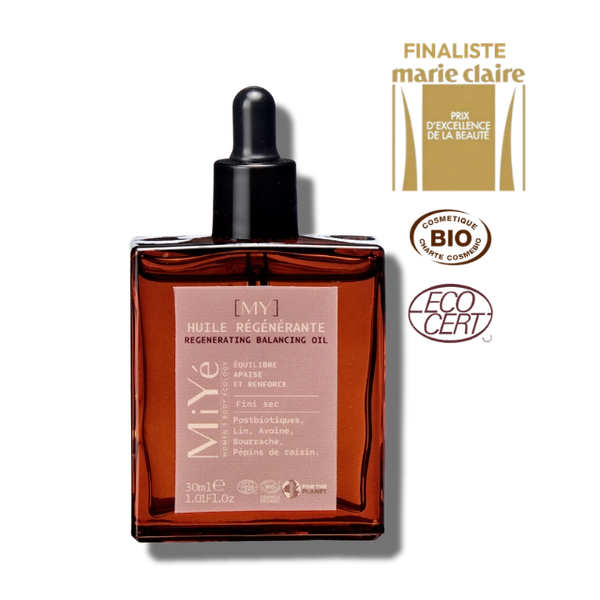
Bacillus Ferment and objectified marine postbiotic extracts are at the heart of our [MY] Regenerating Oil. These two postbiotic complexes work in synergy to preserve the balance of the skin microbiome, reduce redness, strengthen the skin barrier and improve the comfort of sensitive or hormonally stressed skin.
Where can you find postbiotics naturally?
Postbiotics are produced in situ through the fermentation of fibres. To encourage their generation, incorporate the following into your diet:
- Yoghurts and fermented dairy products
- Kefir
- Raw sauerkraut, kimchi
- Miso, tempeh
- Kombucha
- Sourdough bread
- Fermented fruit and vegetable drinks
Please note: Fermented foods contain both live probiotics and postbiotics (fermentation metabolites). A diet regularly enriched with these foods is the foundation of a balanced microbiota. Postbiotic dietary supplements are a complement to, not a replacement for, a varied diet.
Dietary supplements: what to look for before buying
To choose a quality supplement, check for:
- The precise strain (e.g. Lactobacillus rhamnosus GR-1) and its registration number.
- The presence of published clinical studies demonstrating a real benefit, ideally in women.
- Validated dosage: daily dose and duration of use in line with trials (generally 4 to 12 weeks).
- Origin and certifications (GMP, ISO, organic) guaranteeing traceability and manufacturing quality.
- Absence of controversial additives (colourings, artificial preservatives).
Also favour ranges that adopt a holistic approach to women's wellbeing, combining vaginal hygiene, intestinal balance and immune support.
Frequently asked questions about postbiotics
Are they suitable for immunocompromised people?
Even though postbiotics do not contain live bacteria, their immunomodulatory action can be powerful. During chemotherapy or in cases of serious illness, always consult a doctor to assess the benefit-risk ratio and adjust the dose accordingly.
Can they be taken during pregnancy?
Specific data are still limited. Probiotics are generally safe, but it is important to discuss any supplement with a healthcare professional to account for any underlying conditions or ongoing treatments.
How long does it take to see results?
Digestive improvements may occur within 2 to 4 weeks, while for more noticeable immune or hormonal support, allow 8 to 12 weeks of regular use.
Can they completely replace probiotics?
Postbiotics and probiotics have different mechanisms and can be complementary. For some people intolerant to live organisms, postbiotics offer a stable alternative, but they do not always replace probiotics within personalised protocols.
Are there any drug interactions?
Potential interactions with antibiotics or other immunosuppressive treatments are still poorly documented. In the case of long-term treatment (immunosuppressants, chemotherapy, anticoagulants), seek advice from your doctor before starting a supplement.
Scientific sources and references
- Salminen S. et al. (2021). The ISAPP consensus statement on the definition and scope of postbiotics. Nature Reviews Gastroenterology & Hepatology, 18(9):649-667. https://doi.org/10.1038/s41575-021-00440-6
- Ouwehand A.C. et al. (2020). Probiotics reduce the risk of antibiotic-associated diarrhea. Meta-analysis.The American Journal of Clinical Nutrition. PubMed
- Behare P.V. et al. (2022). Postbiotics and immune modulation via TLR pathways. Immunology Letters, 245:12-20. PubMed
- Mayer E.A. et al. (2020). Gut microbiota and IBS in women. American Journal of Gastroenterology. PubMed
- Baker J.M. et al. (2017). Estrogen-gut microbiome axis: Physiological and clinical implications. Maturitas, 103:45-53. https://doi.org/10.1016/j.maturitas.2017.06.025
- Wegh C.A.M. et al. (2019). Postbiotics and their potential applications in early life nutrition and beyond. International Journal of Molecular Sciences, 20(19):4673. https://doi.org/10.3390/ijms20194673


Share:
Menopause and Weight Gain: Causes and How to Regain Balance
Menopause and Weight Gain: Causes and How to Regain Balance