




Astaxanthin is a natural red pigment from the carotenoid family, produced by microalgae and found in certain marine animals such as salmon, trout and shrimp.
It is a very powerful antioxidant that protects cells against oxidative stress caused by pollution, sun exposure, smoking or stress.
It contributes to protecting skin and hair by promoting hydration, collagen production and helping to slow skin ageing.
It can also support cardiovascular health, immunity and reduce inflammation, thanks to its anti-inflammatory properties.
What is astaxanthin?
Definition
Astaxanthin is a red pigment belonging to the carotenoid family — natural substances found in certain plants and animals. This substance is produced by microalgae and gives the characteristic pink-red colour to salmon, shrimp, crayfish and flamingos that feed on these algae.
Carotenoids, recognisable by their vivid colours, are present in a wide variety of fruits, vegetables and flowers such as carrots, tomatoes and apricots. They are precursors of vitamin A, which is essential for vision, growth and the proper functioning of the immune system. Unique in its kind, astaxanthin stands out for its chemical structure, which endows it with distinctive properties.
Astaxanthin belongs to the group of keto-carotenoids, featuring functional ketone groups and xanthophyll groups with hydroxyl functional groups, allowing it to bind to both water and lipids. This amphiphilic nature enables it to dissolve in cell membranes and exert its antioxidant action there, as well as to cross the blood-brain barrier and the blood-retinal barrier, attracting interest for its beneficial effects on the brain and eyes.
Properties: antioxidant
Beyond its colouring contribution, astaxanthin is a powerful antioxidant that plays a crucial role in protecting cells against oxidative stress and inflammation, thereby preserving our health. It is considered one of the most potent natural antioxidants. It has the capacity to neutralise free radicals generated by pollution, smoking, sun exposure, alcohol and stress, which promote premature ageing.
Origin: Natural sources of astaxanthin (algae, shellfish)
Astaxanthin occurs naturally in certain plants and animals. It is synthesised by microalgae such as Haematococcus pluvialis, which are then consumed by various fish, shellfish and birds, giving them their characteristic pink-red colour.
Here are some dietary sources rich in astaxanthin:
- Salmon: the richest source, with approximately 4.5 mg of astaxanthin per 100 g serving. Wild salmon contains more than its farmed counterpart, thanks to its diet rich in algae and shellfish.
- Trout: providing around 3.5 mg per 100 g serving. Rainbow trout leads in terms of content, followed by sea trout and brown trout.
- Shrimp: with approximately 1.2 mg per 100 g serving, red shrimp stands out as the richest in astaxanthin, closely followed by pink shrimp and grey shrimp.
- Lobster: containing 0.9 mg per serving, European lobster being the richest, followed by American lobster and Canadian lobster.
- Krill: this small crustacean from cold waters contains approximately 0.6 mg per 100 g.
- The microalgae Haematococcus pluvialis: this algae holds the highest concentration, with 40 mg per gram of dry matter. Cultivated under controlled conditions, it is used to manufacture food supplements.
To benefit from its properties, you can incorporate these foods into your diet.
Comparison: Comparison with other antioxidants (vitamin C, vitamin E)
Astaxanthin is exceptionally more effective than many recognised antioxidants, such as vitamin C, vitamin E, beta-carotene, lutein and lycopene. It can also regenerate other antioxidants, thereby promoting enhanced protection against oxidative damage.
What are the benefits of astaxanthin for the skin?

It is a precious ally for the skin, offering optimal protection against external aggressors such as UV rays, pollution, tobacco and stress. These generate free radicals that threaten the integrity of our skin.
Beyond its antioxidant effect, it also possesses significant anti-inflammatory properties, capable of reducing redness, irritation and skin inflammation. It acts by decreasing the production of cytokines, thereby contributing to the comfort of sensitive or allergy-prone skin. It can help support the comfort of skin prone to certain cutaneous discomforts. By improving hydration, elasticity and skin texture, astaxanthin encourages the synthesis of collagen, which is essential to skin structure and suppleness.
The result? Skin that is softer, smoother and more radiant.
It is therefore a natural ingredient with numerous benefits for the skin, offering protection, repair, nourishment and a rejuvenating effect.
The benefits of astaxanthin for hair
Astaxanthin offers numerous benefits for hair, improving its growth, strength and shine.

Stimulates hair growth
It improves blood circulation in the scalp, supporting the delivery of nutrients and oxygen to hair follicles. It also increases the expression of the growth factor IGF-1, boosting the proliferation of cells in the hair bulb.
Prevents and slows hair loss.
It has a demonstrable action on hair loss, including that caused by androgenetic alopecia. This benefit is explained by its inhibitory action on the enzyme 5-alpha-reductase, which converts testosterone into dihydrotestosterone (DHT) — a hormone that shortens the lifespan of hair.
Strengthens hair resilience.
Free radicals damage hair proteins such as keratin, collagen and elastin, making hair fragile, brittle and dull. Thanks to its antioxidant power, astaxanthin preserves the integrity of these proteins, improving hair resilience.
Enhances hair shine
By increasing moisture levels, it makes hair more supple and soft while improving the reflection of light on its surface, giving it unrivalled luminosity and radiance. Even for dry or damaged hair, it can restore vitality to the hair.
Delays the appearance of grey hair
Its protective power shields melanocytes — the cells responsible for producing melanin, the pigment that gives hair its colour — against the oxidative stress responsible for their degeneration and the reduction of melanin production. Astaxanthin thus preserves the natural colour of hair and can contribute to delaying or slowing the appearance of grey hair.
What are the health benefits of astaxanthin?
Far exceeding the cosmetic benefits for skin and hair, it also demonstrates remarkable favourable effects on our overall wellbeing. Thanks to its antioxidant and anti-inflammatory properties, it can play a key role in supporting health.
At the level of the heart and blood vessels, it is a valuable ally: it reduces cholesterol and triglyceride levels. Studies suggest a potential role in supporting cardiovascular health.
It also prevents the oxidation of LDL cholesterol, which is known to cause the formation of plaques in the arteries.
For those suffering from joint pain, astaxanthin also proves beneficial by inhibiting the production of certain molecules that cause inflammation and pain, while slowing the degradation of cartilage.
It also strengthens the immune system by stimulating the activity of defence cells such as T lymphocytes and macrophages, while regulating excessive immune responses that may trigger allergies or autoimmune diseases. Its antioxidant and anti-inflammatory properties are the subject of studies into various aspects of general health.
Where can you find astaxanthin?
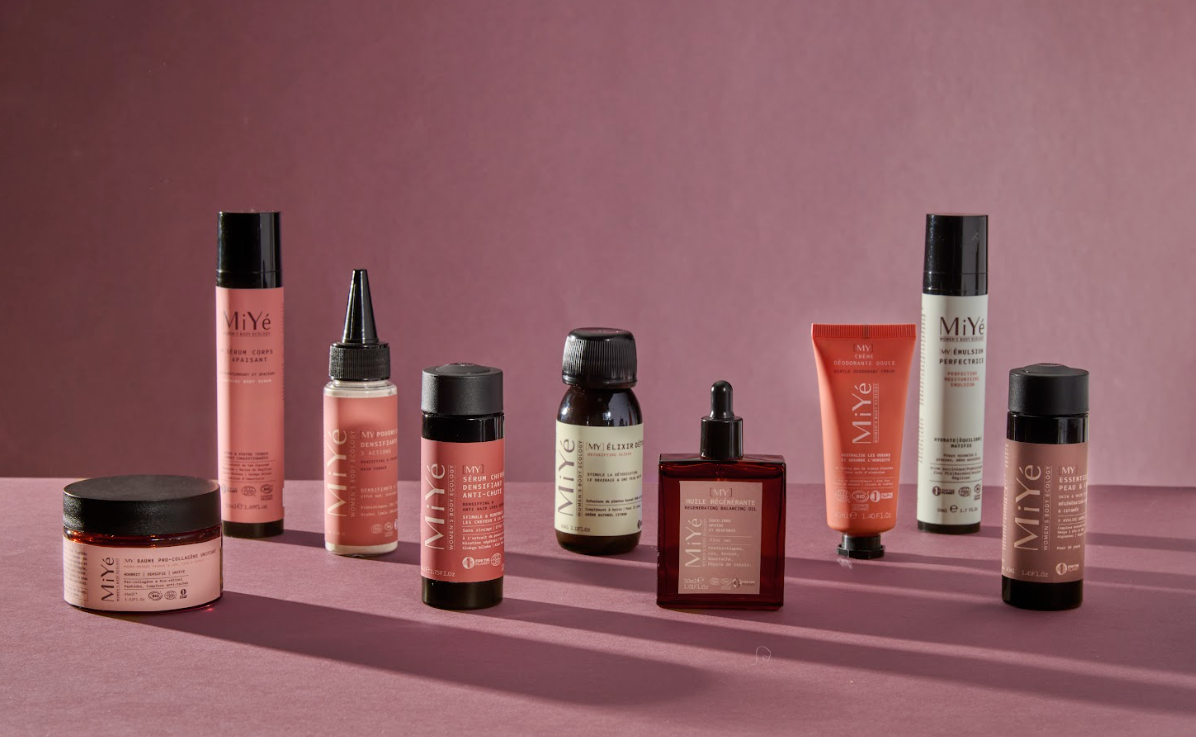
In addition to the foods mentioned above, you can opt for a supplement containing it. We recommend choosing supplements that are organic, vegan and manufactured in France.
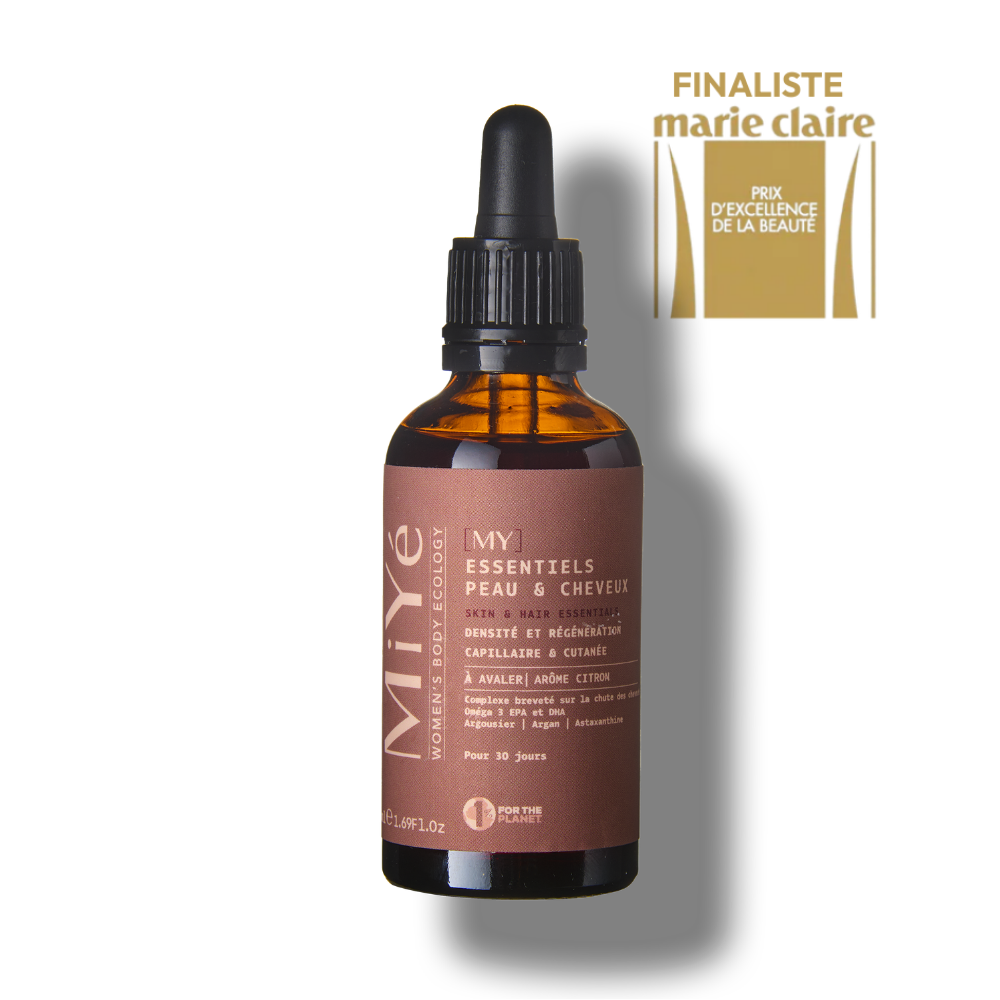
MiYé ESSENTIELS PEAU ET CHEVEUX contains it. It is also a product manufactured exclusively in France and is vegan.
The essentials on astaxanthin
As we have now understood, astaxanthin plays a key role in protecting cells against oxidative stress and inflammation, acting as an effective anti-ageing ingredient and helping to prevent the ageing of skin, hair and cells.
For those interested in its antioxidant benefits, we recommend the option of food supplements — organic, vegan and made in France. These products are environmentally respectful and prioritise quality.

Share:
How can I prepare my skin for summer ?
How do the sun and sunscreens affect the skin microbiome?
1 comment
The information given here is very helpful, and I will try this product