



SUMMARY
Key takeaways:
Astaxanthin is a natural red pigment from the carotenoid family, produced by microalgae and found in certain marine animals such as salmon, trout or shrimp.
It is a carotenoid recognised for its antioxidant power, studied for its ability to neutralise free radicals linked to pollution, sun, smoking or stress.
It is popular in skin and hair beauty routines, where it is valued for helping to preserve radiance and suppleness, alongside a healthy lifestyle.
It is found in food (salmon, trout, shrimp) and in supplements derived from the microalga Haematococcus pluvialis.
What is astaxanthin?
Definition
Astaxanthin is a red pigment belonging to the carotenoid family, a natural substance found in certain plants and animals. It is produced by microalgae and gives a characteristic pink-red colour to salmon, shrimp, crayfish and flamingos that feed on these algae.
Carotenoids, recognisable by their bright colours, are present in a wide variety of fruits, vegetables and flowers such as carrots, tomatoes or apricots. They are precursors of vitamin A, essential for vision, growth and the proper functioning of the immune system. Astaxanthin, for its part, stands out for a chemical structure that gives it particular properties.
Astaxanthin belongs to the group of keto-carotenoids, with ketone and hydroxyl functional groups, which allows it to bind to both water and lipids. This amphiphilic nature allows it to integrate into cell membranes and cross the blood-brain and blood-retinal barriers, which explains why research takes an interest in the brain and eyes.
Properties: antioxidant
In addition to its colouring contribution, astaxanthin is a carotenoid recognised for its strong antioxidant power. It is one of the most studied natural antioxidants for their ability to neutralise free radicals, molecules generated notably by pollution, smoking, sun exposure or stress, and associated with the premature ageing of cells.
Origin: Natural sources of astaxanthin (algae, shellfish)
Astaxanthin is naturally present in certain plants and animals. It is synthesised by microalgae such as Haematococcus pluvialis, which are then consumed by various fish, crustaceans or birds, which then take on this characteristic pink-red colour.
Here are some food sources rich in astaxanthin:
- Salmon: the richest source, with around 4.5 mg of astaxanthin per 100 g serving. Wild salmon contains more than farmed salmon, thanks to its diet rich in algae and crustaceans.
- Trout: it offers around 3.5 mg per 100 g serving. Rainbow trout comes first, followed by sea trout and brown trout.
- Shrimp : with around 1.2 mg per 100 g serving, red shrimp stands out as the richest, closely followed by pink shrimp and brown shrimp.
- Lobster: it contains 0.9 mg per serving, with European lobster being the richest, followed by American lobster and Canadian lobster.
- Krill : this small cold-water crustacean contains around 0.6 mg per 100 g.
- The alga Haematococcus pluvialis: it holds the highest concentration, with 40 mg per gram of dry matter. Grown under controlled conditions, it is used to make food supplements.
Comparison: How it compares with other antioxidants (vitamin C, vitamin E)
Laboratory studies suggest that astaxanthin may have a greater antioxidant capacity than other known antioxidants, such as vitamin C, vitamin E, beta-carotene, lutein or lycopene. The available research also suggests that it may interact with other antioxidants.
Astaxanthin and the skin

Astaxanthin is an active ingredient valued in beauty routines, particularly for skin exposed to everyday stressors: UV rays, pollution, smoking or stress, all factors that generate free radicals.
Thanks to its antioxidant properties, it is studied for its role against these free radicals. In cosmetics and micronutrition, it is studied for its possible role against these free radicals, alongside a healthy lifestyle.
Astaxanthin and hair
Astaxanthin is also valued in hair care, where it is associated with the vitality and shine of hair.

Astaxanthin and the hair fibre
Free radicals can weaken the hair's proteins such as keratin, collagen or elastin, making hair more brittle and dull. Thanks to its antioxidant properties, astaxanthin is of interest to researchers for its possible role against this oxidative stress.
Astaxanthin and hair radiance
Hydration plays a key role in the suppleness and shine of the hair. Astaxanthin is one of the active ingredients studied for its potential interest, particularly on dry or damaged hair, as part of an overall hair care routine.
Astaxanthin and well-being: what does research say?
Beyond its beauty uses, astaxanthin is the subject of extensive scientific research covering various aspects of general well-being. This research is still being evaluated and is not, to date, the subject of authorised health claims at the European level.
MiYé is not intended to replace medical advice. For any health question, seek advice from your doctor or a healthcare professional.
Where to find astaxanthin?
In addition to the foods mentioned above, you can choose a supplement that contains it. We recommend choosing supplements that are organic, vegan and made in France.
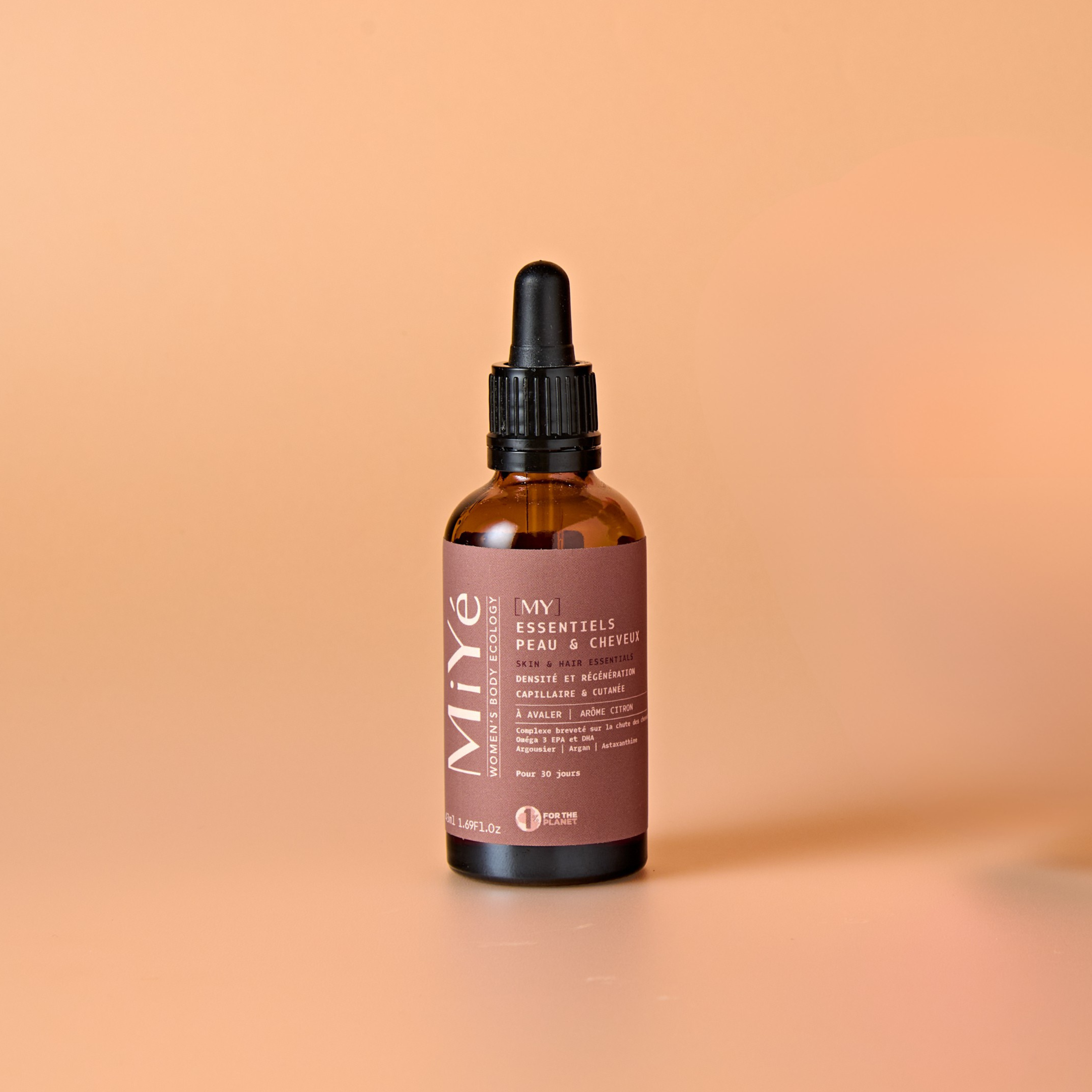
Miyé ESSENTIEL PEAU ET CHEVEUX contains it. What's more, it is a product made exclusively in France and vegan.
The essentials on astaxanthin
As we have seen, astaxanthin is a natural carotenoid recognised for its antioxidant power, studied for its role against everyday oxidative stress. It fits into a holistic beauty approach, alongside a healthy lifestyle: a balanced diet, sleep and stress management.
For those who wish to add it to their routine, we recommend prioritising food supplements that are organic, vegan and made in France, environmentally friendly and attentive to quality.
FAQ:
What is astaxanthin?
Astaxanthin is a carotenoid, a natural red pigment produced by microalgae such as Haematococcus pluvialis. It is also found in certain marine animals that feed on them, such as salmon, trout or shrimp.
Where is astaxanthin found in food?
Mainly in seafood: salmon, trout, shrimp, lobster and krill. The microalga Haematococcus pluvialis is the most concentrated source and is used to make food supplements.
What is the difference between natural and synthetic astaxanthin?
Natural astaxanthin comes from microalgae, while the synthetic version is produced in a laboratory. For a supplement, it is preferable to prioritise natural astaxanthin that is organic and made in France.
Is astaxanthin suitable for everyone?
If you are pregnant, breastfeeding, undergoing any treatment or in doubt, seek advice from your doctor or a healthcare professional. MiYé has no medical purpose and its products do not replace medical advice.

![[MY] Essential skin and hair, anti-hair loss oil for women, and her macaron finalist Marie-Claire of the beauty award of excellence](http://www.miye.care/cdn/shop/files/Visuels_shop_89.png?v=1773306175&width=1000)
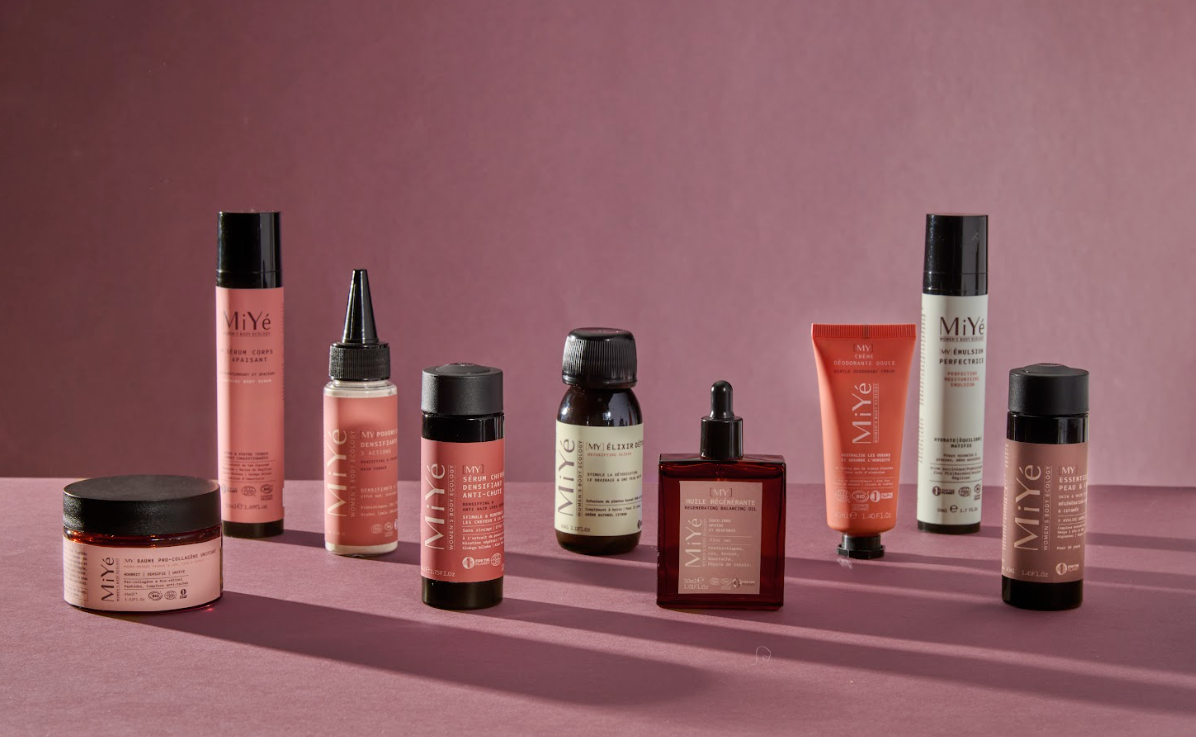
![Tube [MY] Sérum densifiant anti-chutes pour cheveux, et ses macarons finaliste du prix d'excellence de la beauté marie-claire, bio et Ecocert](http://www.miye.care/cdn/shop/files/Visuels_shop_85.png?v=1773305224&width=1000)
Share:
How can I prepare my skin for summer ?
How do the sun and sunscreens affect the skin microbiome?
1 comment
The information given here is very helpful, and I will try this product