




HYALURONIC ACID
Reactivates natural hydration and contributes to lasting comfort.

HYALURONIC ACID: Deeply hydrate your skin
HYDRATES ⎪ PROTECTS ⎪SOOTHES
Hyaluronic acid offers numerous benefits for the health of the skin and mucous membranes thanks to its exceptional ability to retain water.
This molecule naturally present in our body can bind up to 1000 times its weight in water, which makes it a benchmark active ingredient for hydration and cell regeneration.
Its moisturizing and soothing properties make it a valuable ally for maintaining the balance and comfort of tissues, particularly during hormonal variations which affect the quality of the skin and mucous membranes in women.
What is Hyaluronic Acid? Definition and origin
Hyaluronic acid is a natural polysaccharide of the glycosaminoglycan family, composed of repeating units of glucuronic acid and N-acetylglucosamine.
It was discovered in 1934 in the vitreous humor of the bull's eye by biochemists Karl Meyer and John Palmer.
This molecule is naturally synthesized by our body and is mainly concentrated in the skin (50% of the total stock), joints, eyes and mucous membranes.
Its production gradually decreases with age: we lose around 1% of our stock of hyaluronic acid per year after 20 years.
Cosmetic hyaluronic acid is today obtained by bacterial fermentation, a biotechnological method which guarantees a pure and biocompatible molecule.
This technique replaces old animal extraction methods and offers better safety of use.
Composition of Hyaluronic Acid: Active ingredients
The molecular structure of hyaluronic acid determines its specific properties and applications based on its molecular weight.
- High molecular weight hyaluronic acid (1000-1800 kDa) : forms a protective film on the surface, immediate moisturizing effect
- Medium molecular weight hyaluronic acid (300-1000 kDa) : partially penetrates, balancing action
- Low molecular weight hyaluronic acid (50-300 kDa) : deeper penetration, stimulation of endogenous synthesis
- Hyaluronic acid oligomers (less than 50 kDa) : anti-inflammatory and restorative activity
What are the benefits of Hyaluronic Acid?
The benefits of hyaluronic acid are based on its exceptional hygroscopic properties and its structural role in tissues.
Its ability to create a three-dimensional network capable of trapping water makes it a hydrating active ingredient of primary importance.
At the cellular level, hyaluronic acid stimulates cell migration and proliferation, promotes collagen synthesis by fibroblasts and modulates the inflammatory response.
These mechanisms explain its recognized effectiveness in many areas.
- Intense hydration : maintains up to 6 liters of water per gram of hyaluronic acid
- Protection of the skin barrier : strengthens the barrier function and limits dehydration
- Soothing of irritations : documented anti-inflammatory properties
- Stimulation of cell regeneration : activates tissue repair mechanisms
- Improved elasticity : supports the structure and flexibility of tissues
- Anti-aging action : compensates for the natural decrease linked to aging
Key points:
- Water retention 1000 times greater than its weight
- Molecule naturally present in the body
- Decrease of 1% per year after 20 years
- Proven action on hydration and regeneration
- Excellent tolerance and biocompatibility
Hyaluronic Acid at the heart of MiYé formulas
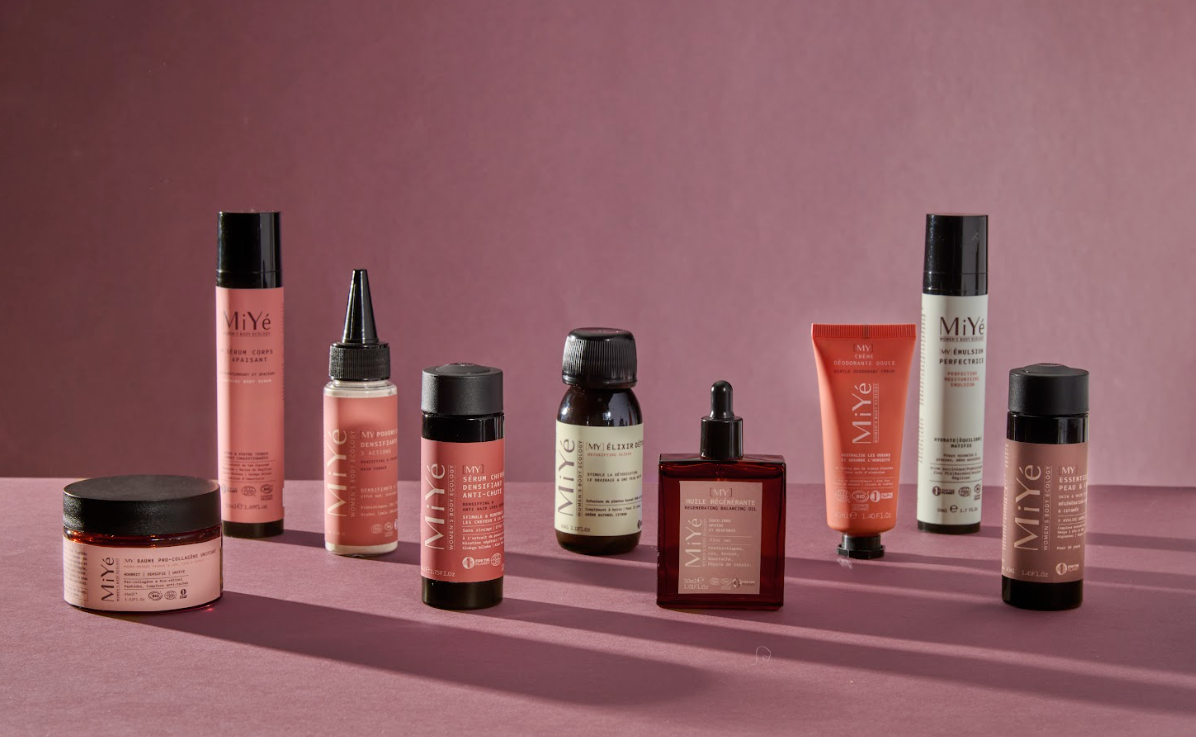
Hyaluronic acid naturally integrates MiYé formulations intended for intimate female well-being thanks to its moisturizing and soothing properties.
It helps maintain the balance of mucous membranes sensitive to hormonal variations.
[MY] SOOTHING INTIMATE MIST
An intimate mist with a refreshing and hydrating texture to relieve intimate discomfort while helping to preserve healthy intimate flora.
- Designed to soothe, hydrate and refresh the intimate area
- Prevents the formation of odors
- Leave-in texture, balancing and comfortable
- Proven effectiveness under gynecological and cytological testing
- Certified organic, rated “Excellent” on rating applications
[MY] REBALANCING MOISTURIZING INTIMATE GEL 50ML
- Suitable for all women suffering from dryness or intimate discomfort and/or vulvar pain and vulvovaginal dryness
- Gel with a discreet, non-flowing, bioadhesive natural texture
- 100% of testers find that the gel soothes from the first application and begin to space out applications in less than 21 days*
- Certified organic, rated “Excellent” on rating applications
- Available in travel size 20 ml
Tips for using Hyaluronic Acid
Hyaluronic acid comes in various forms depending on the desired use: serums, creams, gels, mists or food supplements.
Concentrations generally vary from 0.1% to 2% in cosmetic products, with optimal effectiveness around 1%.
For topical use, application is preferably made to clean, slightly damp skin, which makes it easier for water to bind.
One to three applications per day are sufficient depending on the needs and sensitivity of the treated area.
⚠️ Note : respect the recommended dosages and test tolerance on a small area before extended use.
Precautions for using Hyaluronic Acid
Adverse effects of Hyaluronic Acid
Hyaluronic acid has excellent general tolerance due to its natural presence in the body.
Adverse reactions remain rare and generally benign: slight redness or feelings of tightness during the first applications.
Contraindications are limited to known hypersensitivities to the molecule or to the excipients of the formulations.
Pregnant and breastfeeding women can use it without particular restrictions.
⚠️ If you have a history of allergies or very reactive skin, carry out a preliminary tolerance test.
Consult a healthcare professional in case of doubt or unusual reaction.
Frequently asked questions about Hyaluronic Acid
Here are the answers to the most common questions regarding this reference moisturizing active ingredient.
What are the benefits of Hyaluronic Acid?
Hyaluronic acid provides intense hydration, strengthens the protective barrier of tissues and stimulates their natural regeneration.
It soothes irritation and improves skin elasticity while compensating for its natural decline with age.
Is hyaluronic acid suitable for sensitive skin?
Yes, its natural biocompatibility makes it an active ingredient perfectly suited to sensitive and reactive skin.
Its structure identical to that produced by the body minimizes the risk of adverse reactions.
Can we use hyaluronic acid daily?
Daily use is not only possible but recommended to maintain optimal hydration.
One to three applications per day can be performed as needed without risk of addiction or overdose.
Does hyaluronic acid work immediately?
The moisturizing effect is evident upon application thanks to the immediate fixation of water in the tissues.
The benefits on regeneration and improvement of tissue quality are observed after a few weeks of regular use.
Can we combine hyaluronic acid with other active ingredients?
Hyaluronic acid blends perfectly with most cosmetic active ingredients and can even potentiate their effects.
It combines particularly well with vitamins, plant extracts and soothing agents for complete formulations.
Sources
Papakonstantinou E, Roth M, Karakiulakis G.
Hyaluronic acid: A key molecule in skin aging.
Dermatoendocrinol. 2012;4(3):253-258.
Bukhari SNA, Roswandi NL, Waqas M, et al.
Hyaluronic acid, a promising skin rejuvenating biomedicine: A review of recent updates and pre-clinical and clinical investigations on cosmetic and nutricosmetic effects.
Int J Biol Macromol. 2018;120(Pt B):1682-1695.