




CERAMIDES
The essential lipids in the skin barrier, which protect the skin from dehydration and environmental stressors, decrease with age and hormonal changes

CERAMIDES
PROTECTS ⎪ HYDRATES ⎪ RESTORES
Ceramides are the fundamental building blocks of the skin barrier, making up nearly 50% of the lipids in the stratum corneum. Without them, skin loses its ability to retain water and protect itself against external aggressors.
With age, hormonal fluctuations and environmental stressors, the skin's natural ceramide production declines significantly, weakening the skin and contributing to dryness, sensitivity and loss of radiance.
Topical application of plant-derived ceramides helps restore this essential barrier, particularly for women facing the estrogen decline of perimenopause, a period during which skin can lose up to 30% of its barrier function within a few years.
Now well documented scientifically, ceramides are an essential active ingredient in next-generation anti-aging and soothing skincare.
What is a ceramide? Definition and origin
Ceramides are a family of complex lipids belonging to the sphingolipid class, naturally produced by the skin. Their unique structure, made up of a sphingoid base bound to a fatty acid, allows them to organize into bilayers that hold together the cells of the stratum corneum.
Discovered in the 1970s, their role in the skin barrier was only fully understood starting in the 1990s, when dermatological research showed that their deficiency was involved in most chronic skin conditions (eczema, psoriasis, dry skin).
Today, 12 subclasses of skin ceramides are recognized (CER 1, CER 2, CER 3, etc.), each with a specific role in the organization of the barrier. Human skin naturally produces ceramides, but this production declines from the thirties onward and drops drastically after menopause.
In cosmetics, bio-identical plant-derived ceramides are mainly used, extracted from wheat, rice, corn or soy, and are fully recognized and integrated by human skin.
Composition of ceramides: structure and family
- Ceramide 1 (CER EOS): essential for barrier cohesion, contains a very-long-chain fatty acid
- Ceramide 2 (CER NS): the most abundant in the skin, the main contributor to barrier function
- Ceramide 3 (CER NP): supports water retention and skin elasticity
- Ceramide 6-II (CER AP): plays a key role in repairing a damaged barrier
- Phytoceramides: bio-identical plant-derived ceramides (rice, wheat, soy, corn)
- Pseudo-ceramides: synthetic analogues that mimic the action of natural ceramides
What are the benefits of ceramides?
Ceramides are one of the few cosmetic actives whose efficacy is backed by more than 30 years of dermatological research.
A key study showed that a ceramide deficiency is correlated with an increase in transepidermal water loss (TEWL), the main marker of an impaired skin barrier. Topical application of ceramides helps restore this barrier function within a few weeks, with results measured objectively by corneometry.
- Strengthens the skin barrier and reduces transepidermal water loss
- Long-lasting hydration through natural water retention in the epidermis
- Soothes sensitive, reactive skin prone to redness and tightness
- Supports the skin during hormonal fluctuations (perimenopause, postpartum)
- Protects against environmental aggressors (pollution, UV, cold)
- Improves skin texture, suppleness and firmness
- Anti-aging effect by restoring the cellular cohesion that loosens over time
Key points:
- Make up nearly 50% of the lipids in the stratum corneum
- Decline significantly with age and estrogen fluctuations
- Proven action on barrier function and water retention
- Excellent tolerance, suitable for all skin types, including the most sensitive
- Particularly valuable during perimenopause and postpartum
How to use ceramides
Ceramides are used in a wide variety of skincare products: serums, oils, creams, balms. Their efficacy depends as much on their concentration as on the quality of the cosmetic vehicle, which must support their penetration into the stratum corneum.
Application is ideally done morning and evening on clean, slightly damp skin, either alongside or in place of a classic moisturizer. For optimal efficacy, favor formulas that combine ceramides with essential fatty acids (omega 3, 6, 9), which work in synergy.
The first effects on skin comfort can be felt within a few days, but full restoration of barrier function takes 4 to 8 weeks of regular application.
⚠️ Note: ceramides fit into any routine and are compatible with nearly all other actives (retinol, vitamin C, exfoliating acids), and can even reduce some of their irritating effects.
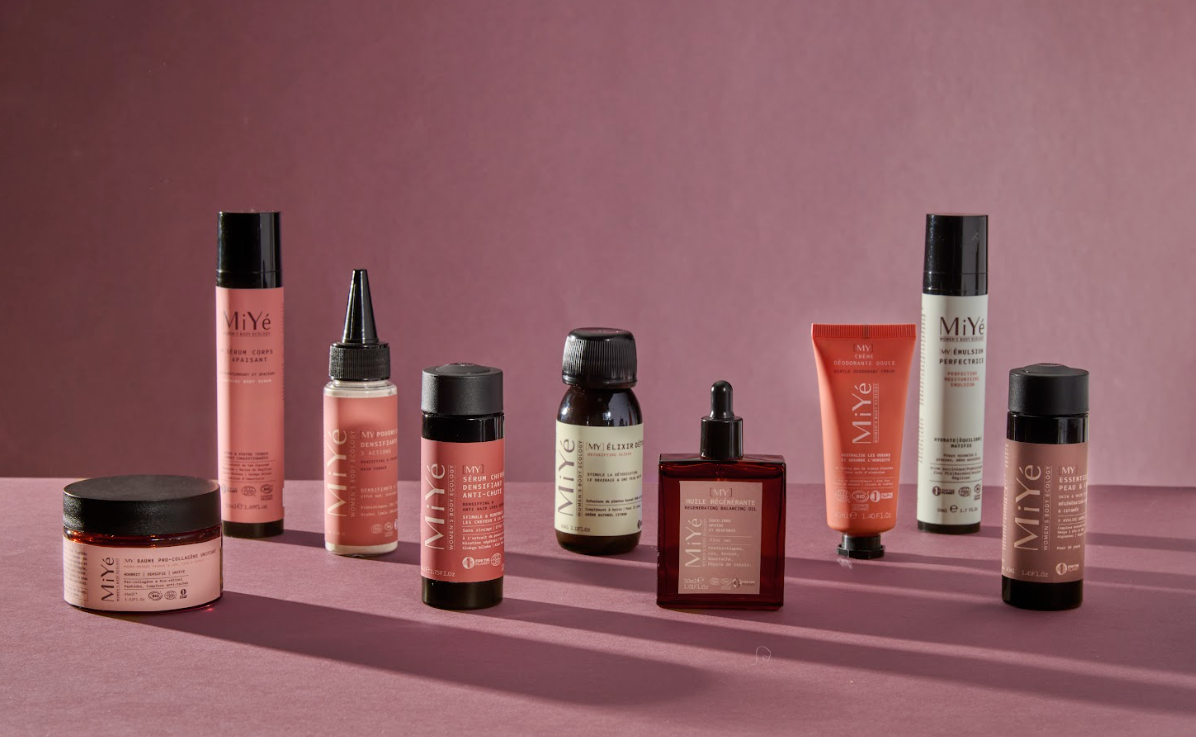
Ceramides at the heart of MiYé formulas
MiYé incorporates plant-derived ceramides into its cosmetic formulations for their unique ability to restore a skin barrier weakened by hormonal fluctuations.
[MY] REGENERATING OIL
Face serum-oil enriched with plant-derived ceramides, postbiotics and essential fatty acids (omega 3 and 6) from grapeseed, flax, borage and jojoba oils.
- Strengthens the skin's protective barrier and improves hydration
- Soothes sensitive skin and reduces redness linked to hormonal fluctuations
- Non-comedogenic, "water-like" texture, suitable during pregnancy and for all skin types
- 87% of testers reported an improvement in their skin's overall appearance*
- Cosmos Organic certified, vegan, free from contraindicated phytohormones
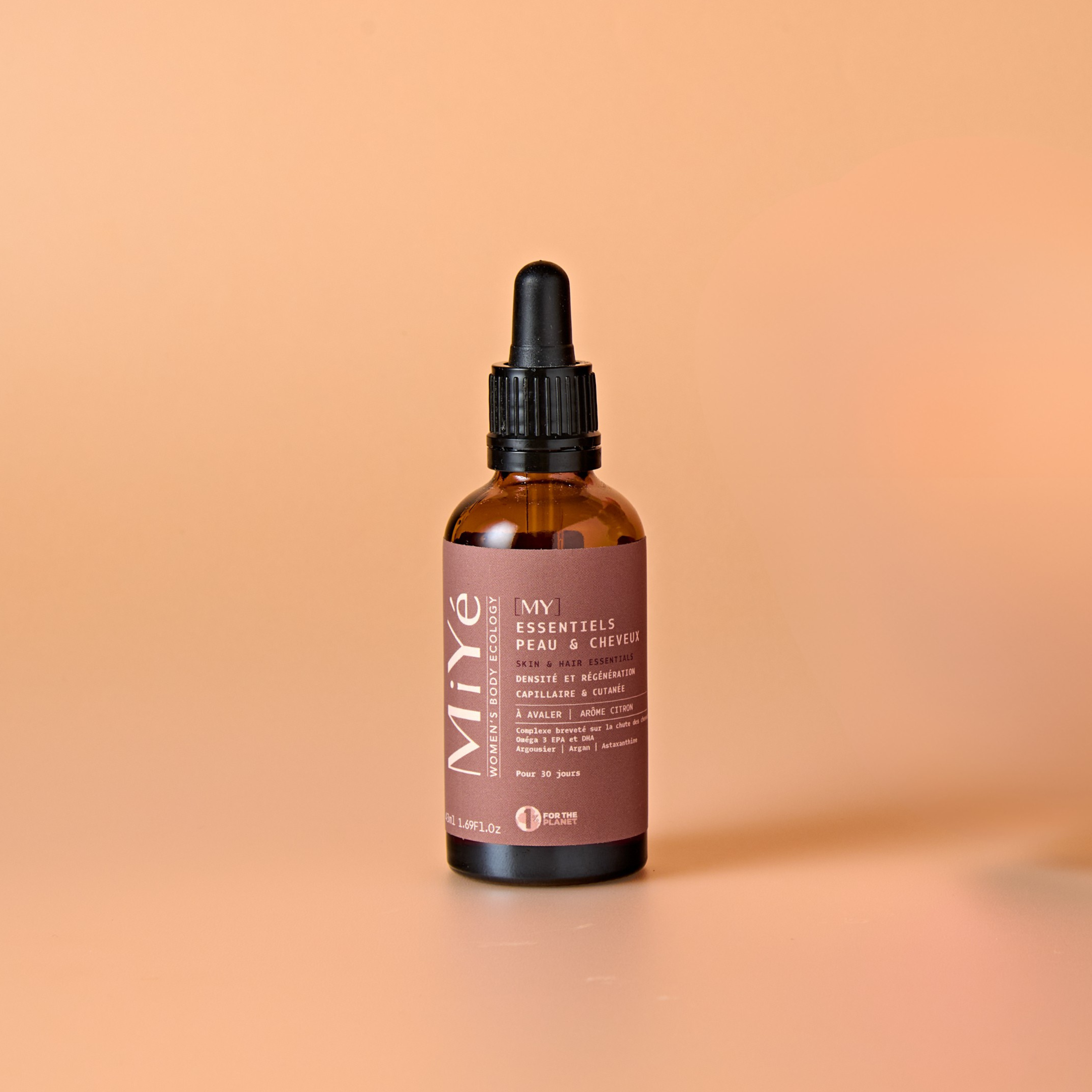
[MY] SKIN & HAIR ESSENTIALS
Food supplement that works in synergy with topical ceramides by stimulating their endogenous production.
- Made with sea buckthorn oil, algae oil and astaxanthin
- Supports skin quality and helps fight oxidative stress
- An In & Out approach that maximizes effects on the skin barrier
Precautions for use
Ceramides are among the best-tolerated cosmetic actives, with a near-perfect safety profile, even for the most reactive skin types.
Adverse effects of ceramides
Adverse effects are exceptional. Rare cases of allergic reactions may occur, mainly linked to other components of the formula rather than to the ceramides themselves.
No major contraindications: ceramides are compatible with pregnancy, breastfeeding, childhood, and skin conditions (eczema, psoriasis, rosacea).
For people with gluten allergies, ceramides derived from rice or soy are preferable to those from wheat. In the vast majority of cosmetics, the extraction process removes allergenic proteins, but some caution is still advised.
⚠️ Note: the efficacy of ceramides depends heavily on formulation quality. Favor products that combine several ceramide subclasses with essential fatty acids.
Frequently asked questions about ceramides
What are the benefits of ceramides for the skin?
Ceramides restore the skin barrier, improve long-lasting hydration, soothe sensitive skin, and protect against external aggressors. They are particularly valuable for mature skin and skin weakened by hormonal fluctuations.
Why do ceramides decline with age?
Ceramide synthesis is regulated by several factors, including estrogen. The hormonal decline of perimenopause, combined with cellular aging, leads to a progressive decrease in their production, which can reach 40% after age 50.
How long does it take to feel the effects of ceramides?
The first effects on skin comfort are felt within a few days. Full restoration of the skin barrier and visible improvement in skin quality take 4 to 8 weeks of regular application.
Can ceramides be combined with other actives?
Ceramides are compatible with nearly all cosmetic actives. They work particularly well in synergy with essential fatty acids, antioxidants (vitamin E, polyphenols) and hyaluronic acid. They can even reduce the irritating effects of retinol and exfoliating acids.
What are the best sources of plant-derived ceramides?
Bio-identical plant-derived ceramides are extracted from rice, wheat, corn and soy. Their structure is very close to that of human skin ceramides and they are fully recognized by the skin.
Sources
- Coderch L, López O, de la Maza A, Parra JL. Ceramides and skin function. Am J Clin Dermatol. 2003;4(2):107-29.
- Meckfessel MH, Brandt S. The structure, function, and importance of ceramides in skin and their use as therapeutic agents in skin-care products. J Am Acad Dermatol. 2014;71(1):177-84.
- Spada F, Barnes TM, Greive KA. Skin hydration is significantly increased by a cream formulated to mimic the skin's own natural moisturizing systems. Clin Cosmet Investig Dermatol. 2018;11:491-497.