




SUMMARY

Creatine is a molecule naturally produced by the body (liver, kidneys) from amino acids.
It is stored in the muscles as phosphocreatine, which helps regenerate ATP, the cells' primary energy source.
Improves sports performance (strength, power, muscular endurance)
Supports muscle development and a more toned physique.
It may improve focus, stabilise mood and support vitality.
Food supplements are not a substitute for a varied and balanced diet or a healthy lifestyle. If in doubt, consult your healthcare professional.
What is creatine and how does it work?
Creatine is a molecule naturally synthesised by the body, mainly by the liver, kidneys and, to a lesser extent, the pancreas. It is produced from amino acids such as arginine and glycine, then released into the bloodstream before being transported to the skeletal muscles, where it is stored.
Inside muscle cells, it converts into phosphocreatine, an energy-rich form that plays a key role in the rapid production of ATP (adenosine triphosphate), often referred to as the cells' "energy currency". During short, intense physical efforts such as a sprint or a strength training session, ATP is rapidly consumed to provide energy.
Phosphocreatine then steps in to rapidly regenerate ATP, extending the muscles' ability to produce energy during short, powerful efforts.
For women, this mechanism is equally essential. Creatine monohydrate supplementation can optimise this energy process. It helps improve muscular performance by increasing strength and power, particularly during high-intensity exercise. It also helps offset certain fluctuations in muscle mass and strength linked to the hormonal changes specific to the female body.
In short, creatine is not limited to supporting muscle development. It also plays an important role in energy management, adapting to the specific needs of active women.

Benefits of creatine for women
Creatine offers many specific benefits for women, both physically and mentally. On the muscular level, it significantly improves sports performance by optimising energy production during intense efforts, which supports better strength and muscular endurance. This improvement helps accelerate muscle development and lean mass gain, resulting in a more toned and defined physique.
It also stimulates intracellular water retention, which gives muscles a fuller appearance without causing excessive bloating or fat gain.
Beyond sports performance, it plays an important role in muscle recovery, reducing post-workout fatigue and making it easier to maintain regular physical activity. It also helps preserve lean mass and bone density, which is particularly relevant for women going through phases of hormonal change, such as menopause, where the risk of osteoporosis increases.
On the cognitive and energy front, recent studies show that it improves alertness, mental endurance and helps combat chronic fatigue, symptoms that can be amplified in women during certain phases of the hormonal cycle or periods of high stress. It may also have a protective effect on cardiovascular health, an important aspect of women's overall wellbeing.
Many women also report an improved sense of general wellbeing and a noticeable improvement in performance during high-intensity training sessions, particularly with approaches such as superset nutrition or routines combining strength training and cardio. This illustrates how easily creatine fits into a sports or women's health routine, whether in monohydrate powder, capsule or pre-workout form.
In summary, it is a versatile food supplement, both effective and safe, that supports women's muscular health, performance and overall vitality, contributing to a better quality of life every day.
Why does creatine support wellbeing during hormonal changes?
Hormonal fluctuations in women, notably the drop in oestrogen levels during the menstrual cycle, pregnancy, postpartum or menopause, can lead to low energy, increased fatigue and mood disturbances. Creatine acts as a major energy support by compensating for this metabolic dip. It optimises ATP production not only in the muscles but also in brain tissue, helping to restore the energy reserves needed to maintain vitality and physical and mental performance.
It has a positive effect on mood stabilisation, particularly during periods of hormonal stress. Several studies indicate that creatine supplementation may ease mental fatigue, improve focus and support better emotional balance. This neuropsychological support is particularly beneficial during periods when stress and hormonal fluctuations affect overall wellbeing, such as perimenopause or postpartum.
These properties make it a relevant food supplement to support women throughout sensitive hormonal phases, contributing to their physical and mental wellbeing, better daily energy management and the maintenance of overall good health.

Common myths and safety of creatine for women
Many misconceptions circulate about creatine, particularly regarding its use by women. Here is a list of common myths along with clarifications based on scientific research:
- Creatine causes weight gain: Taking creatine may lead to a slight increase in weight due to intracellular water retention in the muscles. This effect is temporary and is not linked to fat gain.
- Creatine is only for bodybuilders or men: It is an effective and safe supplement for all athletes, men and women alike, regardless of their activity level.
- Creatine affects female hormones: Scientific studies have shown no effect on the menstrual cycle or fertility. It has no steroidal action and does not alter hormones.
- Creatine is harmful to the kidneys: In healthy individuals, research confirms that it does not cause kidney or liver problems, even with long-term use.
- Creatine causes digestive issues: These effects are rare and often linked to improper use (for example, taken on an empty stomach or not fully dissolved). Splitting the dose and staying well hydrated can prevent this discomfort.
- Creatine causes hair loss: This myth is not supported by reliable scientific evidence.

Regarding safety, creatine monohydrate, particularly in Creapure form, is considered a very safe food supplement for women when taken at recommended doses (generally 3 to 5 grams per day). The International Society of Sports Nutrition recommends creatine as an asset for performance and muscular health, with no notable risks for healthy individuals.
However, women with a medical history of kidney or liver conditions, as well as pregnant or breastfeeding women, are advised to consult a healthcare professional before starting supplementation. Good hydration and appropriate monitoring are also essential for optimal supplementation without side effects.
How to use creatine effectively as a woman?
Creatine supplementation yields better results when it is part of a consistent healthy lifestyle: a balanced diet, quality sleep, regular physical activity and stress management. It supports an already established balance, not replaces it.
To fully benefit from the advantages of creatine, it is important to follow an appropriate dosage and a thoughtful intake method. For women, a daily dose of 3 to 4 grams of creatine monohydrate is generally ideal for supporting muscle mass, improving sports performance and promoting overall wellbeing. This dosage allows for a gradual saturation of muscle creatine stores while avoiding side effects.
Creatine monohydrate, particularly in its high-quality form such as Creapure creatine, is recognised for its stability and bioavailability. It fits perfectly into a natural and targeted supplementation routine, offering a reliable solution for optimising results.
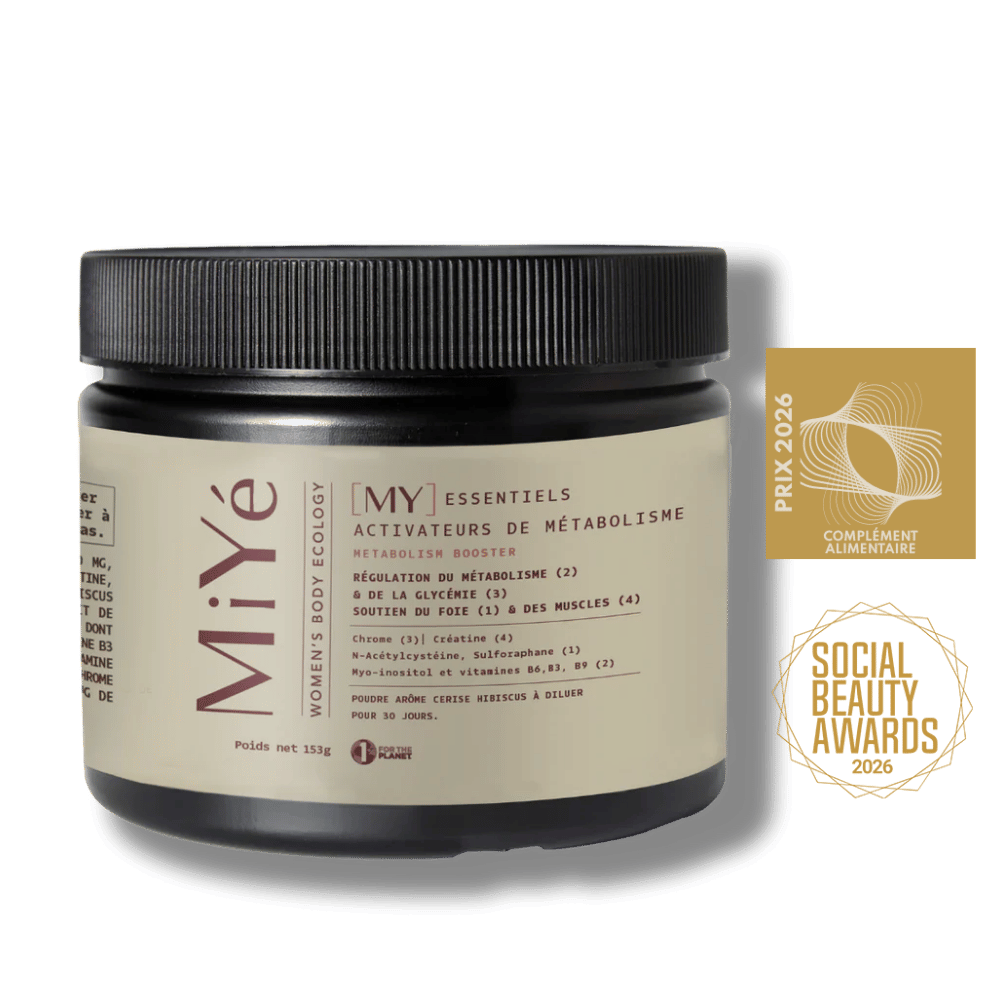
Moreover, innovative products such as those from MiYé combine creatine with active ingredients and metabolic boosters specially designed for women. These formulations are particularly beneficial for those in (peri)menopause or experiencing hormonal imbalances such as PCOS. Presented as a powder to dilute, often sugar-free and in pleasant flavours such as cherry/hibiscus, these products contribute to metabolic and hormonal balance, blood sugar maintenance, while supporting liver health and muscle mass.
Regarding the ideal time to take creatine, it is recommended to take it post-workout, paired with a source of carbohydrates to optimise absorption. However, it remains effective at any time of day, as the main goal is to achieve consistent muscle saturation. Splitting the dose throughout the day may also improve digestive tolerance for some people.
To optimise your results, you can combine creatine with other supplements, such as high-quality protein, to support muscle recovery and lean mass development. Remember to stay well hydrated throughout supplementation to maximise the effects of creatine monohydrate.
By following these practical tips, you can integrate creatine into your sports nutrition routine in a simple and effective way. This supplement, safe and specially adapted to women's needs, will help you improve your performance while caring for your overall health.

FAQ about creatine
What is the best time to take creatine?
The ideal time to take creatine depends on your personal goals. To maximise performance during training, taking it approximately 30 minutes before exercise is recommended.
This helps raise ATP levels, providing immediate energy to the muscles. However, taking creatine right after training is often preferred, as the muscles are then more receptive to its absorption, which supports recovery and the replenishment of muscle stores.
You can also split the dose into two servings, before and after training, or take it at a set time on rest days to maintain a consistent level in the body.
Is creatine safe?
For healthy individuals, creatine monohydrate is considered safe when taken at recommended doses (generally 3 to 5 grams per day). Concerns about harmful effects on the kidneys or liver are not supported by scientific research. In the case of pre-existing kidney or liver conditions, it is however advised to consult a healthcare professional before starting supplementation.
Good hydration is also important to prevent any discomfort.
Does creatine cause weight gain?
Creatine may lead to slight weight gain, but this is mainly linked to water retention at the muscle level, which gives muscles a fuller appearance. This mechanism is temporary and distinct from fat gain. Therefore, creatine does not cause weight gain by increasing body fat, but may contribute to a fuller and more toned physique through increased muscle mass.
Which foods naturally contain creatine?
Creatine is naturally present in certain foods, mainly red meat, fish and, to a lesser extent, poultry. These dietary sources provide a variable amount of creatine, often insufficient to fully saturate muscle stores, particularly in athletes.
This is why creatine monohydrate supplementation in powder or capsule form is an effective option for increasing these stores.
Is it good to take creatine every day?
Yes, it is recommended to take creatine daily, including on rest days. This habit helps maintain a stable level of creatine in the muscles, which optimises its effects on performance, recovery and muscle mass. Contrary to popular belief, it is not necessary to follow a course followed by a break. Continuous low-dose intake is often recommended by experts.

Sources
- International Society of Sports Nutrition position stand on creatine: safety, efficacy and use in sport medicine, Kreider RB et al., Journal of the International Society of Sports Nutrition, 2017.
- Creatine in women's health: a life-stage perspective, Smith-Ryan AE et al., Nutrients, 2021.
- Effects of creatine supplementation on brain function and health, Forbes SC et al., Nutrients, 2022.
- Creatine monohydrate for lean mass, strength and bone density in postmenopausal women: a systematic review and meta-analysis, Naddafha S. et al., Journal of the International Society of Sports Nutrition, 2026.
Key takeaways on creatine for women
Creatine is not just a supplement for muscle development or improved sports performance: it is a genuine ally for women's overall health, regardless of their lifestyle. Whether to increase strength, preserve lean mass, support better recovery, or regulate mood and energy during periods of hormonal change, its benefits are now solidly backed by science.
What matters most is starting with high-quality products, such as creatine monohydrate or Creapure, and following the recommended dosages. Think of this supplementation as a valuable partner on your path to wellbeing. Consider consulting a healthcare professional to adapt its use to your specific needs. Above all, take that first step and discover for yourself the positive effects on your physical fitness and mental health.

Share:
Dark Spots: Which Active Ingredient for an Even Complexion?
Dark Spots: Which Active Ingredient for an Even Complexion?
1 comment
POuvez vous donner les articles et étrudes sités en question ?