






SUMMARY
Key takeaways
Increasing inflammation : over time, the body produces more prostaglandins → stronger uterine contractions + lack of oxygen → more intense pain.
Hormonal imbalance : excess estrogen vs progesterone makes the uterus more sensitive and amplifies pain (up to +30%).
Age & perimenopause : after age 40, hormonal fluctuations make cycles more irregular, heavier, and more painful.
Common gynecological conditions : endometriosis, adenomyosis, and fibroids significantly increase pain and affect a large proportion of women.
Lifestyle & warning signs : stress, diet, and lack of physical activity worsen symptoms; severe or unusual pain = seek medical advice.
Why do periods become more painful over time?
On average, 50 to 90% of women suffer from dysmenorrhea (painful periods) to varying degrees; in 20% of them, the pain is severe enough to disrupt their daily activities (Fertility and Sterility, 2020). This progressive worsening is notably explained by an overproduction of prostaglandins (up to 2.5 times higher according to J Reprod Med, 2019), leading to stronger uterine contractions and local hypoxia of the myometrium. Over the course of cycles, this repeated inflammation can evolve into secondary dysmenorrhea, characterized by more severe and prolonged pain.
Hormonal imbalance, the leading cause of worsening pain
An inadequate estrogen/progesterone ratio increases the sensitivity of uterine nerve fibers and strengthens contractions. According to a BMJ Open study (2021), a relative excess of estrogen can increase pain perception by 30% compared with balanced hormone production.
Age and perimenopause: when periods get worse after 40
As women approach perimenopause (average ages 45–55), around 60% report more irregular and more painful cycles (Menopause, 2022). Hormonal fluctuations can sometimes lead to menorrhagia and stronger cramps, requiring medical reassessment.
Gynecological conditions: endometriosis, adenomyosis, fibroids
Several conditions contribute to increased uterine inflammation and intense cramps: the prevalence of endometriosis is estimated at 10% of women of reproductive age (Lancet, 2018), adenomyosis affects up to 35% of patients undergoing hysterectomy (Hum Reprod, 2017), and fibroids affect more than 50% of women by age 50 (Am J Obstet Gynecol, 2019).
-
Endometriosis
- A chronic disease characterized by the presence of tissue similar to the endometrium outside the uterus (ovaries, fallopian tubes, peritoneum, etc.).
- It causes persistent local inflammation, responsible for intense pelvic pain, especially during menstruation.
- It may be accompanied by digestive symptoms, urinary symptoms, and pain during intercourse.
- It is also associated with fertility difficulties in some cases.
- It affects around 1 in 10 women of reproductive age, with diagnosis often delayed.
Adenomyosis
- It refers to infiltration of the endometrium directly into the uterine muscle (myometrium).
- It leads to an enlarged uterus that is more sensitive and more contractile.
- It is responsible for very painful, long, and heavy periods.
- It can cause a feeling of chronic pelvic heaviness.
- It is often diagnosed in women between 35 and 50 years old, sometimes alongside other conditions such as endometriosis.
Uterine fibroids
- These are benign tumors of the uterine muscle (myomas), and they are very common.
- Their impact depends on their size, number, and location.
- They can cause heavy periods (menorrhagia), pelvic pain, and more intense cramps.
- They are sometimes associated with symptoms such as frequent urination or abdominal discomfort.
- They affect more than 50% of women before age 50, although not all are symptomatic.
Other aggravating factors: stress, diet, and lifestyle
Chronic stress increases cortisol secretion, which can disrupt hormonal balance and exacerbate pain (Psychoneuroendocrinology, 2021). A diet rich in saturated fatty acids and insufficient physical activity are also correlated with increased cramps (Journal of Nutrition, 2020).
How can I tell if my increasingly painful periods require a consultation?
It is normal for periods to come with some degree of discomfort. But when the pain becomes unusual, more intense, or affects your daily life, it may be a sign that it is important to consult a healthcare professional.
Some menstrual pain is not simply “normal” and may reveal an imbalance or an underlying condition.
Warning signs not to ignore Here are the main signals that should prompt you to seek medical advice:
- Very intense pain If the pain prevents you from working, going out, or carrying out your usual activities.
- Pain that worsens over time Periods that become increasingly painful over the cycles are not trivial.
- Pain resistant to standard painkillers If paracetamol or ibuprofen is no longer enough to relieve you.
- Pain outside your period Pelvic pain that persists before or after menstruation.
- Very heavy or unusual periods Very heavy bleeding, the presence of clots, or an abnormally long duration. Severe fatigue or faintness A feeling of extreme exhaustion, dizziness, or faintness during your period.
- Pain during intercourse
- Discomfort or pain during or after intercourse may be a sign worth investigating.
- Associated digestive or urinary issues
- Significant bloating, diarrhea, or pain while urinating during your period.
When should you consult?
If the pain prevents you from working or studying —which happens to around 25% of affected women (Journal of Women’s Health, 2019) — or if it is accompanied by fever, very heavy bleeding, nausea/vomiting, or dizziness, a gynecological consultation is recommended without delay. Signs such as pain that gradually increases despite first-line treatments (anti-inflammatories, antispasmodics) should also be considered warning signs.
Management and gentle solutions
To relieve menstrual pain globally, it is essential to act on inflammation, stress, and hormonal balance at the same time.
Supporting hormonal balance at the root
Supplements such as [MY] Feminine Balance help act on the root causes of pain. Its formula combines adaptogenic and soothing plants such as ashwagandha, lemon balm, and rosemary, known to support the nervous system, reduce inflammation, and help manage hormonal fluctuations. It is also enriched with vitamins B6, B9, and D, which contribute to hormonal regulation and reducing fatigue.
Reducing stress to lessen the intensity of cramps
Stress plays a key role in making pain worse. [MY] Essentials Serenity acts directly on this axis thanks to a synergy of adaptogenic plants (saffron, griffonia, rhodiola) that support mood and serotonin production, combined with three highly bioavailable forms of magnesium and vitamins B and D. This combination helps manage stress better, which is often involved in the worsening of menstrual pain.
Naturally soothing inflammation
In addition, some simple habits remain effective:
- Herbal teas made with chamomile, ginger, or yarrow
- A diet rich in omega-3s
Releasing muscle tension
- Applying heat (hot water bottle at 40–45 °C) to relax the uterine muscle
- Gentle activities (yoga, walking, stretching) to improve circulation
Acting on the nervous system
- Breathing exercises, meditation, sophrology
→ by reducing stress, the intensity of pain often decreases as well
Natural solutions to relieve increasingly painful periods
FAQ
What are the common causes of heavier periods?
Several factors can explain an increase in menstrual flow: uterine fibroids (up to 50%), hormonal imbalances, polyps, adenomyosis, bleeding disorders, thyroid conditions, or, more rarely, endometrial cancer. A medical evaluation is necessary to establish an accurate diagnosis.
How can I assess whether my periods are too heavy?
The Higham score is a validated tool for quantifying menstrual flow: a score > 65 (equivalent to > 40–50 ml of blood loss) indicates menorrhagia (BJOG, 2018). It is calculated as follows: 1 tampon or pad every hour = 5 points, overnight use without leakage = 1 point, clots > 3 cm = 5 points, duration > 7 days = 5 points. A score < 20 is considered light, 20–65 moderate.
Can a copper IUD make my periods worse?
Yes, in 10–20% of users, a copper IUD can increase the duration and volume of bleeding through a local inflammatory reaction (Contraception, 2021). If symptoms worsen, consult a healthcare professional: they may suggest anti-bleeding treatments, iron supplementation, or switching to a hormonal IUD.
What natural solutions are there for painful and heavy periods?
In addition to heat and herbal teas, several complementary approaches may help: gentle abdominal massages, a diet rich in omega-3s (oily fish, flaxseeds), acupuncture (30% reduction in pain according to Acupuncture in Medicine, 2020), and relaxation techniques. If severe pain persists, do not hesitate to consult a doctor.
Sources
- ANSM — Menstrual pain (dysmenorrhea)
https://ansm.sante.fr/dossiers-thematiques/douleurs-menstruelles-dysmenorrhees Explains the role of prostaglandins, the benefits of heat, physical activity, and a healthy lifestyle - Naturactive — Dysmenorrhea: causes, symptoms, and treatments
https://www.naturactive.fr/blog-sante-naturelle/sante-et-bien-etre-au-quotidien/dysmenorrhee-causes-symptomes-et-traitements Highlights plants such as chamomile, yarrow, and lemon balm for their anti-inflammatory and antispasmodic effects - University of Lille — Dysmenorrhea and premenstrual syndrome
https://pepite-depot.univ-lille.fr/LIBRE/Th_Pharma/2023/2023ULILE133.pdf Highlights the role of diet (fiber, antioxidants) in reducing inflammation and pain

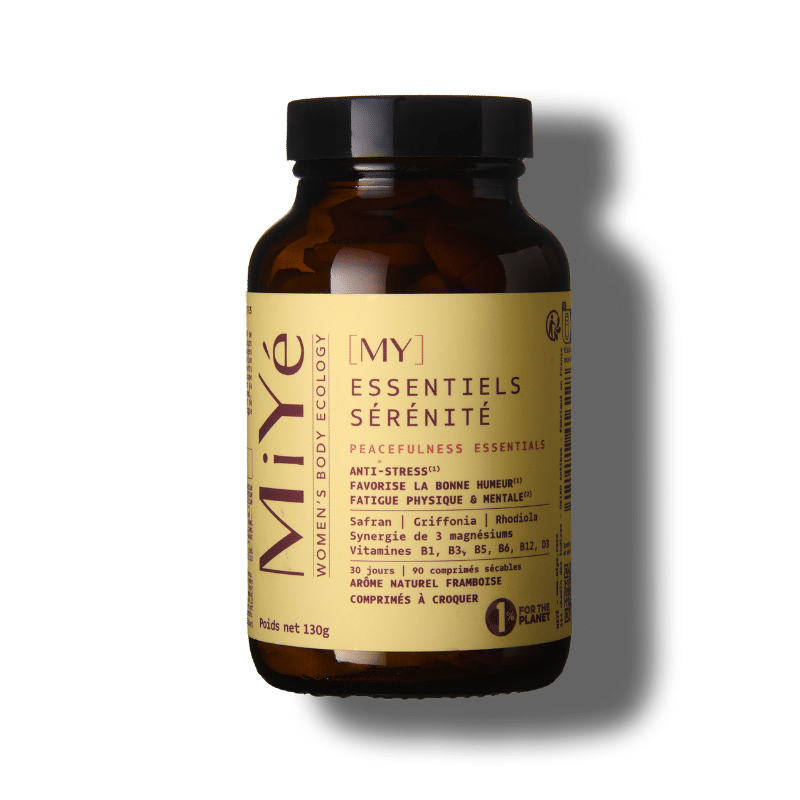
![Pilulier [MY] Essentiels équilibre féminin sur fond transparent](http://www.miye.care/cdn/shop/files/Visuels-shop-25.png?v=1747987949&width=800)
Share:
Menopause and brain fog: What is brain fog ?
Fatigue Before and During Your Period: Causes and Natural Solutions