




SUMMARY

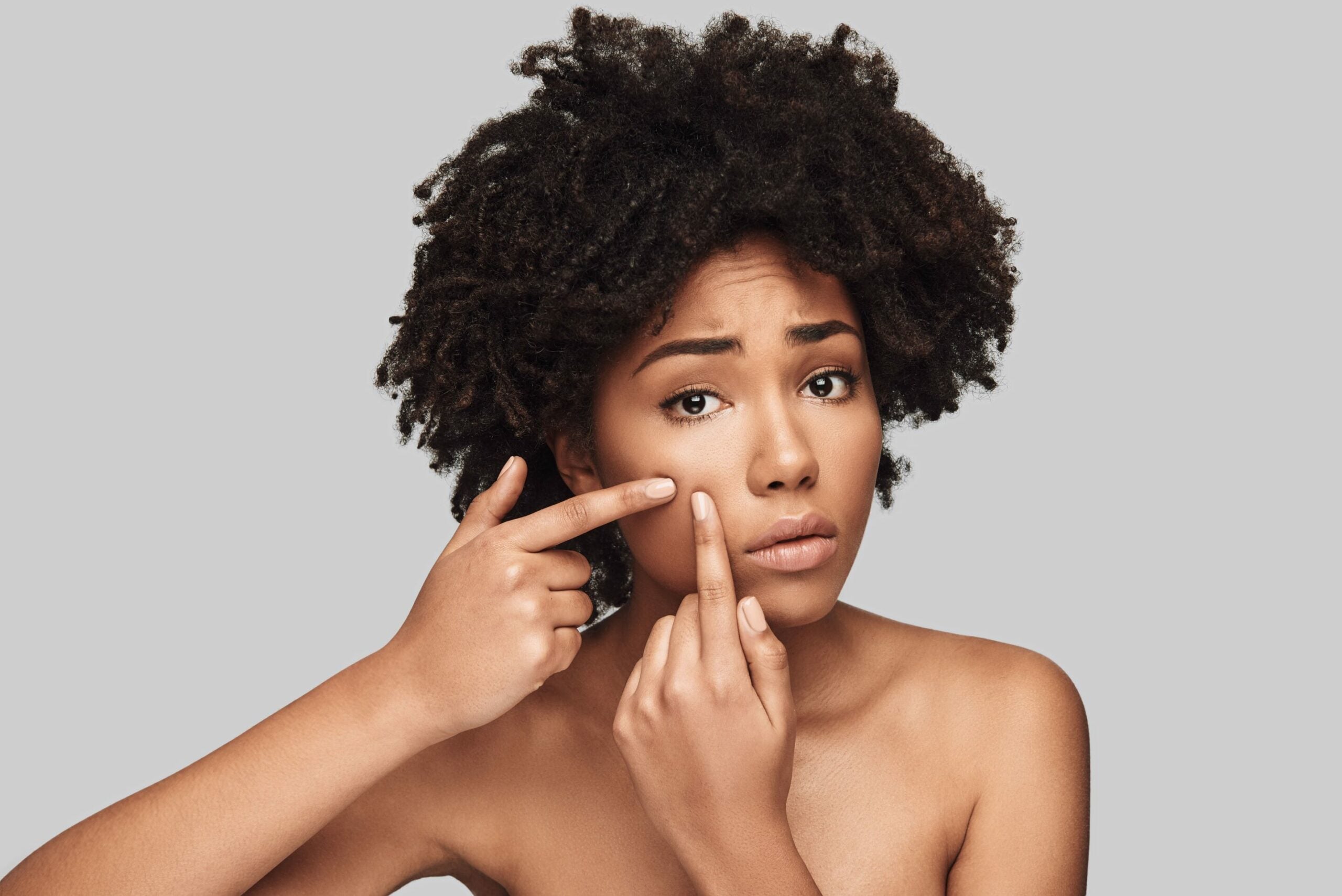
Salicylic acid is a well-established active ingredient for acne, thanks to its antimicrobial and exfoliating properties, but it can be irritating and photosensitising for sensitive skin.
Succinic acid is a natural alternative increasingly used in cosmetics for its antibacterial, anti-inflammatory and sebum-regulating properties.
Unlike salicylic acid, succinic acid is gentler on the skin and better tolerated by sensitive or reactive skin types.
It helps reduce blemishes, calm inflammation, support healing and promote cell renewal.
Thanks to its ability to maintain hydration and preserve collagen, it also contributes to a brighter, healthier-looking complexion.
Learn more about succinic acid and salicylic acid
If you are looking for a skincare product to help you address blemishes, you have probably come across salicylic acid. But did you know there is an alternative to this popular ingredient? Succinic acid is an entirely natural solution for acne-prone skin and offers many advantages over salicylic acid. Let us look at why succinic acid could be the better choice for your skin.

Salicylic acid: why is it controversial?
Salicylic acid is a star ingredient in cosmetic products. It has an antimicrobial effect that helps purify the skin and reduce the appearance of spots. It also stimulates cell renewal and collagen synthesis, which helps the skin look younger, more radiant, and helps fade scars.
However, it is not recommended for sensitive or reactive skin types. As the skin barrier is already fragile, salicylic acid can directly aggravate the skin and trigger reactions of varying severity. This ingredient is therefore often too harsh for the skin. Salicylic acid is also photosensitising, and can cause skin reactions when exposed to UV rays.
Despite its many qualities, studies have raised concerns about the potential endocrine-disrupting properties of salicylic acid. This molecule is classified as CMR category 2, meaning there are serious doubts regarding its toxicity on reproduction, as well as its mutagenic and carcinogenic potential.
These concerns have not yet been confirmed, but the ingredient has undergone an in-depth European review, notably by the Scientific Committee on Consumer Safety, to determine whether it should be phased out by the cosmetics industry.
Salicylic acid therefore carries significant drawbacks. This is why it can be beneficial to favour other active ingredients for purifying the skin, such as succinic acid.
What is succinic acid?
Succinic acid is a natural dicarboxylic acid found in many plants and animals. It has been used as an ingredient in traditional medicine for centuries and, more recently, has gained popularity as a skincare ingredient thanks to its antimicrobial and anti-inflammatory properties. According to studies, the topical application of succinic acid on lesions caused by acne-triggering bacteria significantly reduces inflammation and helps prevent the formation of new blemishes. It is also an effective soothing active ingredient, as it can help calm the skin and support wound healing.
Due to its similarity to the skin's natural lipids, succinic acid helps regulate excess sebum production while maintaining skin hydration. It also supports cell renewal and contributes to preserving collagen, helping the skin maintain its firmness over time.
The physical and biological properties of succinic acid
Succinic acid comes in the form of a white powder that is stable and easily soluble in water. These characteristics make it particularly well suited to cosmetic formulations: it integrates into skincare products without altering their texture or colour.
From a biological standpoint, it is a natural intermediate in the Krebs cycle, the metabolic process through which our cells produce energy. This connection to cellular metabolism gives it antioxidant properties, which help protect the skin from oxidative stress and support cell renewal.
Stable in light and heat, it retains its efficacy over time, an essential criterion for guaranteeing the quality and consistency of a cosmetic product.


The difference between succinic acid and salicylic acid
One of the main advantages of succinic acid over salicylic acid is its gentleness on the skin. Salicylic acid can often be too harsh, particularly for sensitive skin, leading to redness or irritation.
Succinic acid is mild and non-irritating, making it ideal for those with sensitive skin who want to maintain a fresh complexion without worrying about negative side effects. In addition, succinic acid has a structure close to the skin's natural lipids, so it helps maintain healthy hydration levels in the skin, keeping the complexion fresh and radiant.
Another advantage of succinic acid is that it does not dry out the skin the way salicylic acid does. Because succinic acid helps retain moisture rather than stripping it away, your skin will feel soft and supple rather than tight and flaky after using products containing this active ingredient. Furthermore, succinic acid leaves no residue, so you do not need to worry about clogged pores or any build-up of oils.
The benefits of succinate in dermatology and skincare
Succinic acid-based skincare products are multiplying across beauty ranges, driven by tangible results and a level of skin tolerance that surpasses conventional acids. Here is why this active ingredient deserves a place in your routine.
The effects on acne and skin health
In vitro studies have documented the effects of succinic acid on acne lesions. Applied topically, it contributes to reducing the inflammation associated with blemishes and limiting the proliferation of bacteria responsible for breakouts.
Unlike more aggressive acids such as salicylic or glycolic acid, succinic acid respects the skin's natural balance. Sebum is gradually regulated, redness subsides, and skin tolerance remains good even with regular use. It is suitable for both younger skin prone to blemishes and adult skin that is reactive or sensitive.
FAQ
What is another name for salicylic acid?
Salicylic acid is also known as 2-hydroxybenzoic acid or ortho-hydroxybenzoic acid.
It is also recognised as the precursor of aspirin, with which it shares certain anti-inflammatory properties.
What is succinic acid?
Succinic acid is a natural (dicarboxylic) acid found in plants and living organisms.
In cosmetics, it is used for its:
- antibacterial properties
- anti-inflammatory properties
- sebum-regulating properties
- skin-soothing properties
It is particularly valued for being gentler and better tolerated, especially by sensitive skin types.
Sources:
-
Scientific Committee on Consumer Safety (SCCS), European Commission, Opinion on salicylic acid in cosmetic products
https://health.ec.europa.eu/scientific-committees/scientific-committee-consumer-safety-sccs_en
(CMR classification and safety assessment of salicylic acid in cosmetics, URL to be refined to the specific opinion) -
Ameli, Acne: treatment and skincare
https://www.ameli.fr/assure/sante/themes/acne/traitement
(active ingredients used in blemish-targeting skincare, including salicylic acid) -
PubMed, antimicrobial and anti-inflammatory properties of succinic acid
https://pubmed.ncbi.nlm.nih.gov/
(in vitro studies on succinic acid and acne lesions, URL to be refined to the specific study)

![Flacon en verre [MY] Huile Régénérante et ses macarons : finaliste prix d'excellence de la beauté Marie-Claire, Bio et EcoCert](http://www.miye.care/cdn/shop/files/151_1.webp?v=1775138766&width=600)
![[MY] Essential skin and hair, anti-hair loss oil for women, and her macaron finalist Marie-Claire of the beauty award of excellence](http://www.miye.care/cdn/shop/files/Visuels_shop_89.png?v=1773306175&width=1000)
Share:
What are the harmful effects of hot water on skin microbiota ?
What are the harmful effects of hot water on skin microbiota ?