






SUMMARY
Discover Happy Hormones, a channel dedicated to educating women about how their hormones and their bodies work, demystifying hormonal cycles and exploring how nutrition, stress, and lifestyle impact hormonal health.
Taking care of your health through the different phases of hormonal life
The human body is subject to hormonal fluctuations throughout life, and these variations can impact our body. Three life stages where hormones play a key role are puberty, pregnancy, and menopause. At each of these stages, it is crucial to understand the associated health risks and take preventive measures to ensure optimal well-being. In this article, we explore the health risks linked to each hormonal phase and the precautions to take.

Puberty and associated risks
Puberty marks the beginning of sexual maturation in teenagers, accompanied by significant hormonal changes. This phase is essential for physical and emotional development. During adolescence, the brain triggers the release of hormones by the ovaries: oestrogen and progesterone.
Oestrogens are responsible for the development of female organs at puberty, but they also affect mood and libido, while acting on the body (for example on fat distribution, bone strengthening, blood circulation, etc.). Progesterone is produced by the ovaries and helps create an environment favourable to pregnancy. Thanks to these two hormones, the hormonal cycle and ovarian cycle are established and will repeat until menopause, allowing ovulation roughly every 28 days through several phases.
At puberty, it is common to experience headaches or acne, mainly due to the overactivity of the sebaceous glands. However, certain health risks can also arise:
-
Mental health:
Hormonal fluctuations can also affect teenagers’ mental health, increasing the risk of depression and anxiety. Adolescence, with the onset of puberty, is a developmental period during which there is greater vulnerability to the emergence of psychopathologies.
-
Cardiovascular risks:
During puberty, it is crucial to pay attention to eating habits and physical activity, as unhealthy choices can contribute to obesity, hypertension, and high cholesterol levels.
-
Type 2 diabetes:
The critical time for diabetes is puberty. At this age, the risk of developing type 2 diabetes increases if there is a genetic predisposition. The body changes, particularly hormonally, and growth stops at the end of puberty.
To minimise health risks during puberty, it is essential to take preventive measures and promote a healthy lifestyle. It is important to adopt a balanced diet, avoid excess sugar and fat, and encourage regular physical activity to maintain good health and strengthen muscles and bones.

Health risks during pregnancy
Pregnancy is a period of profound hormonal and physiological changes for women. Hormone levels are completely shaken up during pregnancy. In the first trimester, the body produces more and more progesterone, which can cause intense fatigue. Oestrogen levels then rise significantly as the pregnancy progresses, strongly impacting mood and helping to restore energy.
These pregnancy hormones also support foetal development, thickening of the uterine lining to welcome the baby, changes in skin and hair, and they help prepare for lactation, for example. Because they act on other organs, they can also have less desirable effects such as constipation, fainting, water retention, or anxiety.
During this period, it is important to monitor certain health risks:
Cardiovascular risks:
Biological changes linked to pregnancy create a higher-risk situation for cardiovascular disease. Pregnant women can be prone to high blood pressure, preeclampsia, and other cardiovascular complications, which require regular medical monitoring.
Gestational diabetes:
Gestational diabetes, or pregnancy diabetes, is an increase in blood sugar that appears during pregnancy and disappears after childbirth. It affects the health of both mother and child. During pregnancy, regulation of the pregnant woman’s blood sugar changes. Gestational diabetes is a disorder of sugar tolerance, with a more or less significant increase in blood glucose (amount of sugar in the blood). The risk of gestational diabetes is higher in cases of overweight, a history of diabetes, or if the pregnant woman has polycystic ovary syndrome (PCOS).
Stroke and blood clots:
Hormonal changes during pregnancy can increase the risk of blood clots and stroke, especially in women with pre-existing risk factors. The risk of stroke is three times higher in pregnant women than in young adults. Pregnant women undergo physiological changes that may increase the risk of vascular events. Pregnancy-related high blood pressure, overweight, or gestational diabetes, which are common in pregnancy, all increase stroke risk. That said, stroke remains rare during pregnancy, estimated at 10 per 100,000 births.
To minimise health risks during pregnancy, it is important to take preventive measures and receive appropriate medical follow-up. Adopting a healthy diet, staying active, and managing stress helps reduce cardiovascular and stroke risks. Regular medical appointments and open communication with healthcare professionals are also essential for a healthy pregnancy.

Menopause: What are the health impacts?
Menopause marks the end of the fertile period in women and is characterised by a significant decrease in sex hormones. Menopause is a natural phenomenon. It occurs when the ovaries stop producing hormones (oestrogens and progesterone) and releasing an egg each month. Menopause can cause symptoms such as hot flashes, insomnia, fatigue, irritability, and more.
However, menopause also increases the risk of certain diseases:
Osteoporosis:
The drop in oestrogen levels has long-term consequences for bones, blood vessels, and the heart. After menopause, the risk of bone demineralisation is higher, leading to fragile bones and fractures in the event of a fall: this is osteoporosis. This condition mainly affects postmenopausal women, with a prevalence two to three times higher than in men of the same age. Read our article on the link between menopause and osteoporosis in 5 questions.
Cardiovascular disease:
Although the risk of cardiovascular disease (high blood pressure, coronary artery disease, atherosclerosis, heart attack, stroke) is lower in women than in men, it increases after menopause. Ten years after menopause, women’s cardiovascular risk is as high as that of men of the same age. The drop in female hormones can increase cardiovascular risk, and factors such as smoking or overweight further amplify it. It is therefore essential to maintain a healthy lifestyle and have regular checks of blood pressure and cholesterol levels.
Weight gain:
Hormonal changes can make weight management more difficult during menopause. This weight gain is linked to an increase in fat tissue and a change in fat distribution, which accumulates mainly in the abdominal area (and much less on the thighs and buttocks), while muscle mass decreases.
Although menopause is inevitable, it is possible to take preventive measures and manage associated health risks. Adopting a healthy lifestyle, with a balanced diet rich in calcium and vitamin D, combined with regular physical activity and good stress management, can help strengthen bones and prevent osteoporosis. Regular health check-ups help monitor cholesterol levels, blood pressure, and other cardiovascular risk factors.
Hormonal fluctuations at different life stages can have a significant impact on cardiovascular health, diabetes, stroke, and other health risks. It is crucial to be aware of these risks and take preventive measures from puberty onwards by adopting a healthy lifestyle, with special attention to diet and physical activity. During pregnancy, regular medical monitoring is essential to detect and manage potential risks. Finally, during menopause, preventive measures such as a balanced diet and regular health check-ups can help maintain good health. By taking care of our health at every hormonal phase, we can improve our overall well-being and reduce the risk of complications in the future.

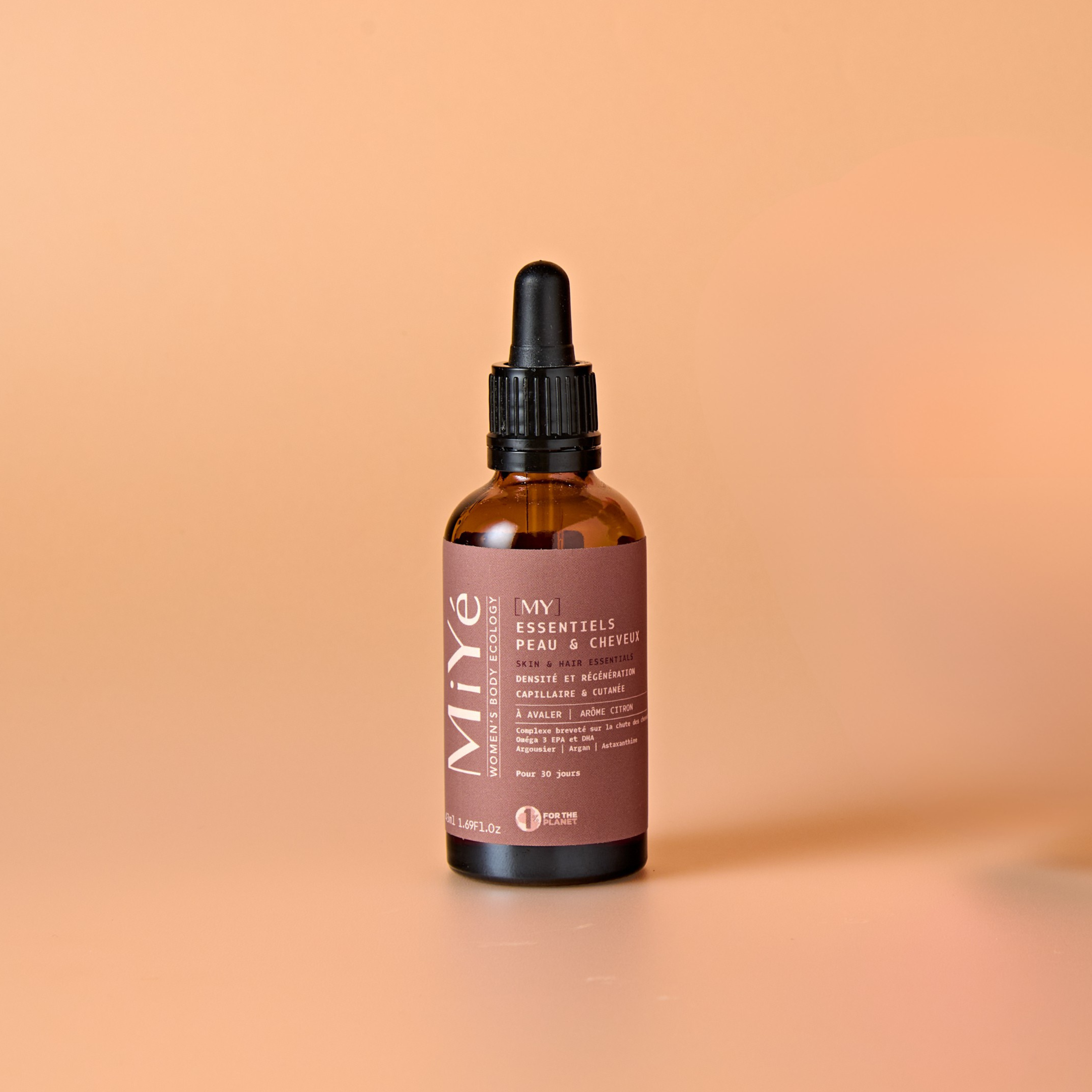
To relieve symptoms during this stage of life, MiYé offers natural solutions designed for these different imbalances, to gently support women’s cycles in a natural and eco-friendly way. Discover the MiYé range, including herbal teas, dietary supplements, balancing intimate gels and other products dedicated to this period.
Sources
- Gestational diabetes (pregnancy diabetes): definition and consequences <internet>. Available at: https://www.ameli.fr/assure/sante/themes/diabete-gestationnel/definition-facteurs-risque-consequences</internet>
- Pregnancy and stroke risk in women | Heart and Stroke Foundation <internet>. Available at: https://www.coeuretavc.ca/articles/grossesse-et-risque-d-avc-chez-les-femmes</internet>
- Vascular diseases of pregnancy – Santé publique France <internet>. Available at: https://www.santepubliquefrance.fr/maladies-et-traumatismes/maladies-cardiovasculaires-et-accident-vasculaire-cerebral/maladies-vasculaires-de-la-grossesse/la-maladie/#tabs</internet>
- Menopause – symptoms, causes, treatments and prevention – VIDAL <internet>. Available at: https://www.vidal.fr/maladies/sexualite-contraception/menopause.html</internet>
- Menopause: at what age and with what symptoms? <internet>. Available at: https://www.ameli.fr/assure/sante/themes/menopause/symptomes-diagnostic</internet>
- Menopause: what are the health impacts? <internet>. Available at: https://www.ameli.fr/assure/sante/themes/menopause/menopause-quelles-repercussions-sur-la-sante</internet>
- Maternal deaths from stroke. Results of the ENCMM, FRANCE 2010–2012 – ScienceDirect <internet>. Available at: https://www.sciencedirect.com/science/article/abs/pii/S2352580017302198</internet>
- Puberty (adolescence): risk factors and who is at risk <internet>. Available at: https://www.passeportsante.net/fr/Maux/Problemes/Fiche.aspx?doc=puberte-pm-les-signes-de-la-puberte</internet>
- When adult diabetes strikes young people – Planete sante. When adult diabetes strikes young people. Available at: https://www.planetesante.ch/Magazine/Bebes-enfants-et-adolescents/Puberte-et-adolescence/Quand-le-diabete-des-adultes-frappe-les-jeunes

![Pilulier [MY] Essentiels équilibre féminin sur fond transparent](http://www.miye.care/cdn/shop/files/Visuels-shop-25.png?v=1747987949&width=800)


Share:
What are the different experiences with endometriosis?
Natural remedies for menopause hot flashes
1 comment
Merci pour le partage sur ce sujet de la ménopause souvent peu abordée ! Je partage d’autres informations utiles à vos lectrices sur les questions à propos de la ménopause : www.dereglee.com