








Key Takeaways
Drop in estrogen during menopause → imbalance of the vaginal and gut microbiota + symptoms (dryness, infections, digestive issues).
Probiotics, especially Lactobacillus and Bifidobacterium strains, can help restore the balance of the vaginal microbiota.
Lactobacillus rhamnosus and Lactobacillus crispatus → vaginal health
Bifidobacterium infantis and Bifidobacterium longum → digestive health
Lactobacillus reuteri → bone health
Probiotics are a highly relevant natural support to better navigate the imbalances associated with menopause.
Hormonal Changes During Menopause
Menopause brings about a significant decrease in estrogen and progesterone hormones in a woman's body. Understanding the benefits of probiotics on the vaginal and gut flora during menopause, and why our hormones play such a crucial role throughout our bodily systems—including reproductive and digestive health—is essential.
These hormonal shifts can trigger various symptoms of discomfort:
- Hot flashes
- Weight gain
- Vaginal dryness
- Sleep disturbances
- Mood fluctuations
Effect of Estrogen on the Vaginal Microbiota
The vaginal microbiota is made up of both beneficial and pathogenic bacteria. Estrogen promotes the abundance of lactobacilli, which are probiotics that maintain a low pH and inhibit the growth of pathogenic bacteria. During menopause, declining estrogen levels can disrupt this microbiota, increasing vulnerability to infections.
Impact on the Digestive System
Hormones also influence the gut microbiota. The drop in estrogen levels perturbs this equilibrium, leading to digestive issues such as constipation or bloating. Here too, probiotics can act correctively by restoring microbial balance.
What is the Role of Probiotics in Menopause and for Overall Health?
Probiotics encompass various strains of live, active bacteria, such as Lactobacillus and Bifidobacterium. These offer multiple benefits for women's health during menopause, particularly regarding the composition of their microbiota.
Probiotics Support the Vaginal Microbiota

Strengthening your vaginal microbiota with probiotics helps lower the risk of common vaginal infections experienced during menopause. Lactobacilli restore pH balance by producing lactic acid, thereby creating a highly unfavorable environment for pathogenic bacteria.
For instance, using probiotics containing strains of Lactobacillus acidophilus enhances your vaginal health. Targeted local applications—such as intravaginal probiotics—provide direct benefits to combat vaginal dryness and infections, leaving the vaginal flora restored and healthier.
Probiotics and Improved Digestion

Alongside the vaginal microbiota, probiotics also work to cultivate a balanced gut microbiota, assisting with food digestion, nutrient assimilation, and toxin elimination. Supplementing with probiotics thus minimizes the intestinal discomforts associated with menopause.
When comparing two groups of menopausal women, those who received probiotic supplements showed fewer digestive symptoms compared to those who did not consume any. This difference highlights the efficacy of probiotics as an excellent digestive support during this phase of a woman's life.
The Different Types of Probiotics

Classification Criteria for Probiotics:
The Strain
The strain is the specific classification of a probiotic. It groups bacteria derived from the same sub-family that fulfill the exact same role within our body.
The Species
More specific than the genus, the species encompasses different strains of bacteria that share similar traits but remain distinct due to their unique properties.
The Genus
The genus is the broadest category grouping together various distinct types of bacteria, such as Lactobacilli, Bifidobacteria, Bacilli, and Saccharomyces.
Lactobacillus Probiotics

Lactobacillus is the most well-known type of probiotic. It is highly diversified, containing bacteria that produce lactic acid, and includes over 100 different species. Their role is to protect the intestinal barrier by improving its permeability. Their primary actions include:
- Promoting intestinal transit
- Boosting immunity
- Improving sleep quality
- Acting positively on cholesterol levels
Bifidobacterium Probiotics

The Bifidobacterium type, on the other hand, belongs to what are known as anaerobic bacteria. Like Lactobacilli, they are crucial for the proper functioning of the body. They have a regulating action on intestinal inflammation. They feature 4 primary actions:
- Supporting the immune system
- Enhancing the body's ability to cope with stress
- Reducing digestive issues
- Maintaining mood balance
How Do Microbiotas Evolve During Menopause?
Vaginal Microbiota
Throughout her development, a woman goes through more or less major shifts in her vaginal microbiota:
- During puberty: the flora sets up hormones that thicken the vaginal mucosa, and glycogen production allows for the colonization of the flora by Lactobacilli.
- dishonesty During menstruation: these lactobacilli temporarily decrease due to the alkalinity of menstrual flow, which increases the pH of the vaginal flora.
- During pregnancy: when pregnant, women produce higher levels of hormones that cause an increase in Lactobacilli.
- Menopause period: during menopause, estrogens decline progressively; in some women, this may give rise to dysbiosis, resulting in an imbalance in bacterial levels.
Gut Microbiota
- Young adulthood and adulthood: Once adulthood is reached, the microbiota becomes stable but remains highly influenced by diet and lifestyle. Menstrual cycles and sex hormones (estrogen and progesterone) affect this gut microbiota. Hormonal variations often modify gut permeability and thus alter microbial composition.
- Pregnancy: The pregnancy period is ripe for significant adjustments; risks of inflammation are higher, often linked to an increase in certain bacteria, serving as a preparatory stage for the body ahead of delivery.
- Menopause: During the menopause phase, studies indicate that low estrogen levels correspond with an increase in certain bacterial strains. This drop is directly linked to menopause, resulting in lesser microbial diversity and opening the door to a higher risk of potential pathogens.
Factors Influencing Microbiota Evolution
The factors influencing our microbiotas are quite diverse; we have listed the main areas to watch over to avoid sudden, disruptive shifts in our microbiotas:
- Sex hormones: variations in estrogen and progesterone levels.
- Diet: the diversity and richness of your meals; fiber tends to sustain a healthy microbiota.
- Lifestyle: physical activity, stress levels, and consistent sleep patterns directly impact gut health.
- Medications: antibiotics can disrupt the microbiota, while probiotics and prebiotics favor the maintenance of your health.
Which Probiotics are Recommended During Menopause?
Specific Beneficial Strains
The strains Lactobacillus rhamnosus and Bifidobacterium bifidum prove particularly useful for improving gynecological and digestive health. It is recommended to choose formulas that include these specific strains.
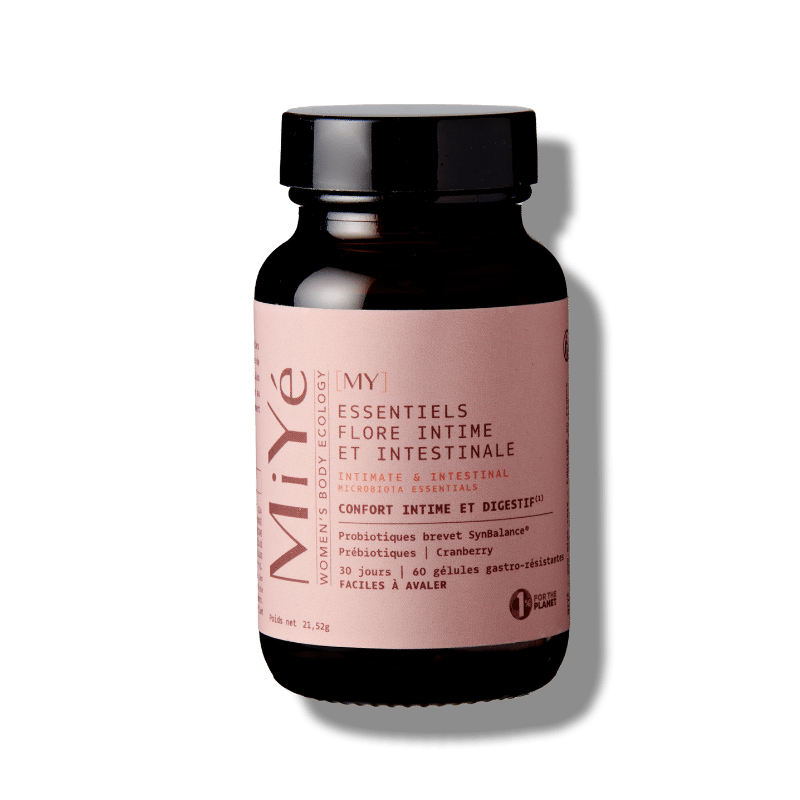
Miyé offers a combination designed specifically for menopausal women.
For Vaginal Health
Many probiotics help restore and maintain vaginal health; however, some stand out for delivering highly specific effects:
Lactobacillus rhamnosus: demonstrates efficacy against yeast infection issues affecting the vagina and vulva.
Lactobacillus crispatus: being naturally present in the largest numbers within a healthy vaginal microbiota, it prevents bacterial vaginosis and helps maintain mucosal hydration, targeting vaginal dryness.
For Gut Health
- Bifidobacterium infantis: according to the French National Society of Gastroenterology, it is the most suitable and shows the best results against irritable bowel syndrome (IBS).
- Bifidobacterium longum: this strain is also capable of mitigating irritable bowel syndrome by acting on gut permeability, leading to a reduction in symptoms like abdominal pain, bloating, and diarrhea.
For Bone Health
- Lactobacillus reuteri: according to recent research, it is the strain most capable of promoting an increase in bone mineral density in the body.
- Lactiplantibacillus plantarum HEAL9, Lactiplantibacillus plantarum HEAL19, and Lacticaseibacillus paracasei 8700:2 were used in a study where they demonstrated efficacy in limiting bone loss in ovariectomized mice (inducing a drop in estrogen comparable to that experienced by women during menopause).
Method of Administration
Probiotics can be administered via capsules, tablets, or powders. Liquid forms and yogurts enriched with probiotics are also popular choices. Everyone can choose according to their dietary preferences and lifestyle.
Recommended Dosage
An effective dosage generally begins around a few billion CFU (Colony Forming Units) per day. For specific needs related to menopause, higher dosages may sometimes be required.
How to Incorporate Probiotics into Your Diet?
Foods Rich in Probiotics:
Milk Kefir
The main probiotics present in milk kefir include:
- Lactobacillus kefiranofaciens: A lactic acid bacterium specific to kefir, beneficial for the immune system and digestion.
- Lactobacillus acidophilus: Helps balance gut flora and improve digestion.
- Bifidobacterium bifidum: Contributes to digestive health and can reduce intestinal inflammation.
- Saccharomyces cerevisiae: A yeast that assists with digestion and the production of certain vitamins.
Water/Fruit Kefir
Fruit kefir, or water kefir, is a fermented drink made from sugary water or fruit juice. Water kefir grains differ slightly from milk kefir grains and mainly contain lactic acid bacteria and yeasts. Typical probiotics include:
- Lactobacillus brevis: Known for improving digestion and strengthening the immune system.
- Lactobacillus hilgardii: Associated with gut health and vitamin production.
- Saccharomyces cerevisiae: A common yeast, also present in milk kefir, beneficial for gut health.
Kombucha
The main probiotics present in kombucha include:
- Brettanomyces bruxellensis: A yeast that produces acids and esters, contributing to the complex aromas of kombucha.
- Lactobacillus (various species): Support gut health and digestion.
- Acetobacter: An acetic acid bacterium that helps convert the alcohol produced by yeasts into acetic acid, giving kombucha its signature tangy taste.
Sauerkraut
Sauerkraut is a dish rich in beneficial bacteria for the gut, containing:
- Leuconostoc mesenteroides,
- Lactobacillus plantarum,
- Lactobacillus brevis,
- Pediococcus, and Enterococcus.
Kimchi
Kimchi is a Korean dish primarily made of cabbage, rich in Lactobacillus kimchii, which exerts a highly positive effect on the gut flora.
Additional Benefits of Probiotics
Beyond the notable improvements related to menopause symptoms, probiotics offer numerous other advantages for the female body.
Better Nutrient Absorption
By promoting a good intestinal balance, probiotics enhance the absorption of essential nutrients like calcium and magnesium, which contribute to the maintenance of normal bones—a benefit that is particularly vital during the post-menopause phase.
Strengthening the Immune System
Probiotics contribute to maintaining the body's natural defenses by supporting microbiota balance, which can help limit vulnerability to common infections during menopause.
Clinical trials have shown that women taking probiotics had lower infection rates and exhibited more robust immune responses compared to those who did not consume them.
The MiYé Probiotic to Support Your Flora Daily
RECOMMENDED PRODUCT
A patented probiotic complex that acts primarily on the vaginal and gut flora. The synergy of the 4 lactobacillus strains makes its composition unique, backed by clinical trials. It helps preserve healthy intimate and intestinal flora.
It is clearly demonstrated that probiotics offer multiple advantages during menopause. Understanding their role and knowing how to seamlessly weave them into a daily routine can significantly enhance the quality of life for women going through this natural phase of their life cycle.
Sources
- Lewis F.M.E. et al. — The vaginal microbiota during menopause: the role of estrogen and Lactobacillus
- Rondanelli M. et al. — Probiotics and menopause: current data on vaginal and gut microbiotas
- Nilsson A.G. et al. — Lactobacillus reuteri reduces bone loss in postmenopausal women with low bone mineral density: a randomized, double-blind, placebo-controlled trial
- French National Society of Gastroenterology (SNFGE) — Recommendations on irritable bowel syndrome
- ISAPP — International Scientific Association for Probiotics and Prebiotics — Scientific definition of probiotics and quality criteria
![[MY] INTIMATE BALANCING MOISTURIZING GEL 20mL](http://www.miye.care/cdn/shop/files/Visuels_shop_93.png?v=1773306838&width=1000)
Share:
What impact do hormones have on sleep?
Matcha and its health benefits