

ARNICA
Rich in anti-inflammatory and analgesic principles, is recognized for its calming and softening properties.
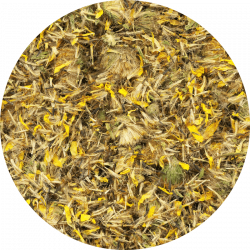

ARNICA :
RELAXES ⎪ SOOTHES ⎪ RELIEVES TENSION
What is arnica ? Definition and origin
Arnica montana, also known as "mountain tobacco" or "fall herb", belongs to the Asteraceae family.
This perennial plant grows spontaneously in high-altitude meadows between 800 and 2,800 metres, mainly in the Vosges, the Massif Central and the Pyrenees.
Its golden yellow flowers, harvested between June and August, contain the highest concentration of active ingredients.
Harvesting is traditionally carried out in the early morning, when the dew still preserves the integrity of the bioactive compounds.
Arnica has been listed in the European pharmacopoeia since the 16th century. Mountain dwellers already used it to treat trauma from falls and intense physical exertion.
Composition of arnica: Active principles
The effectiveness of arnica is based on a synergy of natural bioactive compounds concentrated in its flowers.
- Sesquiterpene lactones: helenalin and dihydrohelenalin, responsible for the main anti-inflammatory activity
- Flavonoids: quercetin, kaempferol and luteolin, which strengthen microcirculation
- Phenolic acids: caffeic and chlorogenic acid with antioxidant properties
- Carotenoids: notably arnidiol, which promotes cell regeneration
- Essential oil: thymol and terpene derivatives with antiseptic properties
What are the benefits of arnica ?
Arnica acts through scientifically documented mechanisms of action that explain its recognised effectiveness.
Its sesquiterpene lactones inhibit the release of pro-inflammatory mediators such as leukotrienes and cytokines.
The flavonoids strengthen capillary resistance and improve lymphatic drainage, thereby reducing congestion.
This action proves particularly beneficial for feminine areas prone to cyclical tension.
- Anti-inflammatory properties: reduces local inflammation by inhibiting the activity of pro-inflammatory enzymes
- Decongestant action: improves peripheral circulation and promotes drainage of tense areas
- Soothing effect: calms feelings of discomfort and pulling sensations
- Stimulation of microcirculation: activates local blood circulation for better tissue oxygenation
- Healing properties: promotes skin repair and cell regeneration
- Antioxidant action: protects tissues from oxidative stress
Key points:
- Reduces inflammation in 15 to 30 minutes according to clinical studies
- Improves local circulation by 25% after application
- Suitable for sensitive and reactive skin
- Compatible with daily feminine care
- Proven effectiveness on areas of cyclical congestion
Usage advice for arnica
Arnica comes in several pharmaceutical forms adapted to specific needs.
For topical application, concentrations generally range between 2% and 10% dry extract for optimal effectiveness.
Application is preferably carried out 2 to 3 times a day on clean skin, with a light massage until fully absorbed.
Results generally become apparent within 24 to 48 hours following the first use.
⚠️ Note: respect the indicated dosages and avoid application on open wounds to prevent any sensitisation.
Arnica at the heart of MiYé formulas
Arnica is incorporated into MiYé formulations for its soothing and decongestant properties, perfectly suited to feminine needs. This selection meets the brand's requirements for naturalness and effectiveness.
[MY] PACK CONFORT
- Contributes to good hormonal regulation
- Designed to soothe sensitised and tense areas
- Massage care with a serum texture, no rinsing required
- Free from contraindicated phytohormones
[MY] SOOTHING BODY SERUM FOR TENSE AREAS
- A targeted massage care product, this serum is a concentrate of natural active ingredients selected for their effectiveness on congestion-related pain linked to cycles in the legs, tender breasts and stomach. Designed to massage and soothe sensitised and tense areas.
- Tender breasts and stomach, heavy legs
- Light texture, no rinsing required, suitable for pregnant women*
- 95% of testers notice that the serum quickly relieves feelings of discomfort**
- Certified organic, rated "Excellent" on rating apps
[MY] WELLNESS ESSENTIALS TO GO
- Soothes the intimate area
- Gel with a discreet, non-drip natural texture
- Tender breasts and stomach, heavy legs
- Rated "Excellent" on rating apps
Precautions for use of arnica
Side effects of arnica
Arnica generally presents excellent skin tolerance at recommended cosmetic dosages.
A few cases of sensitisation may nevertheless occur in people allergic to Asteraceae plants.
Reactions are usually limited to mild redness or transient itching.
Internal use of arnica is strictly reserved for diluted homeopathy, as the fresh plant is toxic when taken orally.
⚠️ Pregnant women may use arnica as an external application after consulting their healthcare professional. A tolerance test on a small area is recommended before first use.
Frequently asked questions about arnica
These recurring questions provide practical insight into the everyday use of arnica.
What are the benefits of arnica for women?
Arnica effectively relieves cyclical tension linked to hormonal fluctuations. Its decongestant properties naturally soothe tender breasts, a bloated stomach and heavy legs.
Is arnica suitable for sensitive skin?
Arnica presents excellent tolerance on delicate skin when formulated in appropriate concentrations. Standardised extracts offer optimised effectiveness while preserving gentleness of application.
How long does it take to feel the effects of arnica?
The first soothing effects generally become apparent within 15 to 30 minutes of application. Lasting improvement requires regular use over several days.
Can arnica be used during pregnancy?
Topical application of arnica presents no contraindication during pregnancy at cosmetic dosages. However, this use remains subject to the advice of the healthcare professional monitoring the pregnancy.
Can arnica cause allergies?
Allergic reactions to arnica remain rare but possible, mainly in people sensitive to plants of the Asteraceae family. A prior test on a small area allows individual tolerance to be verified.
Sources
European Pharmacopoeia — Arnica montana monograph, 10th edition.
European Medicines Agency — Assessment report on Arnica montana, Committee on Herbal Medicinal Products, 2014.
Reuter J. et al. — Anti-inflammatory potential of Arnica montana, Inflammation Research, 2010.