








Estrogen dominance is a common hormonal imbalance characterized by an excess of estrogen relative to progesterone, which disrupts the overall hormonal balance.
It can cause numerous symptoms, such as a more intense premenstrual syndrome, weight gain (especially around the belly and thighs), fatigue, headaches, breast pain, lower libido, or mood swings.
This imbalance is often multifactorial, linked notably to chronic stress, poor elimination of hormones by the liver, digestive disorders, or exposure to endocrine disruptors.
Estrogen dominance can appear at different stages of life and affects a large number of women, even though it can sometimes be difficult to identify due to its varied symptoms.
A holistic approach (diet, stress management, supporting hormonal detox) can help rebalance the estrogen/progesterone ratio and improve hormonal well-being.
Estrogen dominance and hormonal detoxification
When discussing hormonal imbalances in women, the list is long…
But estrogen dominance is without a doubt one of the most frequent hormonal imbalances today, according to all the specialists we met!
It is estimated that nearly 70% of women go through a phase of estrogen dominance (excess of estrogen relative to progesterone).

This hormonal imbalance, which reduces women's quality of life, is not easy to identify as it involves a variety of symptoms that could be attributed to other hormonal imbalances (weight gain, low libido, breast pain, more pronounced premenstrual syndromes… just to name a few). The causes are very often linked to our lifestyles and our environment.
Miyé has looked into the matter to help you better understand estrogen dominance, how it works, its causes, and the solutions—like hormonal detoxification—that you can implement to improve your hormonal balance.
What does estrogen dominance consist of?
The word "estrogen" comes from the Latin "oestrus" which means "phenomena linked to ovulation" and the suffix "-gen" which means "to generate."
Estrogen is a natural "feminizing" hormone, mostly produced by the ovaries but also in small quantities by the adrenal glands, mammary glands, fatty tissues (or even the testicles in men).
Estrogens (notably estradiol) produced by the ovaries ensure the development, maintenance, and functioning of the female reproductive organs and breasts. They also act on the brain (effect on mood) and on the heart (protection of the cardiovascular system).
Together with progesterone, estrogens regulate a woman's menstrual cycle; they modify cervical mucus, and are linked to libido and vaginal lubrication.
At menopause, the ovaries become inactive and therefore no longer produce estrogen. This mechanism then triggers a hormonal shift that can be a source of vaginal dryness, decreased libido, or mood swings.
Conversely, a woman can have an excessively high proportion of estrogen relative to other hormones at certain times in her life, which is referred to as estrogen dominance.
Estrogen dominance, a common hormonal imbalance
Contrary to what one might think, estrogen dominance does not necessarily mean an absolute excess of estrogen, but rather an overabundance of estrogen relative to other hormones, such as progesterone (or testosterone in men). A progesterone deficiency leads to estrogen dominance.
With a loss of progesterone combined with poor elimination of estrogen, the estrogen/progesterone ratio is no longer balanced, which is called estrogen dominance.
Men are not spared from this phenomenon either, which in their case manifests as a drop in sperm count, visible feminization, and even (increasingly) breast cancer, which reportedly affects 1% of men!
An increasing number of women (and as you have understood, men as well) suffer from this hormonal imbalance that is complex to identify because it includes so many symptoms that could be attributed to other hormonal disorders.
What are the different symptoms of excess estrogen?
Estrogen dominance manifests through a variety of symptoms that can differ in intensity from one person to another. In women, it is common to notice worsening premenstrual symptoms, an increase in body weight, particularly around the belly and thighs, headaches, fatigue, mood changes, a drop in libido, and breast pain.
Other symptoms can include hormone-related acne, water retention, hair loss, bloating, sleep disturbances, and thyroid issues.
The main manifestations of this hormonal imbalance in women can result in:
- More pronounced premenstrual symptoms,
- Weight gain and an increase in fat cells (especially around the belly and thighs),
- Headaches,
- Fatigue,
- Mood swings, irritability, or even depressive tendencies,
- A decrease in libido,
- A drop in fertility,
- Breast pain,
- Adult hormonal acne,
- Water retention,
- A loss of hair vitality/density,
- Bloating,
- Insomnia,
- Cold hands and feet syndromes,
- Thyroid problems,
- Fibroids,
- Breast cancers and hormone-dependent cancers
Too much estrogen can lead to:
An excess of estrogen relative to progesterone can manifest as chest pain, painful periods, hair loss, and/or hormonal acne. All these symptoms are signs of a hormonal imbalance.
What does a woman feel when her estrogen level is high?
Beyond physical symptoms, women with estrogen dominance often describe a feeling of being "overwired":
- increased emotional sensitivity that is hard to control
- a feeling of a swollen or heavy body during the second half of the cycle
- breasts that are painful to the touch
- restless sleep.
These signs usually worsen 7 to 10 days before periods and improve as soon as they arrive; this is a key indicator of estrogen dominance.
What are the causes of high estrogen levels in women?
Different factors, often combined, can cause this hormonal imbalance.
Factors that are psychological, physical, or environmental… such as an unsuitable diet, chronic stress, high exposure to endocrine disruptors, or contraception (or stopping it) can be at the root of estrogen dominance.
Diet
An unbalanced or unsuitable diet can be the cause of estrogen dominance.
Deficiencies in proteins and fatty acids lead to a lack of "resources" to manufacture enough hormones, particularly progesterone.
Note that B vitamins, magnesium, and trace elements are also necessary for making these resources.
Another cause of hormonal disruption linked to diet can be triggered by an irregular meal pattern, skipped meals, snacking… all of which are sources of stress for the body that induce a hormonal response and overload the liver. However, since the liver is the "organ of hormones," its balance is particularly important.
An unsuitable, over-rich, or overly fatty diet can also disrupt the intestinal flora and transit, which can likewise hinder a good estrogen balance.
Finally, excess weight needs to be monitored; while estrogens do play a role in weight gain, fat cells also manufacture estrogens, which can quickly lead to a true vicious circle.
Environmental factors
Endocrine disruptors, mostly xenoestrogens that mimic our own estrogen, are omnipresent in our daily environment. They are found in most plastic-based products, furniture, textiles, cosmetics, household products… They are also found in certain foods like dairy products or red meat.
Endocrine disruptors can act on our hormones by tricking our body in two different ways: by mimicking our hormones (hormone-like effect) and/or by blocking our hormone receptors.
Consequently, our body does not receive the correct information: in some cases, it will release hormones when it is not necessary, or conversely, in case of a hormone deficiency, it will not necessarily take it into consideration.
Stress
Chronic stress, whether emotional, physical, or even chemical, leads to a sharp increase in the activity of the adrenal glands, which then secrete large amounts of cortisol—the stress hormone.
To satisfy this demand, the body uses progesterone (which is thus heavily mobilized) to manufacture even more cortisol. Cortisol then becomes the priority, and all other sexual, menstrual, digestive, and immune hormones take a backseat. In the long term, this additional need for cortisol leads to exhaustion of the adrenal glands on top of everything else.
The liver's role in estrogen accumulation
When the liver is overloaded, it no longer breaks down used estrogens correctly. Instead of being eliminated, they pass back into the bloodstream via the intestine—this is what is called enterohepatic recirculation. A slow transit worsens this phenomenon: stools remain in prolonged contact with the intestinal mucosa, which reabsorbs the estrogens. It is a silent vicious circle that many women are unaware of.
What are the consequences of excess estrogen?
An untreated estrogen imbalance can have repercussions at several levels:
- In the short term: degraded quality of life, painful cycles, chronic fatigue, emotional instability.
- In the medium term: potential development of uterine fibroids, endometriosis, ovarian cysts, or fertility issues linked to the relative progesterone deficiency.
- In the long term: prolonged exposure to excess estrogen is associated with an increased risk of hormone-dependent cancers (breast, endometrium), insulin resistance, and thyroid dysfunction.
That is why a comprehensive and early approach is important; consulting a doctor or a gynecologist remains the first step in case of doubt.
Addressing estrogen dominance with hormonal detoxification?
One might think that stopping the pill, eating better, being calmer, or eliminating xenoestrogens from our environment as much as possible would be good solutions against estrogen dominance. However, it is not that simple because the causes of this dominance are very often elements that we do not truly control and that are fully part of our daily lives… Furthermore, the elimination process of these daily sources is very long…
And yet, the problems linked to estrogen dominance are very much present every day, along with the discomfort they cause!
Hormonal detoxification consists of naturally eliminating from our body the elements that disrupt our hormones.
It involves 2 major phases:
- Helping the body eliminate what is harmful to it
- Providing it with what it needs to function well
The emunctories, number 1 allies of hormonal detoxification

Through the food we eat, the air we breathe, the clothes we wear, the products we use… our body absorbs good elements every day… but also less good ones! All these elements accumulate in our body. In parallel, we manufacture organic waste during digestion or cell division, for example.
This overflow of harmful elements and organic waste is eliminated naturally by what we call emunctories, organs specialized in eliminating toxins, true "exit doors" of the body.
Hormonal detoxification will consist, among other things, of stimulating and helping these emunctories to better fulfill their role by reducing their workload.
The liver
The organ of hormones (and of emotions in Chinese medicine…), it neutralizes used estrogens to evacuate them. When the liver does not function correctly, estrogens are no longer completely broken down and are therefore no longer eliminated optimally. Note that it is through the gallbladder, via bile, that liver waste is eliminated, hence the importance of its proper functioning.
The kidneys
The role of the kidneys is multiple: they filter blood, ensure the body's fluid balance (water regulation), secrete the hormones responsible for blood pressure and red blood cell production, but also convert vitamin D into a hormone usable by the body.
The intestine (and the intestinal mucosa)
It is the intestine that brings broken-down hormones toward the exit. When transit is slowed, stools remain in contact longer with the intestinal mucosa. Yet, the mucosa has the capacity to absorb the last useful nutrients arriving at the end of digestion. It is also at this moment that used estrogens can pass back into the blood. They are therefore not evacuated, and we then enter a vicious circle.
The lungs
They bring the necessary oxygen to the blood, and evacuate gaseous waste and fatty acids.
The skin
The skin reacts strongly to the different hormones of the female cycle. It produces sweat, sebum, and rejects toxins and acids. But when the other emunctories are saturated, it takes over, and that is when skin problems like acne or eczema can appear.
The uterus
Women are fortunate to possess an additional, so-called secondary emunctorial organ: the uterus, which serves to evacuate menstrual waste every month of a woman's life, from puberty to menopause. While periods constitute the main drainage pathway, vaginal secretions known as "white discharge" are also an effective source of evacuation.
For the uterus to properly fulfill its role as an emunctorial organ, care must be taken to maintain a healthy vaginal flora. Let us recall that the latter is directly linked to the quality of the intestinal flora.
How to eliminate excess estrogen?
As you will have understood, to counter estrogen dominance, hormonal detoxification can be an effective natural solution.
To achieve this, it will be necessary to act on several fronts at the same time: eliminate the sources of the trouble as best as possible, help our body (via the emunctories notably) to eliminate harmful elements, and provide our organism with what it needs.
Concretely, here are some avenues to help you implement a hormonal detoxification:
Adapting your diet
Diet is often involved in estrogen dominance. You must learn to identify and distinguish the foods that will be harmful to you from those that, on the contrary, will help you.

It will be advisable to avoid or limit as much as possible:
- Processed foods like caffeine, fats, sugar,
- Industrial foods like ready-made meals, industrial cakes,
- Dairy products or unfermented soy-based products,
- Processed meats, red meat, cold cuts.
- Alcohol and tobacco
Try instead to consume more foods that contain:
- Fiber which allows for easier elimination of estrogens found in bile: fruits, vegetables, whole grains,…
- Polyphenols, plant derivatives that help reduce estrogen levels in the blood; flax seeds, chia seeds, sesame seeds, other seeds among unrefined whole grains like wheat, oats, rye, barley, corn,…
- Sulfur which helps detoxify the liver and dissolve estrogens: onions, garlic, egg yolks, green leafy vegetables, crucifers, citrus fruits…
You can also consume more mushrooms, black grapes, pomegranates, cruciferous vegetables (cabbage, turnips, broccoli,…) and drink more green tea, all known to either lower estrogens or slow down their manufacture.
Certain vitamins and minerals can help dissolve and eliminate estrogen found in your body: Vitamin B6, Vitamin D, probiotics, zinc, magnesium. (The famous "cofactors" of hormonal balance).
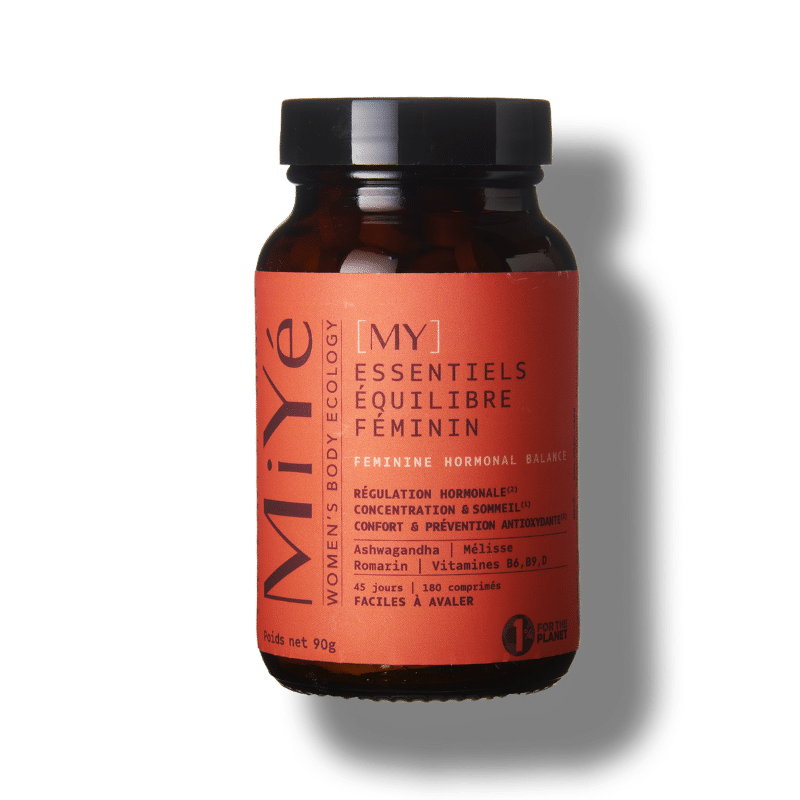
MiYé has designed dietary supplements to relieve metabolic blocks:
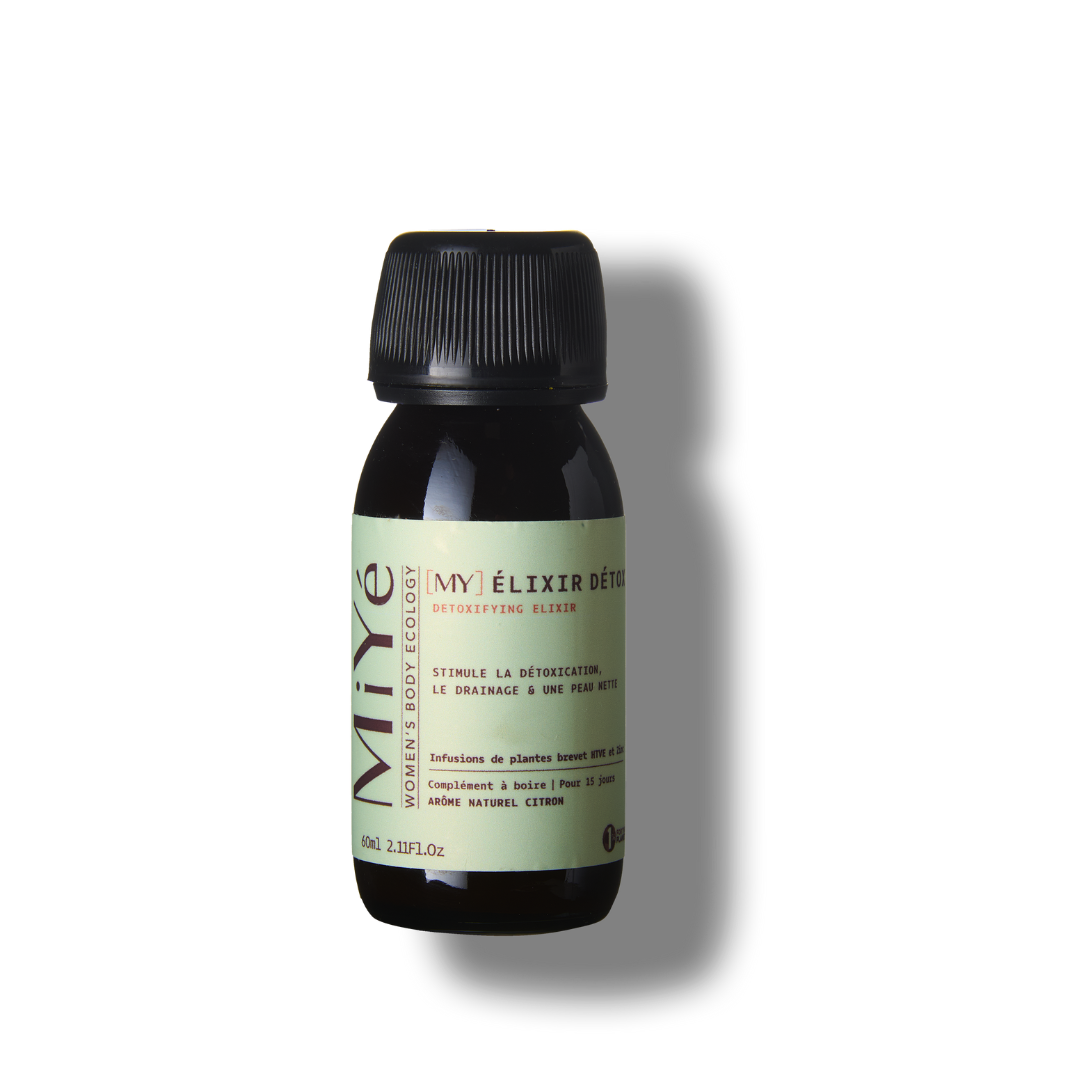
- [MY] DETOX ELIXIR uses hyper-concentrated patented plants (such as burdock, nettle, rosemary) and zinc gluconate to stimulate detoxification and drainage of the organism, contributing to a proper metabolism of estrogens and promoting better digestion.
- [MY] METABOLISM ACTIVATORS ESSENTIALS targets the root causes of metabolic blocks that slow down our organism with a 4-in-1 action: hormonal and glycemic regulation, and support for the liver and muscle mass.


Fleeing endocrine disruptors
Obviously, currently the task is increasingly difficult… we even speak of the headache of endocrine disruptors since these famous xenoestrogens are more and more present in our environment and legislation concerning them remains very limited.
To hunt down endocrine disruptors, you must learn to read labels and find healthier alternatives to certain everyday products, opt for organic (BIO) when possible, and also let common sense speak.
Here are some avenues to limit endocrine disruptors:
- Cleaning products and detergents can be effectively replaced by Marseille soap, black soap, baking soda, or white vinegar.
- Feminine hygiene products can be replaced by menstrual underwear.
- Food products can nowadays be bought without packaging, with safe packaging, or in bulk.
- New furniture you buy should be aired out before being set up, and clothes washed and selected according to their materials, avoiding those that require too much finishing treatment.
Learning to relax
Stress is highly detrimental to our hormonal balance. To each their own method for managing to soothe themselves, to switch to slow life mode… yoga for some, pilates for others, a sophrology session, aesthetic treatments, moments with friends, a shopping trip, a walk in the forest, hugs with one's children… solutions are numerous, but this remains something very personal in the end because what works for some will not necessarily work for others.
One thing is to be remembered, however: the link between stress and sleep is important, and if sleep is not of good quality, then stress increases naturally. Here are some avenues to help you improve your sleep:
- Calm things down: avoid drinking coffee (and any other stimulant) after lunchtime.
- Prefer a book over blue light: turn off your screens several hours before going to bed.
- Exit evening jogging: avoid physical activity 1 hour before bedtime.
- Breathe: do abdominal breathing exercises when going to bed.
- Meditate: numerous applications with free guided meditations can accompany you.
75% of our hormonal balance depends on our lifestyle!
Estrogen dominance, like so many other hormonal imbalances, decreases women's daily quality of life, and solutions, if they exist, are not always easy to implement. That is why Miyé has developed a range of natural and organic products for women to help them face the main symptoms of hormonal imbalances.
Estrogen dominance, which manifests as a hormonal imbalance characterized by excessively high estrogen levels relative to those of progesterone, can deeply affect women's health and well-being. To control this problem, it is essential to grasp its origins, notably chronic stress, compromised liver function, intestinal dysbiosis, and exposure to endocrine disruptors.
It is essential to adopt a balanced diet, favoring cruciferous vegetables, flax seeds, fiber, and to avoid processed foods as well as products containing xenoestrogens. Hormonal detoxification, promoting the proper functioning of filtering organs such as the liver, kidneys, and intestine, is also decisive in hormonal balance.
Learning to manage stress through relaxation methods, such as meditation, yoga, and deep breathing exercises, is just as essential. By adopting these strategies, you can restore hormonal balance, mitigate the symptoms of estrogen dominance, and significantly improve your quality of life.
It is important to act without delay and incorporate these adjustments into your daily routine. Understanding and controlling estrogen dominance is a decisive step toward achieving optimal health and well-being.
Frequently asked questions about estrogen dominance
How do you know if you have excess estrogen?
An excess of estrogen is detected via several combined signs and must be confirmed by a blood analysis (estradiol dosage). If you present several of these signals, consult a doctor or a gynecologist:
- Heavy, irregular, or painful periods
- Painful or sensitive breasts outside of periods
- Inexplicable weight gain, notably around the belly and hips
- Recurrent bloating and water retention
- Chronic fatigue, anxiety, or marked mood swings
- A drop in libido, frequent headaches
Only a complete hormonal assessment (FSH, LH, progesterone, estradiol) allows for confirmation of the diagnosis.
What are the symptoms of an estrogen imbalance?
An imbalance can manifest in both directions: in excess (estrogen dominance) with PMS, tender breasts, weight gain; or in deficit (menopause, amenorrhea) with vaginal dryness, hot flashes, lower libido. Both forms disrupt the cycle and the quality of life.
What are the effects of an increase in estrogen on the body?
A relative rise in estrogen stimulates water retention, promotes fat storage in the hips and thighs, sensitizes breasts, exacerbates mood, and can disrupt sleep. In the long term, it can favor the proliferation of hormone-dependent tissue (fibroids, endometrium).
How to eliminate excess estrogen?
Several levers allow for naturally reducing an excess of estrogen:
- Support the liver: it is the key organ for estrogen metabolism. Reduce alcohol, consume cruciferous vegetables (broccoli, cabbage, radish) and turmeric.
- Optimize transit: a sluggish intestine recycles estrogens. Fiber, hydration, and probiotics help eliminate them.
- Reduce endocrine disruptors: plastics (BPA), cosmetics, and pesticides mimic estrogens.
- Manage stress: chronic cortisol disrupts hormonal balance.
- Practice regular physical activity: it reduces estrogen production by adipose tissue.
Share:
How can we limit endocrine disruptors in our clothing?
Perimenopause: the little-known symptoms of menopause