





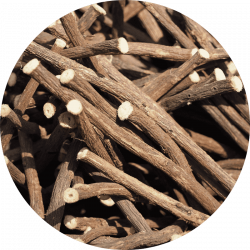
LICORICE
Has a powerful anti-inflammatory action.

LICORICE: Discover its anti-inflammatory properties
RELIEVES ⎪ SOOTHES ⎪ PROTECTS
Definition: What is Licorice?
Licorice, or Glycyrrhiza glabra, is a perennial plant native to Asia and the Mediterranean, known for its roots with a mild and sweet taste. Used for thousands of years in traditional medicine, licorice is prized for its many health benefits, particularly for its soothing effect on the respiratory and digestive tracts. It contains glycyrrhizin, an active compound with anti-inflammatory, antiviral and antispasmodic properties, which makes it a natural remedy for respiratory conditions, sore throats and digestive disorders.
Licorice is a small plant that we know mainly for candies with a characteristic smell and color but it is in fact a essential in traditional medicine. Indeed, licorice or Gan Cao in Chinese medicine is a plant rich in immunostimulating polysaccharides, flavonoids and triterpene saponins such as glycyrrhizic acid.
These components have antioxidant and anti-inflammatory properties which act on the entire body: we speak of “action systemic » because it acts on the whole organism. Licorice is known for its potential to inhibit the breakdown of cortisol into its inactive form, which increases the amount of cortisol available in the body. Cortisol is a powerful natural anti-inflammatory. By reinforcing the anti-inflammatory action, licorice reduces skin irritation and inflammation. Very powerful in topical application, without contraindications.
In our moisturizing perfecting emulsion and our happy cycles body serum, we use dipotassium glycyrrhizate, derived from glycyrrhizic acid for its anti-inflammatory and soothing properties.
Where does Licorice come from?
Licorice grows in warm regions of Asia, Europe and the Middle East. It is grown for its roots, which are harvested, dried and made into a powder or extract for medicinal and culinary use. Licorice root is used in herbal teas, lozenges and food supplements, as well as in food products for its sweet taste and beneficial effects. Since Antiquity, it has also been used in traditional Chinese medicine, Ayurveda and Western herbal medicine for its multiple virtues.
Properties and active ingredients
Licorice is rich in bioactive compounds that give it unique health properties. Here are the main active ingredients and properties of licorice:
- Glycyrrhizin : This active compound gives licorice its sweet taste and has anti-inflammatory, antiviral and immunomodulatory properties, supporting respiratory and digestive health.
- Flavonoids : Licorice contains flavonoids which act as antioxidants, protecting cells from oxidative stress and reducing inflammation.
- Softening and soothing effect : Licorice has a soothing effect on the mucous membranes, helping to calm throat irritations and relieve digestive disorders.
- Natural antispasmodic : It helps reduce muscle spasms in the digestive tract, which can relieve cramps and abdominal pain.
WHAT ARE THE BENEFITS OF LICORICE?
Licorice has many health benefits, particularly for the respiratory and digestive tract. Here are the main benefits of this plant:
- Relief from sore throats and respiratory conditions : Thanks to its anti-inflammatory and antiviral properties, licorice is often used to soothe sore throats, coughs and soothe irritated respiratory tract.
- Digestive support : Licorice helps relieve symptoms of indigestion, heartburn and gastric ulcers thanks to its soothing effect on the stomach mucous membranes.
- Anti-inflammatory effect : The anti-inflammatory properties of licorice make it a natural remedy for inflammatory conditions, including intestinal disorders and some autoimmune diseases.
- Stress reduction : Licorice may also support the adrenal glands, helping to balance cortisol levels and reduce the effects of chronic stress.
- Antispasmodic effect : Licorice helps reduce abdominal cramps and spasms in the digestive tract, providing relief to those suffering from digestive pain.
- Has anti-inflammatory properties
- Prevents cortisol breakdown
- Reduces skin irritation, redness and inflammation.
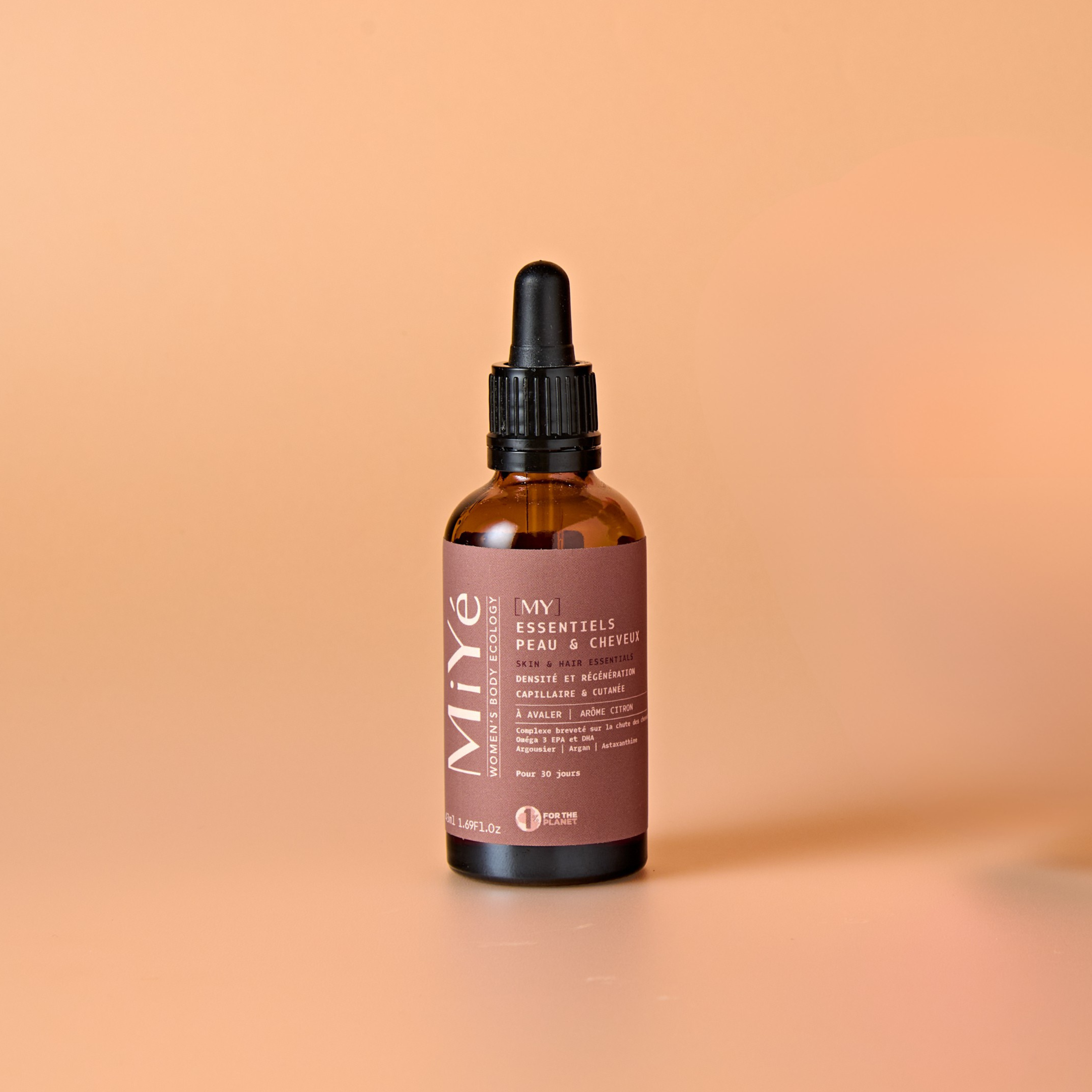
Licorice at the heart of Miyé formulas
[MY] MIXOLOGY PACK
- Relaunch skin regeneration and cell renewal
- Hydrate, soothe and strengthen the skin barrier
- Reduce hormonal imperfections without irritating
[MY] MOISTURIZING PERFECTIVE EMULSION
- Hydrates, evens out and mattifies the complexion, while fighting against imperfections
- Soothes, relieves and strengthens the skin shield
- Suitable for normal to oily skin, even sensitive skin
- Certified organic, rated “Excellent” on rating applications
Use: How to consume Licorice?
Licorice is available in several forms for consumption adapted to specific needs:
- Herbal teas and decoctions : Licorice roots can be infused to prepare a soothing herbal tea for the throat and respiratory tract. The decoction is ideal for extracting the active compounds from the plant.
- Capsules and extracts : Licorice is available in the form of capsules or concentrated extracts for precise dosage, often used as a dietary supplement for its digestive and anti-inflammatory benefits.
- Pastilles and syrups : Licorice lozenges are popular to soothe sore throats and coughs, while syrups are used to relieve respiratory disorders.
Note : Consumption of licorice should be moderate, as glycyrrhizin can cause sodium and potassium retention in the body. It is recommended to consult a healthcare professional in case of prolonged use, particularly for people suffering from hypertension.
Any side effects?
Licorice is generally well tolerated, but certain adverse effects may occur with excessive or prolonged consumption:
- Water retention and hypertension : Glycyrrhizin may cause sodium retention and potassium loss, which may lead to an increase in blood pressure. It is advisable to consume licorice in moderation, especially for people with hypertension.
- Drug interactions : Licorice may interact with certain medications, including diuretics, corticosteroids, and antihypertensives. A medical consultation is recommended before use in the event of drug treatment.
- Laxative effect : In large quantities, licorice can have a laxative effect and cause abdominal cramps or diarrhea.
- Hypokalemia : Prolonged consumption of licorice can lead to potassium deficiency, leading to muscle and heart problems in severe cases.