






TARRAGON
Tarragon (Artemisia dracunculus) is an aromatic plant belonging to the Asteraceae family, native to Central Asia. It is recognized for its richness in antioxidants, minerals and vitamins B and C. Tarragon contains bioactive compounds which give it beneficial properties for digestion and well-being.
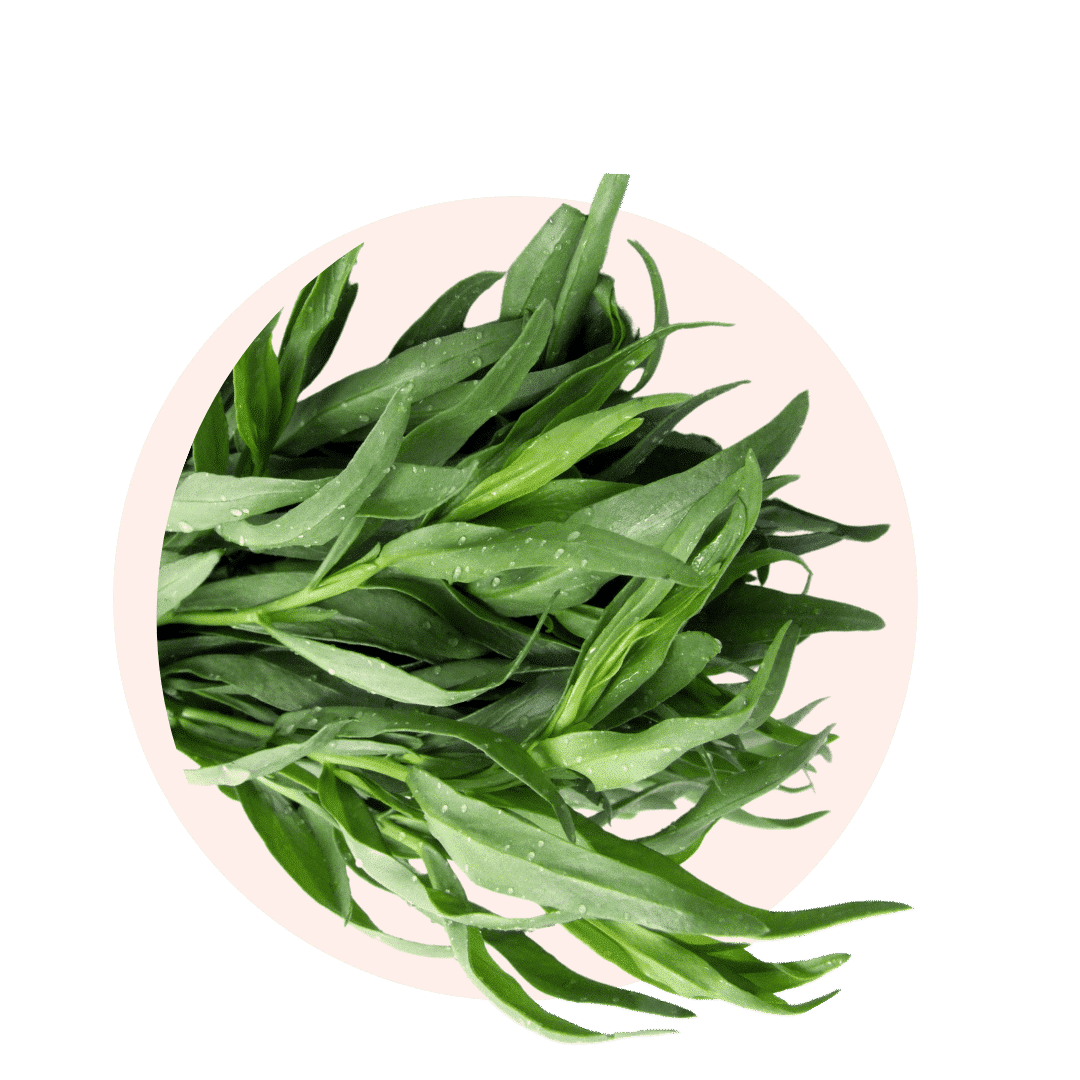

TARRAGON: A precious plant with multiple virtues
STIMULATES ⎪ RELIEVES ⎪ PROTECTS
What is tarragon?
Tarragon (Artemisia dracunculus) is an aromatic plant belonging to the family of asteraceae, originally from Central Asia. Known for its subtle anise aroma, tarragon is widely used in cooking to flavor dishes, but it also has medicinal properties. It is rich in antioxidants, vitamins and minerals, and is renowned for its digestive, antispasmodic and soothing effects. Tarragon essential oil is also prized in aromatherapy for its calming and relaxing properties.
Tarragon is a plant native to southern Russia. It is recognized for its richness in antioxidants, minerals and vitamins B and C.
This plant stimulates the appetite and digestion. It also helps relieve the symptoms of Premenstrual Syndrome (PMS) and premenopause. In addition, it helps regulate menstrual flow and maintain good blood fluidity.
Finally, tarragon promotes a good sleep maintains balanced blood sugar levels and improves joint flexibility.
In massage, it can relieve menstrual or muscle pain and even eczema.
You will have understood: tarragon turns out to be a precious plant with multiple benefits.
Where does tarragon come from?
Native to temperate regions of Asia, notably Siberia and Central Asia, tarragon is today cultivated in many regions of the world, notably in Europe and North America. It is particularly popular in French cuisine, where it is used to flavor sauces, meats and salad dressings. In herbal medicine, tarragon is recognized for its digestive benefits and soothing effects, and tarragon essential oil is extracted by distillation from the leaves and flowers for medicinal applications.
Properties and active ingredients
Tarragon contains bioactive compounds that give it beneficial properties for digestion and well-being. Here are the main characteristics and active components of tarragon:
- Methylchavicol (or estragole) : Main component of tarragon essential oil, it gives it its distinctive aroma and its antispasmodic properties.
- Antioxidants : Tarragon is rich in flavonoids and other antioxidants, which help protect cells against free radicals and oxidative stress.
- Vitamins and minerals : Tarragon contains vitamins A, C and B6 as well as minerals such as iron, calcium and magnesium, which contribute to its toning effects.
- Antispasmodic effect : Tarragon has antispasmodic properties which help to soothe muscles and relieve cramps, particularly in the digestive system.
What are the benefits of tarragon?
Tarragon offers many benefits for digestive health, muscular comfort and general well-being. Here are the main benefits of this aromatic plant:
- Improved digestion : Tarragon stimulates the production of gastric juices and promotes healthy digestion, which helps reduce bloating and abdominal discomfort.
- Relief from cramps and spasms : Thanks to its antispasmodic effect, tarragon is effective in soothing cramps and spasms, particularly those linked to digestive and menstrual disorders.
- Soothing and relaxing effect : In aromatherapy, tarragon essential oil is used for its calming effects, helping to reduce stress and promote a state of relaxation.
- Antioxidant properties : Antioxidants found in tarragon help protect the body's cells from oxidative damage, thereby supporting overall health.
- Appetite stimulation : Tarragon is sometimes used to stimulate the appetite, especially in people who have lost their appetite or are recovering.
- Stimulates the appetite and aids digestion
- Contributes to good blood fluidity and better joint flexibility
- Promotes the return of periods for women in the event of amenorrhea or delay
How to consume tarragon?
Tarragon can be used in cooking, herbal medicine or aromatherapy to benefit from its benefits:
- Kitchen : Tarragon is used fresh or dried to flavor dishes, sauces (like the famous béarnaise sauce) and vinaigrettes. Its leaves can be added to dishes at the end of cooking to preserve their flavor.
- Infusion : Tarragon can be consumed as a herbal tea to promote digestion and soothe abdominal cramps. An infusion of fresh or dried leaves is recommended after meals.
- Essential oil : In aromatherapy, tarragon essential oil is used for its calming and antispasmodic properties. It can be diffused, applied as a massage (diluted in a vegetable oil), or used as an inhalation.
Note : Due to the presence of methylchavicol, the use of tarragon essential oil must be moderate and supervised, especially for internal use, and it is contraindicated in pregnant women and young children.
Any side effects?
Tarragon is generally well tolerated, but certain adverse effects may occur, particularly in the event of excessive consumption or use of the essential oil:
- Irritant effect : Tarragon essential oil can be irritating to the skin and mucous membranes. It is recommended to dilute it before skin application and to carry out a skin test beforehand.
- Allergy risk : Some people may be allergic to tarragon, particularly if they are sensitive to plants in the Asteraceae family. If you have a known allergy, it is best to avoid contact.
- Adverse effects related to methylchavicol : Due to the presence of methylchavicol, excessive consumption of tarragon essential oil can be toxic to the liver and cause adverse effects. Use must therefore be moderated and supervised.
- Contraindications for certain people : Tarragon essential oil is contraindicated in pregnant, lactating women and young children, due to the potential toxicity of methylchavicol.