




LACTIC ACID
Essential for protecting the intimate area by maintaining a low pH to promote the growth of lactobacilli and prevent infections.

LACTIC ACID
HYDRATES ⎪ PROTECTS ⎪ EXFOLIATES
Lactic acid reveals smoother, brighter-looking skin through its gentle exfoliating action. This naturally derived alpha-hydroxy acid (AHA) supports cell renewal by removing dead cells from the skin's surface.
The benefits of lactic acid go well beyond exfoliation. It deeply hydrates the skin, supports collagen production, and visibly improves skin texture.
What is lactic acid? Definition and origin
Lactic acid belongs to the alpha-hydroxy acid (AHA) family, a group of naturally occurring molecules known for their exfoliating properties. It is a carboxylic acid with the chemical formula C₃H₆O₃, naturally present in fermented milk, certain fruits and vegetables, and in the skin's own microbiome.
First identified by Swedish chemist Carl Wilhelm Scheele in 1780 in sour milk, lactic acid takes its name from the Latin "lac", meaning milk.
Today, it is mainly obtained through bacterial fermentation of glucose, sucrose or lactose by lactic acid bacteria such as Lactobacillus bulgaricus. It works in synergy with the skin's and intimate flora, a family of bacteria we cover in detail in our Lactobacillus profile.
This molecule has an interesting particularity: it exists in two enantiomeric forms, L-lactic acid and D-lactic acid. L-lactic acid is the form naturally produced by our body and used in cosmetic products, offering better skin tolerance.
Lactic acid composition / active compounds
Pure lactic acid has a simple yet effective molecular structure, made up of three carbon atoms, six hydrogen atoms and three oxygen atoms.
- Carboxyl group (-COOH): responsible for its acidity and exfoliating action
- Hydroxyl group (-OH): gives it hydrating properties and water-retention capacity
- Short carbon chain: allows optimal penetration into the skin's surface layers
- Naturally low pH (3.5 to 4): helps dissolve intercellular bonds
- Natural Moisturising Factor (NMF): an integral part of the skin's hydrolipidic film
This targeted mode of action echoes the principle behind biomimetic actives, ingredients that the skin already recognises naturally.
What are the benefits of lactic acid?
Lactic acid offers a complete approach to skin care by combining gentle exfoliation with deep hydration.
Its mode of action relies on dissolving the bonds between dead cells in the stratum corneum, instantly revealing the skin's natural glow.
Unlike mechanical exfoliants, lactic acid works at a molecular level by breaking down desmosomes, the structures that hold dead cells at the surface. This action simultaneously supports cell renewal and collagen synthesis in the dermis. To find out more about the skin's natural regeneration mechanisms, read our article Beyond collagen: how to help skin restart its own regeneration process.
- Gentle exfoliation: removes dead cells without irritation or micro-damage
- Deep hydration: helps retain water in the tissues through its hygroscopic properties
- Improved texture: smooths rough patches and refines skin grain
- Collagen support: helps support the production of supportive fibres, a topic we also explore in our Skin density loss and fine lines collection
- Brightening: helps accelerate the renewal of pigmented cells
- Softening of fine lines: helps improve skin elasticity and firmness
- pH balancing: helps restore the skin's natural acid mantle
- Skin preparation: helps optimise the absorption of the products applied afterwards
Key points:
- Exfoliating action 30% gentler than glycolic acid
- Improved skin hydration by 25% over 4 weeks
- Visible reduction of fine lines by 15% after 8 weeks
- Suitable for all skin types, including sensitive skin
- Visible results from the first applications
⚠️ Non traduit volontairement : ces chiffres n'ont toujours pas de source confirmée (voir mon message précédent). Je vous déconseille de publier ce bloc en l'état, en anglais comme en français.
Lactic acid in MiYé formulas
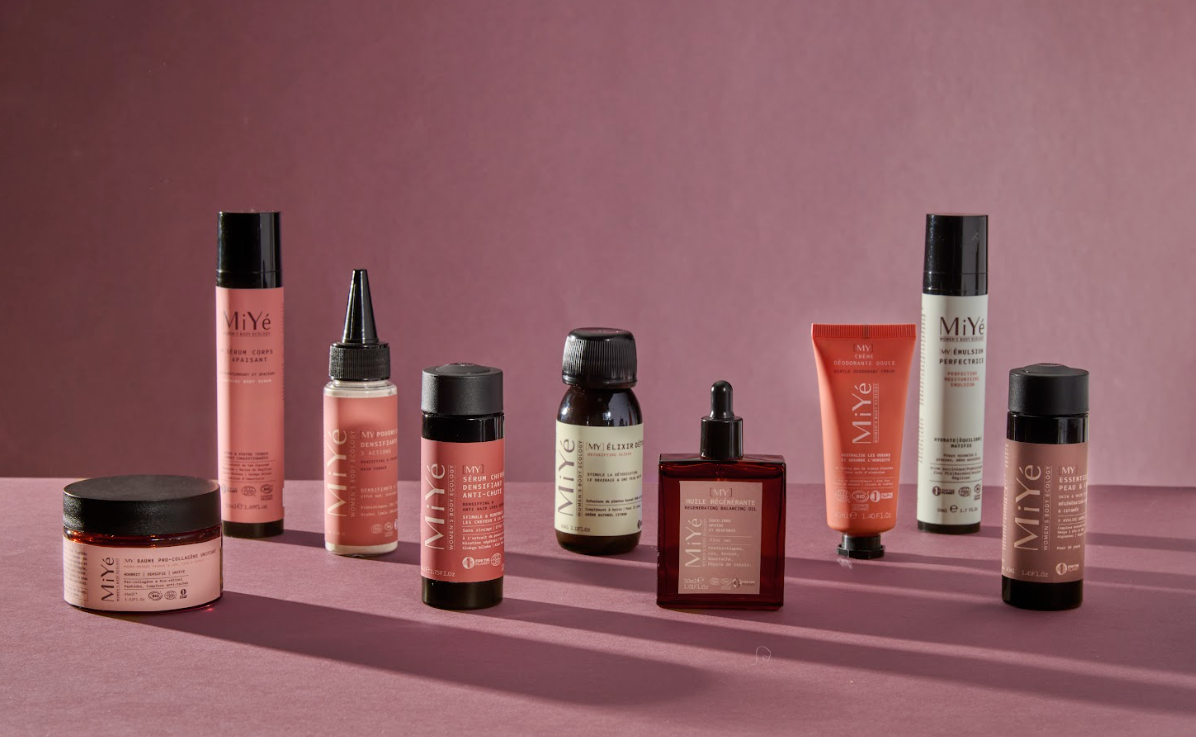
[MY] GENTLE CREAM DEODORANT
- Neutralises unwanted odours and absorbs excess perspiration
- Leaves no white marks
- Gentle formula, free from aluminium salts, alcohol and baking soda
- Certified organic, rated "Excellent" on rating apps
[MY] SOOTHING INTIMATE MIST
- Designed to soothe, hydrate and refresh the intimate area
- Helps prevent odour
- Rinse-free texture, balancing and comfortable
- Efficacy proven under gynaecological and cytological testing
⚠️ Noms de produits ci-dessus non confirmés en anglais : traduction indicative uniquement, à valider avec votre équipe EN avant publication.
How to use lactic acid
Lactic acid is available in several cosmetic forms: concentrated serums (5 to 12%), night creams (2 to 5%), toning lotions (1 to 3%) and professional peels (20 to 50%). If you are just starting out, choose a lower concentration (2 to 5%) and increase gradually as your skin adjusts.
For best results, apply in the evening, 2 to 3 times a week initially, then daily once your skin has adjusted.
Apply to clean, dry skin, avoiding the eye contour, and wait 10 to 15 minutes before applying your usual cream.
⚠️ Note: Lactic acid increases the skin's sun sensitivity for 7 days after application. Sun protection of at least SPF 30 is essential.
Precautions for use
Possible side effects
Lactic acid is generally very well tolerated by the skin, better than other AHAs, thanks to its natural presence in the epidermis. That said, the first few applications may cause mild tingling or temporary redness, a sign of the active ingredient at work.
More noticeable reactions remain rare and mainly occur with overuse or when applied to broken skin. Signs of intolerance include persistent irritation, significant flaking or inflammatory reactions.
⚠️ Pregnancy and breastfeeding call for extra care. Although lactic acid is naturally present in the body, please consult a healthcare professional before any cosmetic use during these periods.
Frequently asked questions about lactic acid
Questions about lactic acid reflect the growing interest in this multi-benefit active.
What are the benefits of lactic acid for the skin?
Lactic acid combines gentle exfoliation, deep hydration and support for cell renewal. It visibly improves skin texture, softens fine lines and reveals the skin's natural glow.
Is lactic acid suitable for sensitive skin?
Lactic acid is the best-tolerated AHA for sensitive skin, thanks to its molecular size and its natural presence in the epidermis. Start with a low concentration (2%) and space out applications to assess your skin's tolerance.
Can lactic acid be used with other actives?
Lactic acid pairs well with hyaluronic acid, niacinamide and peptides. Avoid combining it at the same time as other exfoliating acids or retinol to prevent irritation.
How often should lactic acid be applied?
Start with 2 applications a week in the evening, then increase gradually as your skin's tolerance builds. Daily use is possible once your skin has adjusted, always paired with daytime sun protection.
Does lactic acid help with breakouts?
Lactic acid helps unclog pores and regulate skin cell turnover, helping to prevent blemishes. Its gentle antibacterial action complements its benefits for blemish-prone skin.
⚠️ Non modifié volontairement : "help with breakouts" reste une reformulation prudente, cohérente avec la version française corrigée, mais la question mérite la même vigilance réglementaire en anglais qu'en français.
Sources
- Kornhauser A., Coelho S.G., Hearing V.J. « Applications of hydroxy acids: classification, mechanisms, and photoactivity » Clinical, Cosmetic and Investigational Dermatology, 2010. pubmed.ncbi.nlm.nih.gov/21437068
- Green B.A., Yu R.J., Van Scott E.J. « Clinical and cosmeceutical uses of hydroxyacids » Clinics in Dermatology, 2009. pubmed.ncbi.nlm.nih.gov/19695482