

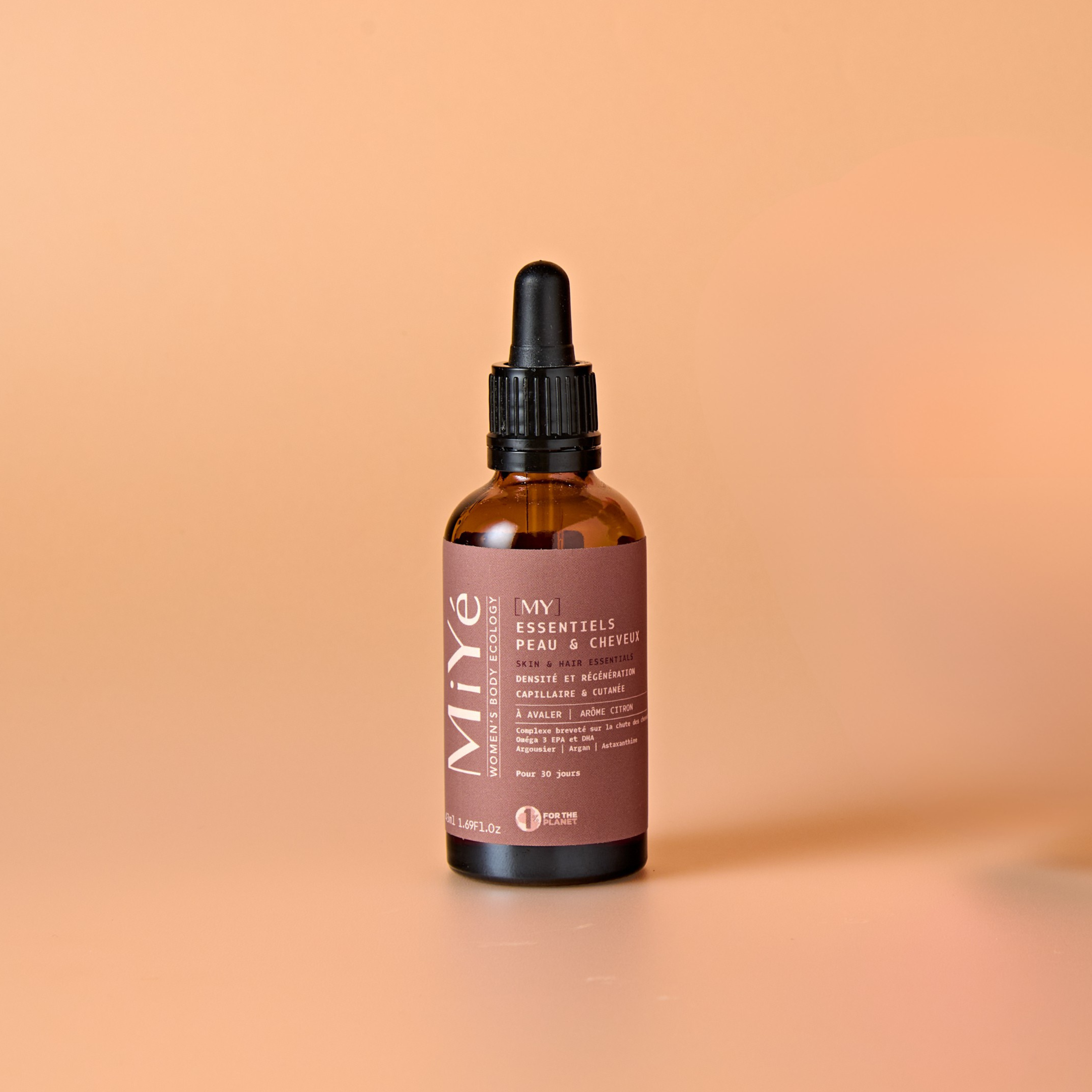




ASHWAGANDHA
Helps maintain good physical, mental and emotional balance.
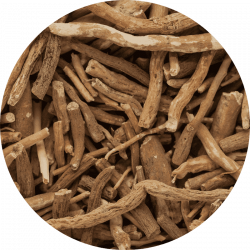

ASHWAGANDHA
REGULATES ⎪ SOOTHES ⎪ PROTECTS
Ashwagandha offers many benefits for women's health, particularly in stress management and hormonal balance.
This adaptogenic plant helps reduce cortisol, improves sleep quality and supports the body in the face of hormonal variations.
Recognized for millennia in Ayurvedic medicine, it is today a valuable ally to support women in their daily well-being.
Its scientifically documented properties make it a reference ingredient in food supplements dedicated to female balance.
What is ashwagandha? Definition and origin
Ashwagandha (Withania somnifera) is a herbaceous plant in the nightshade family, native to India and North Africa. Its Sanskrit name literally means "horse smell", referring to its characteristic smell and its reputation for imparting horse strength.
Used for more than 3000 years in traditional Ayurvedic medicine, it is considered a "rasayana", a term designating a substance which promotes longevity and vitality.
The root is the most used part of the plant for its therapeutic properties.
This adaptogenic herb grows mainly in arid and semi-arid regions.
It naturally develops bioactive compounds to resist environmental stress, properties which it then transmits to the human body.
Composition of ashwagandha: active ingredients
The benefits of ashwagandha come from its richness in specific bioactive compounds, concentrated mainly in the root.
- Withanolides : steroidal alkaloids responsible for adaptogenic and anti-stress effects
- Withanoside VI : glycoside active on the nervous system
- Isopelletierine alkaloids : compounds with relaxing properties
- Steroidal saponins : bioactive molecules supporting hormonal balance
- Free amino acids : in particular tryptophan, precursor of serotonin
- Phenols and flavonoids : natural antioxidants protecting cells
What are the benefits of ashwagandha?
Scientific research confirms the multiple benefits of ashwagandha on the female body.
Its withanolides act on the hypothalamic-pituitary-adrenal axis, thus regulating the production of cortisol and supporting hormonal balance.
A randomized clinical study demonstrated a 27.9% reduction in morning cortisol levels in stressed adults after 60 days of supplementation.
This direct action on the stress hormone explains its many beneficial effects on overall well-being.
- Reduced stress and anxiety : reduces serum cortisol and improves resistance to stress
- Improved sleep quality : promotes falling asleep and nighttime recovery
- Support for hormonal balance : supports natural hormonal variations
- Strengthening energy and vitality : combats physical and mental fatigue
- Improved mood : stabilizes emotional fluctuations
- Support for cognitive functions : improves concentration and memory
- Strengthening the immune system : stimulates natural defenses
Key points:
- Proven cortisol reduction of 27.9% in 60 days
- Significant improvement in sleep quality
- Natural support for female hormonal balance
- Scientifically recognized adaptogenic action
- Excellent tolerance at recommended dosages
Ashwagandha at the heart of Miyé products
MiYé integrates ashwagandha into its formulations for its exceptional adaptogenic properties.
This plant naturally supports female hormonal balance and supports physiological variations at each stage of life.
[MY] FEMININE BALANCE ESSENTIALS
- Contributes to good hormonal regulation
- Fight against oxidative stress and the phenomenon of inflammation (physical comfort)
- Helps to regain better concentration and quality sleep
[MY] HOLI PACK
- Contributes to good hormonal regulation
- Soothes the intimate area
- Restores hair vitality and density
- Without contraindicated phytohormones or suspected endocrine disruptors
[MY] WOMEN'S REBOOT DUO
- Contributes to good hormonal regulation
- Supports energy and muscle metabolism
- Helps to better manage stress and fatigue
- Without contraindicated phytohormones
Tips for using ashwagandha
Ashwagandha comes in different forms: root powder, standardized extracts in withanolides or capsules.
Dosages vary from 300 to 600 mg of standardized extract per day, depending on individual needs.
It is recommended to take with a meal to optimize absorption and reduce the risk of gastric discomfort.
For sleep disorders, taking it in the evening is preferable.
⚠️ Note : starting with low dosages and gradually increasing allows individual tolerance to be assessed.
Precautions for using ashwagandha
Side effects of ashwagandha
Ashwagandha has excellent general tolerance at recommended dosages.
Some people may experience slight drowsiness at the start of treatment, an effect which tends to normalize over time.
Mild digestive disorders (nausea, stomach aches) remain rare and mainly occur when taken on an empty stomach.
This plant is contraindicated in people suffering from hyperthyroidism or taking immunosuppressive medications.
⚠️ Pregnant and breastfeeding women should avoid this supplementation as a precaution.
Medical advice is recommended in the event of concurrent drug treatment, particularly for thyroid medications.
Frequently Asked Questions About Ashwagandha
Here are the most common questions regarding this adaptogenic plant and its applications.
What are the benefits of ashwagandha for women?
Ashwagandha particularly supports female hormonal balance by regulating cortisol and supporting physiological variations.
It significantly improves stress management, sleep quality and overall energy.
How long does it take to feel the effects of ashwagandha?
The first effects on stress and mood can appear after 2 to 4 weeks of regular use.
For the benefits on hormonal balance and energy, you need 8 to 12 weeks of continuous supplementation.
Can ashwagandha disrupt the menstrual cycle?
On the contrary, ashwagandha tends to harmonize cycles by reducing stress, a major factor in hormonal imbalances.
It naturally accompanies physiological variations without directly interfering with hormones.
Can ashwagandha be combined with other supplements?
Ashwagandha pairs excellently with other adaptogenic plants and vitamins.
Combinations with lemon balm, rosemary or B vitamins are particularly synergistic for feminine balance.
Are there any contraindications to ashwagandha?
This plant is contraindicated in cases of hyperthyroidism, immunosuppressive treatment, pregnancy and breastfeeding.
Medical supervision is recommended if taking thyroid or antidiabetic medications.
Sources
Chandrasekhar K, Kapoor J, Anishetty S.
A prospective, randomized double-blind, placebo-controlled study of safety and efficacy of a high-concentration full-spectrum extract of ashwagandha root in reducing stress and anxiety in adults.
Indian J Psychol Med. 2012;34(3):255-62.
Pratte MA, Nanavati KB, Young V, Morley CP.
An alternative treatment for anxiety: a systematic review of human trial results reported for the Ayurvedic herb ashwagandha (Withania somnifera).
J Altern Complement Med. 2014;20(12):901-8.