






Key takeaways
Period blood color is a key indicator of your hormonal health: it depends on blood oxidation, flow speed, and hormonal balance
A “normal” flow naturally changes over time:
→ Bright red (fresh flow, beginning of your period)
→ Dark red / burgundy (slower flow)
→ Brown (end of your period, oxidized blood)
Some colors are common and not a cause for concern:
→ Brown, black (end of the cycle)
→ Pink (mixed with vaginal discharge or a light flow)
Stress, diet, or contraception can change the color of your period
Period blood color can also reflect medical conditions: PCOS, endometriosis, fibroids, infections…
According to the World Health Organization, a woman loses an average of 30 to 80 ml of blood per cycle, and nearly 30% of women of reproductive age suffer from iron-deficiency anemia. These figures highlight the importance of paying close attention to the color and heaviness of your flow.
Why does period blood color change?
Which period blood colors are reassuring, which ones deserve closer attention, and when should you see a healthcare professional? You will then be better equipped to protect your menstrual health, with scientific references and reliable data. For example, menopause symptoms can also impact menstrual health and require an appropriate approach.

Sometimes, vaginal secretions mixed with blood can create pinkish or light shades. These variations, observed in around 65% of cycles according to a Journal of Women’s Health study, are generally not a cause for concern.
However, if an unusual color is accompanied by symptoms such as intense pain, fever, or a bad smell, it is recommended to consult a healthcare professional. In addition, it can be helpful to learn more about what to do to relieve hot flashes, especially if these changes coincide with major hormonal shifts.
What is the color of healthy periods?
A bright red color at the beginning of your period indicates a fresh and regular flow. Gradually, the red may darken into burgundy or light brown as the flow decreases. These variations are normal as long as they are not accompanied by concerning symptoms (severe pain, unusual smell, excessive fatigue).
Bright red is the color most commonly seen at the beginning of the cycle and generally indicates an active flow with no stagnation. This color reflects a normal physiological process: the blood is recent and has not had time to be altered by oxidation. It leaves the uterus quickly, which preserves its vivid shade.
| Color | Appearance | Explanation | Frequency |
|---|---|---|---|
| Bright red | Liquid, fluid | Recent flow, no oxidation, active endometrium | Very common (beginning of cycle) |
| Dark red | Slightly thick | Slower flow, early oxidation | Common (middle of cycle) |
| Pinkish red | Diluted, watery | Mixed with vaginal secretions, light flow | Common (end or beginning of period) |
| Brown | Thick, clumpy | Oxidized blood, slow discharge | Common (end of period) |
| Brown / black | Dense, not very fluid | Endometrial stasis, maximum oxidation | Less common (beginning or end) |
| Very pale pink | Watery | Very diluted flow, low estrogen levels | Less common, should be monitored |
What are the different period blood colors?
Bright red blood
Bright red blood indicates a heavy, well-oxygenated flow. This shade, common during the heaviest days of the cycle, may be accompanied by small clots, which are usually harmless if they are no larger than a coin. This reflects a normal physiological process: the blood is recent and has not had time to be altered by oxidation. It leaves the uterus quickly, which is why it keeps its vivid color.

What to remember about bright red
Bright red is a sign of good endometrial health and a functioning menstrual cycle. The blood is expelled quickly, without time to break down. This is the color most often seen at peak flow, meaning the first and second days of your period, when uterine contractions are the strongest.
The shade may vary slightly depending on age. In teenagers whose cycle is still settling, bright red may alternate with pink or brown without being concerning. In perimenopause, blood color may vary from one cycle to another due to hormonal fluctuations.
Dark red or burgundy period blood
Dark red or burgundy blood reflects slightly older blood that has started to oxidize. It often appears at the beginning or end of the cycle and remains, in the vast majority of cases (85% of women according to a survey published in Obstetrics & Gynecology), a normal variation.
Dark brown period blood
Brown or dark brown blood corresponds to older blood that is slow to leave the body. Common at the beginning or end of the cycle, this blood has stagnated, oxidized, and taken on a darker shade. In the absence of associated symptoms, there is usually no reason to worry. However, in some isolated cases, tingling sensations may occur at the same time, which should be discussed with a healthcare professional.

When these dark colors should be a warning sign:
Brown or black blood that persists outside the usual time frame (beginning or end of your period), together with symptoms such as pelvic pain, foul-smelling discharge, or fever, justifies a medical consultation. Incomplete shedding of the endometrium can also be behind these shades, especially in the case of a structural uterine issue.
Pale pink period blood
Pale pink period blood results from a mix of blood and clear vaginal discharge. It can occur during a light flow, at the start of hormonal contraception, or with mild iron deficiency. About 20% of pill users report this shade during the first few months of adjustment.

A pink or very pale flow is most often explained by one of the following situations:
- Low estrogen levels, which lead to a thinner endometrium and therefore a lighter, more diluted flow. This is common in cases of intense stress, severe food restriction, or when a cycle resumes after a long interruption.
- Anovulation, meaning a cycle without ovulation, during which bleeding may be light and pinkish rather than red.
- Early pregnancy: implantation bleeding, which occurs 10 to 14 days after fertilization, is often pink or very light brown, short-lived, and can be mistaken for a light period.
- Hormonal contraception: the pill, implant, or hormonal IUD can change both the color and amount of flow, sometimes making it very pale or almost absent.
A regularly pink and light flow over several consecutive cycles should be discussed during a gynecological consultation, even without any associated symptoms.
Orange period blood
Orange appears when blood mixes with watery vaginal secretions. If this shade is occasional, it may be normal. However, if it is accompanied by itching, burning, or an unusual smell, it may be warning of a vaginal infection (20 to 30% prevalence according to studies on bacterial vaginosis).

Gray
Gray is considered abnormal and should be taken seriously. It may indicate an infection or a gynecological complication, especially in the event of a miscarriage. Prompt medical advice is essential.

Black period blood
Black period blood is highly oxidized and often older, usually seen at the end of your period. It may appear as small dark traces. If this remains an isolated occurrence, it is generally harmless. However, if severe pain or an unpleasant smell is present, medical advice is recommended.

What explains changes in period blood color?
Variations in period blood color are mainly explained by how long hemoglobin is exposed to oxygen and by the speed at which the blood is discharged. A fast flow gives bright red blood, while a slow or stagnant flow oxidizes, darkens, and turns brown or black.
The impact of the menstrual cycle
During a normal cycle:
- At the beginning of your period, the flow may be moderate and sometimes dark brown during the first few hours.
- On the second day, the flow often reaches its peak, with bright red blood and an average volume of 40 to 60 ml.
- Toward the end, as the flow decreases, the blood darkens again, becoming burgundy, brown, or black.
Hormonal factors
Hormones (estrogen and progesterone) determine the thickness of the endometrium and influence blood color. A drop in estrogen can lead to a lighter, sometimes pinkish flow, while an excess of estrogen can produce a heavier and darker flow. Stress, rapid weight changes, or starting a new hormonal contraception can also influence these shades.
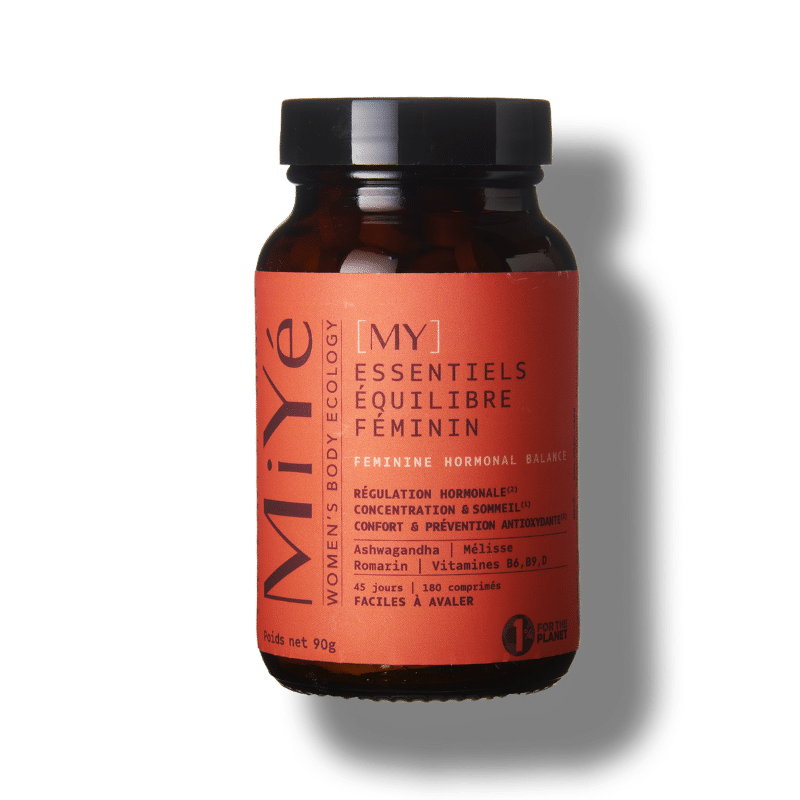
Some supplements for menopause may help stabilize hormone levels and reduce these fluctuations.
RECOMMENDED PRODUCT
- Helps naturally stabilize hormones
- Reduces hormonal fluctuations
- Helps reduce stress (cortisol)
- Contributes to better cycle quality (less PMS, more regular cycles)
Symptoms: Physical fatigue, hot flashes, breast pain, irritability, sleep issues, night sweats, brain fog
How do hormones influence blood color?
The menstrual cycle is orchestrated by two main hormones: estrogen, which stimulates the growth of the uterine lining in the first part of the cycle, and progesterone, which prepares this lining for implantation in the second part.
When fertilization does not occur, the sudden drop in these two hormones triggers menstruation.
- Excess estrogen: may lead to a thick endometrium, heavy bright red periods, and sometimes clots.
- Progesterone deficiency: often associated with insufficient flow, short and pale periods, or even anovulation.
- Estrogen deficiency: common during perimenopause, hypothalamic amenorrhea (due to stress or food restriction), or after childbirth, it results in a light, pink, or almost absent flow.
- Age plays a key role: the first periods (menarche) and the last ones (perimenopause) are naturally associated with greater color variations due to the hormonal instability typical of these transition periods.
Gynecological conditions associated with a change in menstrual flow color
A persistent or sudden change in period blood color, accompanied by pain or unusual symptoms, may reveal an underlying condition requiring specialized evaluation.
| Condition | Associated flow color | Common symptoms | Recommended action |
|---|---|---|---|
| Endometriosis | Dark brown, sometimes black | Severe pelvic pain, long periods | Gynecological consultation + ultrasound |
| Uterine polyps | Bright red, heavy flow | Irregular periods, bleeding between periods | Diagnostic hysteroscopy |
| Genital infection (STI, endometritis) | Abnormal color + odor (red or brown) | Foul-smelling discharge, fever, pain | Urgent consultation + infection work-up |
| Uterine fibroids | Very heavy red flow, with clots | Pain, pelvic heaviness, anemia | Pelvic ultrasound, appropriate treatment |
| Polycystic ovary syndrome (PCOS) | Pink or brown, irregular flow | Irregular cycles, acne, excess hair growth | Hormonal assessment, ovarian ultrasound |
| Endometrial hyperplasia | Heavy flow, dark red | Long periods, bleeding between cycles | Endometrial biopsy recommended |
Changes in period blood color during pregnancy
Analyzing bleeding color in pregnant women is especially important in order to distinguish normal physiological bleeding from warning signs. Early guidance is essential for both fetal and maternal safety.
Period-like blood color as a sign of pregnancy: myths and realities
Pregnancy can sometimes come with light bleeding whose color may be confusing. Contrary to popular belief, the appearance and timing of bleeding help avoid confusing it with a true menstrual period.
What people believe vs what science says:
A widespread belief is that periods stop systematically and abruptly as soon as pregnancy begins. In reality, bleeding can occur during the first trimester and may be mistaken for menstruation, particularly because of its timing (happening around the expected date of the period).
Implantation bleeding, which corresponds to the embryo implanting into the uterine wall, has distinct characteristics:
| Characteristic | Implantation bleeding | Regular period |
|---|---|---|
| Color | Light pink, pale brown | Bright red to dark red |
| Duration | 1 to 3 days | 3 to 7 days |
| Amount | Very light (a few drops) | Variable, often heavier |
| Consistency | Liquid, no clots | May contain clots |
| Pain | Mild or absent | Cramping is common |
| Timing | 10 to 14 days after ovulation | On the expected period date |
Risks signaled by changes in bleeding color at the beginning of pregnancy
An unexplained change in blood color in a pregnant woman, especially if associated with pain or unusual heaviness, requires prompt medical evaluation. Some signs are genuine emergencies.
Situations requiring urgent medical attention:
- Heavy, bright red bleeding in early pregnancy: may suggest a threatened miscarriage. Associated pelvic pain and the patient’s overall condition help assess the level of urgency. An ultrasound is essential to visualize embryo viability.
- Bleeding accompanied by one-sided pain (on only one side of the lower abdomen), intense nausea, or sudden weakness: suggestive of an ectopic pregnancy. This is an absolute medical emergency. Ectopic pregnancy occurs when the embryo develops in the fallopian tube instead of the uterus, exposing the woman to a risk of tubal rupture.
- Persistent brown bleeding with pain: may indicate trophoblastic detachment or a nonviable pregnancy. A follow-up ultrasound is required.
When to consult about the color of your period
Identifying the real reasons to worry about a change in period blood color requires solid medical information and helpful decision-making tools.
Warning signs revealed by period blood color
Extra caution is needed with certain signs associated with period blood color, especially when they come with other alarming symptoms.
Consult promptly if you notice:
- Heavy bright red bleeding outside your usual menstrual period, without an obvious explanation (trauma, missed pill, etc.).
- Black or very dark thick flow, accompanied by fever, pelvic pain, or an unusual odor: a possible sign of infection or retained endometrial tissue.
- An unusual color that persists over several consecutive cycles, even without pain: a lasting change should be evaluated.
- Bleeding after menopause, whatever the color: always considered abnormal until proven otherwise.
- A sudden change in the color or heaviness of your periods, not related to a recent change in contraception.
- Colored discharge between periods (metrorrhagia), especially pink, brown, or bright red, without any known explanation.
FAQ
What does bright red period blood mean?
Bright red blood indicates a fresh, fast flow, typical of the heaviest days of the cycle. It is a sign of good oxygenation and efficient discharge, with no stagnation or oxidation.
When should pink periods worry me?
A pale pink flow at the beginning or end of the cycle is often due to mixing with cervical mucus. However, if this color persists outside your period and is accompanied by fatigue or weakness (possible anemia), a medical consultation is recommended.
Why is my period brown or black at the beginning of the cycle?
These shades simply mean the flow is slow and the blood oxidizes before or after the peak-flow days. Without pain or other symptoms, there is usually no reason to worry.
Is dark red blood always normal?
Dark red is generally normal and results from partial blood oxidation. However, if you have fever, severe pain, or an abnormally heavy flow, it is advisable to consult a healthcare professional.
Sources
- What does the color of period blood mean? The color naturally varies (red, brown, black) depending on blood oxidation and its composition (blood + tissue + secretions).
- Period blood color: 8 shades to understand your health The color of menstrual flow is an overall indicator of health and hormonal balance.

Share:
The 4 types of PCOS: how to identify yours to better treat it
The 4 types of PCOS: how to identify yours to better treat it