






SUMMARY
Key takeaways
Periods normally last between 3 and 7 days; during perimenopause, this duration can vary from one cycle to the next.
Perimenopause begins on average around age 47 and lasts between 4 and 8 years.
Fluctuations in oestrogen and progesterone make cycles unpredictable in duration, frequency and intensity.
Periods lasting fewer than 2 days or more than 8 days on a recurring basis warrant medical advice.
Natural lifestyle adjustments can help you navigate this period more comfortably.
Understanding these changes is essential to better navigating this transition in a woman's life. This article sheds light on perimenopause, its impact on the menstrual cycle, the causes of these changes, associated symptoms, and practical solutions to help you approach this period with greater ease.
What is perimenopause or premenopause?
Perimenopause, also known as premenopause, is the transition period leading up to menopause. It differs from menopause, which is characterised by the absence of periods for at least 12 consecutive months. During perimenopause, menstrual cycles continue but may become irregular. This phase typically begins around the mid-forties, with an average age of around 47.5, although the exact age can vary from woman to woman.
Several factors, including genetics, smoking, and certain medical treatments, can influence the age at which perimenopause begins. Its duration also varies but generally lasts between four and eight years. During this period, oestrogen levels gradually decline, leading to hormonal fluctuations and various symptoms.
Understanding these elements is essential for managing this phase of a woman's life and recognising the changes taking place in her body.
The impact of perimenopause on the menstrual cycle
Hormonal fluctuations and their effects on periods
Perimenopause is marked by significant hormonal fluctuations that considerably influence the menstrual cycle. The gradual decline in oestrogen and progesterone levels, produced by the ovaries, leads to notable hormonal variations.
These variations affect ovulation and the menstrual cycle, causing menstrual irregularities. Oestrogen and progesterone, essential for a regular cycle, are secreted less consistently, disrupting the usual rhythm of the cycle.
Changes in cycle frequency and duration
Menstrual cycles can become irregular during perimenopause, with changes in their frequency and duration. Some women experience shorter cycles, reduced to 21 or 24 days, leading to more frequent periods.
Others may experience longer cycles, extending to 35 days or more, spacing periods further apart. This irregularity makes it difficult to predict the timing of the next period.
Changes in menstrual flow: heavier or lighter
Menstrual flow can also vary significantly, becoming either heavier and more prolonged, or lighter and sometimes appearing as spotting lasting up to 10 days.
These changes are linked to hormonal fluctuations and the response of the uterine lining to them. Understanding these variations in cycle and menstrual flow is essential for managing perimenopause more effectively.
Why do periods change during perimenopause?
Several mechanisms explain the variations in duration and flow of periods during perimenopause.
- A decline in progesterone: Anovulatory cycles (without ovulation) become more frequent during perimenopause. Yet it is ovulation that triggers progesterone production. Fewer ovulations lead to a drop in progesterone, which can cause longer and heavier periods.
- Fluctuating oestrogen levels: Oestrogen does not decline in a linear fashion. It can rise during some cycles, thickening the uterine lining further, then fall again. This phenomenon is what causes heavier periods some months and lighter ones in others.
- Stress and lifestyle: Chronic stress, lack of sleep, or an unbalanced diet can amplify hormonal imbalances and accentuate cycle irregularities.
- Ovarian reserve: With age, the egg reserve naturally diminishes, reducing the ovaries' capacity to produce hormones in a stable manner. This natural phenomenon is at the heart of menstrual variations during perimenopause.
Symptoms associated with menstrual changes
Intensified premenstrual syndrome
Perimenopause can intensify premenstrual syndrome (PMS), considerably impacting daily life. The decline in oestrogen and progesterone levels worsens PMS symptoms, causing mood swings, irritability, fatigue, and changes in menstrual flow. Some women may also experience new symptoms or an intensification of pre-existing ones, such as increased abdominal pain or breast tenderness.
Hot flushes and night sweats
Hot flushes and night sweats are among the most common and uncomfortable symptoms of perimenopause, resulting from hormonal fluctuations, particularly the decline in oestrogen levels. The hypothalamus, the brain's temperature regulation centre, mistakenly interprets this decline as overheating, triggering hot flushes and night sweats. These episodes can be extremely disruptive, soaking clothes and bedding, and interrupting sleep.
Sleep and mood disturbances
Sleep disturbances and mood changes are also common during perimenopause. Hot flushes and night sweats can disrupt falling asleep and cause night-time waking, often leading to insomnia. Hormonal fluctuations can also trigger stress, anxiety, and other mood disturbances such as low mood and mood swings, making it difficult to maintain restful sleep and affecting emotional balance.
Solutions for navigating this period more comfortably
To better manage perimenopause and ease its symptoms, it is recommended to adopt several strategies and lifestyle changes. Discover practical and effective solutions below.
- Adopting a healthy lifestyle: A balanced diet, rich in fruit and vegetables such as berries, kiwis, broccoli and carrots, is essential. These foods, rich in antioxidants, help combat skin ageing and other symptoms. Wholefood sources such as brown rice, quinoa, and lentils, rich in fibre, help regulate blood sugar levels and curb cravings. Consuming quality proteins, such as sardines, poultry and eggs, is essential for tissue regeneration and maintaining muscle mass.
- Regular physical exercise: Regular physical activity is essential for maintaining good muscle mass, managing stress and improving sleep quality. It can also help prevent menopause-related conditions such as osteoporosis.
- Stress and sleep management: Adopting stress management techniques, such as meditation, relaxation, and acupuncture, can be greatly beneficial. It is also recommended to aim for 8 hours of restorative sleep per night for good hormonal and emotional balance.
- Supplements and medicinal plants: Certain plants, such as sage (Salvia officinalis), may help ease discomforts linked to cycle variations. Micronutrients such as magnesium, omega-3s, and calcium combined with vitamin D are also beneficial.
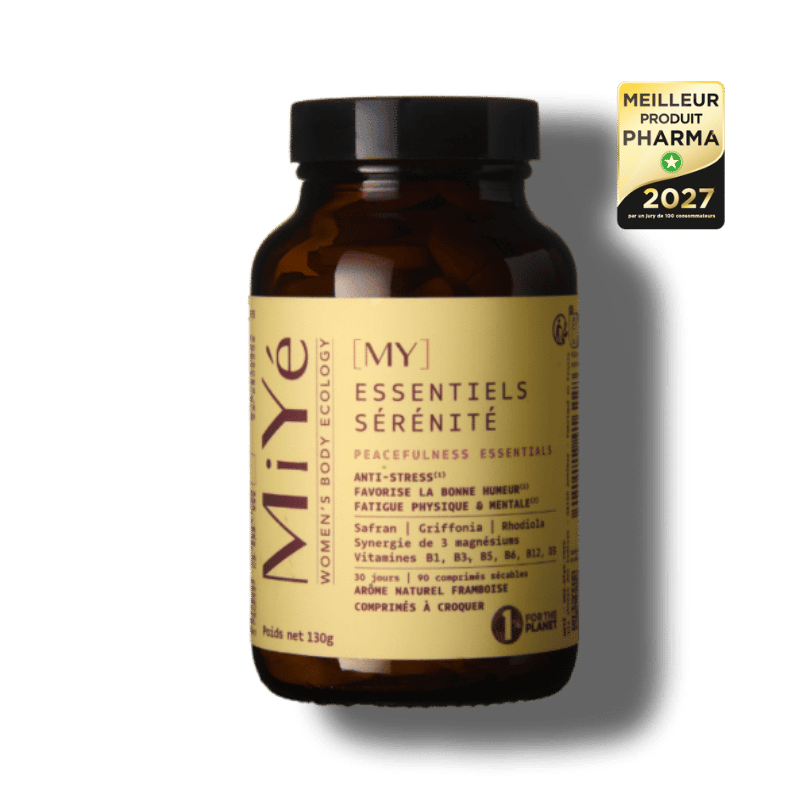
For targeted support, [MY] Women's Balance Essentials is formulated to support physical comfort during perimenopause: cycle variations, hot flushes, and hormonal fatigue. For associated mood changes and sleep disturbances, [MY] Serenity Essentials can complement this approach.
- Medical support: Some women are offered hormonal support by their doctor. We are not in a position to advise you on this matter: each situation is unique, and only a healthcare professional can assess what is best suited to your case.
- Consulting healthcare professionals: It is essential to regularly consult a gynaecologist or GP for personalised follow-up. They can offer detailed guidance, manage symptoms, and adjust any support as needed, as well as referring to other specialists if necessary.
By implementing these solutions and taking care of yourself, it is possible to navigate perimenopause more comfortably and preserve your overall wellbeing.
Food supplement: does not replace a varied diet and a healthy lifestyle. The information provided is for educational purposes only and does not replace the advice of a healthcare professional.
How long do periods last during perimenopause?
During perimenopause, periods can last from 2 to more than 10 days depending on the cycle. Periods lasting fewer than 2 days or more than 8 days on a regular basis warrant medical advice to rule out any other cause.
Is it normal to have very heavy periods during perimenopause?
Yes, heavier periods are common during perimenopause. They are often linked to anovulatory cycles, which cause a drop in progesterone and thickening of the uterine lining. Very heavy bleeding (changing protection every hour) warrants medical advice.
How do you distinguish irregular periods from another health issue?
Menstrual irregularities during perimenopause are generally linked to natural hormonal fluctuations. Certain signs warrant medical advice: bleeding between periods, duration of more than 10 days, unusual pain. When in doubt, gynaecological follow-up is recommended.
Sources:
- The menstrual cycle: function and irregularities — Questions Sexualité, French Government
- Periods: information and advice — Ameli.fr / Assurance Maladie
- Menopause: learning more and talking about it — French Ministry of Health
- Menopause: biological mechanisms and symptoms — INSERM
- Menopause and beyond: menstrual irregularities and premenopause — CNGOF
- Menopause and ovarian insufficiency: hormonal mechanisms — Société Française d'Endocrinologie
- Periods, endometriosis, menopause: their impact on women's lives — Vie Publique / DILA
- HMPC monograph on Salvia officinalis L., folium — EMA / HMPC
- HMPC monograph on Vitex agnus-castus L., fructus — EMA / HMPC

![Pilulier [MY] Essentiels équilibre féminin sur fond transparent](http://www.miye.care/cdn/shop/files/Visuels-shop-25.png?v=1747987949&width=800)
Share:
Postpartum care : essential tips for a successful postpartum recovery
How to cope with hormonal imbalance after the age of 40 ?