






SUMMARY


Key takeaways
Period pain (dysmenorrhea) is caused by uterine contractions triggered by prostaglandins — the higher their levels, the more intense the pain.
There are two types: primary (without an underlying condition, often from adolescence) and secondary (linked to disorders such as endometriosis or PCOS).
Symptoms include cramps, radiating pain (back, thighs), fatigue, digestive issues, and headaches.
Certain positions (such as gentle yoga) help by relaxing the muscles, improving circulation, and reducing contractions.
Complementary solutions (heat, breathing, diet, supplements) can help, but you should consult a professional if the pain is unusual or disabling.
Why do we feel this pain during periods?
Period pain, or dysmenorrhea, comes from uterine contractions as the uterus tightens to shed its lining. These contractions are triggered by prostaglandins, molecules produced in the endometrium during menstruation.
When prostaglandin production is too high, contractions become intense, compress blood vessels, and cause sharp cramps in the lower abdomen. It is not uncommon to experience a bloated belly during your period, which can disrupt menstrual comfort. The pain can sometimes radiate to the back, thighs, or abdomen, and may be accompanied by nausea during periods or headaches.
Identifying the different forms of dysmenorrhea
There are two types of menstrual pain. Primary dysmenorrhea occurs in the absence of any organic abnormality: the uterus and ovaries are normal, but contractions are stronger due to an excess of prostaglandins. It usually appears shortly after puberty. By contrast, secondary dysmenorrhea is linked to a medical condition (endometriosis, adenomyosis, fibroids, or hormonal disorders such as PCOS) and often appears later in life.
Common symptoms and when to be concerned
Typical signs of primary dysmenorrhea include:
- Cramping in the lower abdomen, just before or at the start of your period.
- A feeling of heaviness in the pelvis.
- Pain radiating to the lower back, thighs, or abdomen.
- Sometimes nausea, vomiting, or diarrhea.
- Fatigue, mild headaches, or dizziness.
It is important to distinguish this pain from other pelvic disorders (infections, urinary conditions, or appendicitis), which may be accompanied by fever or unusual discharge.
Why do positions help?
Adopted as soon as the first signs appear, these positions relax the muscles of the abdomen and pelvis, reducing excessive contractions. They stimulate blood circulation, bring more oxygen to the tissues, and help clear prostaglandins. By relieving pressure on the uterus and gently opening the pelvis, they can also reduce the effects linked to water retention, a common discomfort during this time. These positions offer quick and lasting relief.
7 effective positions to relieve menstrual cramps
1. Fetal position: a reassuring cocoon
How to do it
Lie on your side, then gently bring your knees toward your chest. You can place a pillow between your knees for extra comfort.
Why it helps
This position reduces pressure on the abdomen, relaxes the lower back, and creates a comforting, cocooning effect.
Benefits
Reduces abdominal and lower back pain
Provides a sense of safety and calm
Promotes overall body relaxation
2. Child’s pose (Balasana): an anti-cramp shelter
How to do it
Start on all fours, bring your knees closer together, then sit back on your heels. Lean your torso forward, with your arms stretched out in front of you or relaxed alongside your body. Separate your knees slightly if needed.
Why it helps
It gently stretches the lower back and releases tension in the abdomen.
Benefits
Soothes menstrual cramps
Relaxes the nervous system
Encourages deeper breathing
3. Knees to chest (Apanasana)
How to do it
Lie on your back and bring your knees toward your chest. Wrap your arms around them and breathe deeply.
Why it helps
This posture gently massages the lower abdomen and relaxes the pelvic floor.
Benefits
Reduces bloating
Releases internal tension
Improves digestive comfort
4. Cat-cow (Marjaryasana / Bitilasana): mobilizing the lower back
How to do it
On all fours, alternate between arching your back (inhale) and rounding it (exhale), synchronizing the movement with your breath.
Why it helps
The movement mobilizes the spine and stimulates circulation in the pelvic area.
Benefits
Relieves lower back tension
Improves back mobility
Boosts blood circulation
5. Butterfly pose (Baddha Konasana): opening the hips
How to do it
Sit down with the soles of your feet together and your knees open to the sides. Keep your back straight or lean slightly forward.
Why it helps
It releases tension in the pelvis and encourages the hips to open.
Benefits
Improves pelvic circulation
Reduces tension in the lower abdomen
Promotes deep muscular relaxation
6. Legs up the wall (Viparita Karani): circulatory relief
How to do it
Lie down near a wall and place your legs vertically against it. Let your arms rest on the floor.
Why it helps
This position promotes venous return and reduces pressure in the lower body.
Benefits
Reduces the feeling of heavy legs
Improves blood circulation
Provides an overall relaxing effect
7. Gentle spinal twist: releasing tension deeply
How to do it
Lie on your back, bend one knee, and let it fall to the opposite side while keeping your shoulders on the floor. Alternate sides.
Why it helps
The twist releases tension in the back and abdomen.
Benefits
Deep muscular relaxation
Stimulates digestion
Releases abdominal tension
Extra support for optimal comfort
Local heat
A hot water bottle or heating pad placed on the lower abdomen or lower back relaxes the muscles and improves circulation. A 20 to 30-minute session often provides quick relief, especially when you are looking for natural solutions for premenstrual syndrome.
Conscious breathing
Slow, deep breathing activates the parasympathetic nervous system. Practice abdominal breathing: place one hand on your belly, inhale through your nose while expanding the abdomen, then exhale slowly. Repeat for 5 to 10 minutes to soothe the pain.
Diet and hydration
Choose a balanced diet rich in fruits, vegetables, whole grains, legumes, and healthy fats. Drink 1.5 to 2 liters of water or herbal teas to reduce bloating. Avoid excess salt, refined sugar, and caffeine.
Natural supplements
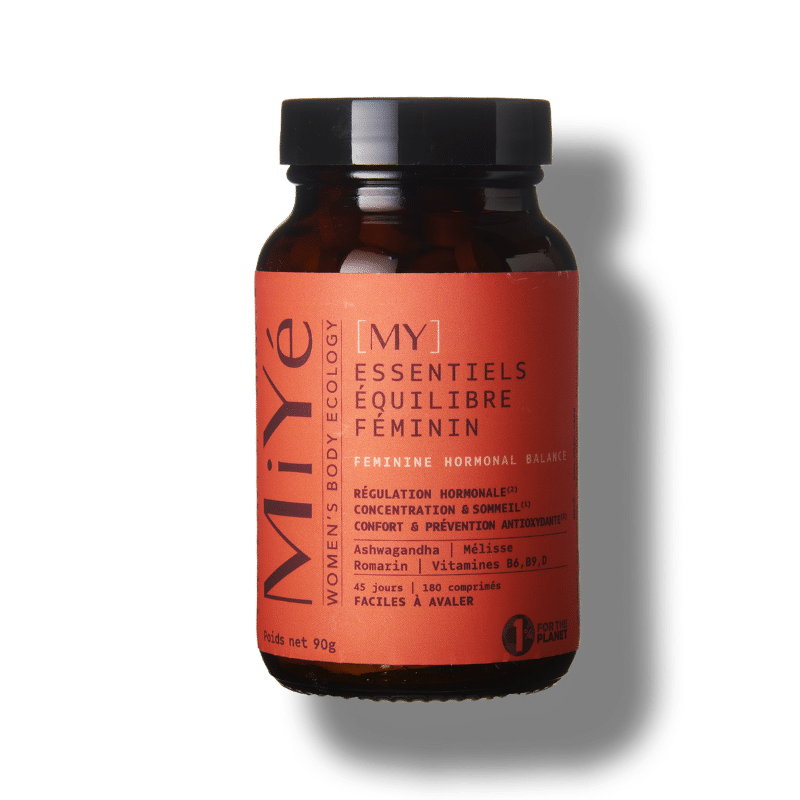
Among the dietary supplements for painful periods, [MY] Équilibre Féminin is particularly interesting in the context of painful periods because it works deeply on the mechanisms behind pain rather than simply masking it. Its formula combines natural actives that target inflammation, hormonal imbalances, and stress all at once, three key factors in dysmenorrhea.
Ashwagandha, a well-known adaptogen, helps regulate cortisol, which can limit the intensification of pain linked to stress. Lemon balm, rich in rosmarinic acid, plays a central role thanks to its anti-inflammatory and antispasmodic properties, helping relax the uterine muscles and reduce cramps.
Rosemary supports the liver in eliminating excess estrogen, contributing to better hormonal balance. Finally, vitamins B6, B9, and D3 reinforce this overall action by supporting the nervous system, regulating hormonal activity, and modulating inflammation.
When should you consult?
Painful periods can often be managed naturally, but if the pain becomes disabling, persists despite gentle methods, or is accompanied by unusual symptoms (very heavy bleeding, fever, pain outside the menstrual period), consult a healthcare professional. Early care, especially in cases of endometriosis or PCOS, can improve your comfort and quality of life.
FAQ: your most common questions
Can all women practice these positions?
Yes, most of you can try these positions as long as they remain comfortable. If you are pregnant or have a heart, spinal, or neurological condition, ask a professional for advice first.
How can you sleep more peacefully during your period?
The fetal position on your side, with a pillow between your knees, reduces pressure on the lower abdomen and back. It is ideal for sleeping better and reducing cramps.
Should some positions be avoided?
Avoid strong twists, inversions, and positions that place heavy strain on your abdominal muscles. Focus on gentleness and comfort.
How long should you stay in a position?
In general, 5 to 10 minutes is enough to feel the first benefits. Listen to your body and come out of the position if you feel discomfort.
Are these positions suitable in cases of endometriosis or PCOS?
Yes, gentle positions can help relieve pelvic pain linked to these conditions. Adapt them according to how you feel and, if necessary, get support from a specialist.


![[MY] Gel intime hydratant rééquilibrant](http://www.miye.care/cdn/shop/files/Design_sans_titre_11.png?v=1788166395&width=3797)
Share:
Adenomyosis and Bloating: Understanding and Managing This Symptom
Menopause and brain fog: What is brain fog ?