





SUMMARY
- Menstrual Migraine: What Exactly Are We Talking About?
- Why Do Hormones Trigger a Menstrual Migraine?
- Associated Aggravating Factors and Triggers
- How to Recognize the Symptoms of a Menstrual Migraine?
- How to Diagnose a Menstrual Migraine?
- How to Relieve Menstrual Migraines Naturally?
- Menstrual Migraines and the Major Stages of Female Hormonal Life
- Sources
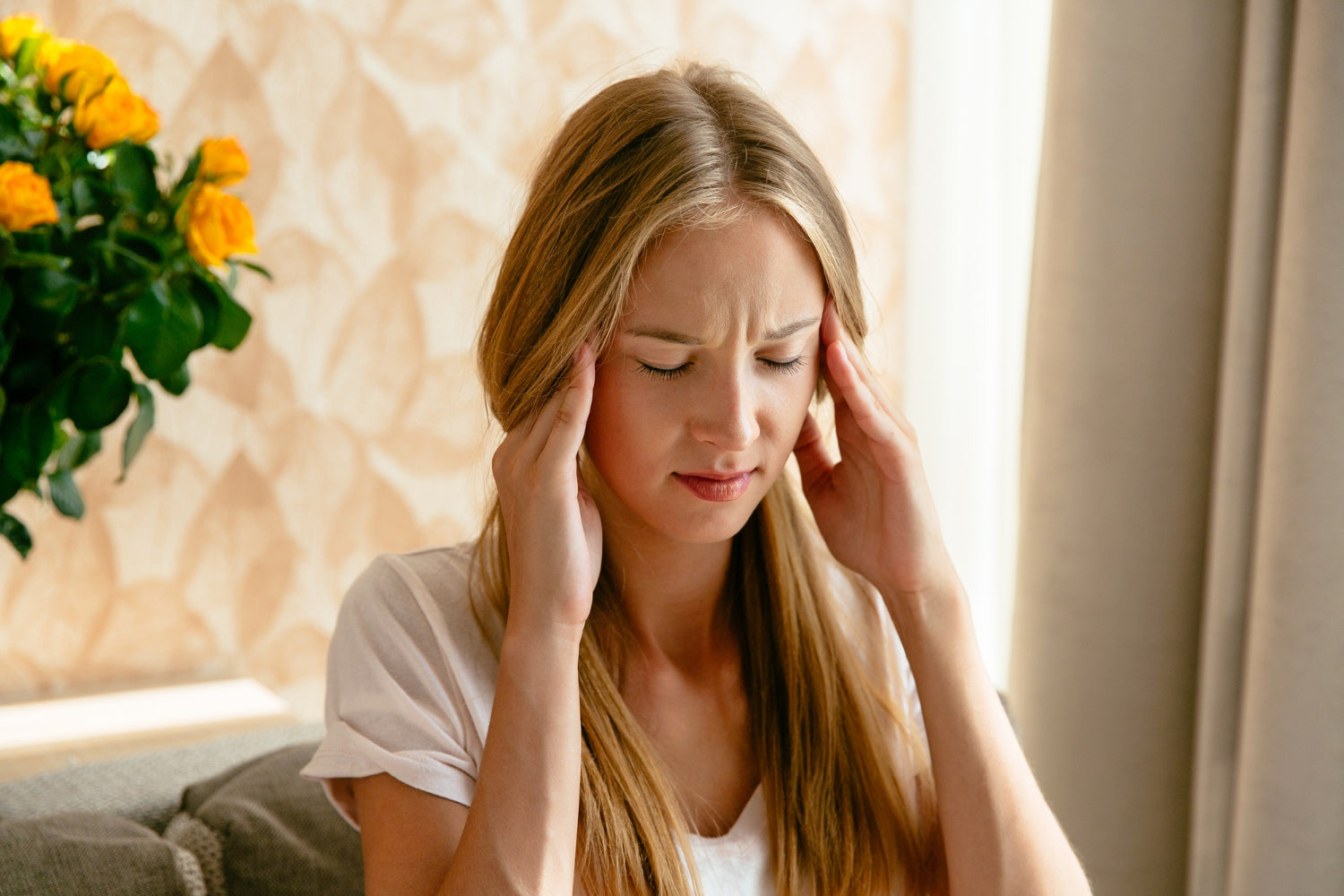
A precise hormonal mechanism: it is not a low level of estrogen that triggers the flare-up, but rather its sudden drop at the end of the cycle—a variation that some women tolerate less well than others.
Recognizing the pattern: if your migraines regularly occur between Day -2 and Day +3 of your period for at least 2 out of 3 cycles, they are likely menstrual migraines, and keeping a cycle diary is the primary tool to confirm this.
More intense and longer-lasting attacks: menstrual migraines last on average longer than other attacks and are more resistant to standard pain relievers, which means they deserve appropriate management rather than being downplayed.
Concrete solutions exist: magnesium, vitamin B2, omega-3, sleep hygiene, and stress management are well-documented allies to reduce the frequency and intensity of attacks over the long term.
The hormonal life cycle matters: pregnancy, perimenopause, menopause—each major transition shapes the migraine profile. Understanding this progression allows you to anticipate and adapt your care framework.
Studies show that menstrual migraine attacks tend to be longer and more intense than migraines occurring outside the menstrual period, and they respond less effectively to conventional pain relievers. Understanding this hormonal link and discussing it with your doctor allows you to consider strategies tailored to your profile and improve your menstrual comfort.
Menstrual Migraine: What Exactly Are We Talking About?
A menstrual migraine is diagnosed when:
- An attack systematically appears within a window spanning from 2 days before to 3 days after the first day of your period;
- This recurs across at least two consecutive cycles (IHS criteria);
- It is predominantly a migraine without aura, although rare cases with aura have been documented.
The Difference with "Classic" Migraines
A migraine, whether linked to your period or not, is recognized by the same signs. However, the experience differs from one woman to another. The pain can affect only one side of the head or both. It can beat like a pulse or feel more diffuse. Depending on the profile, it may be accompanied by nausea, vomiting, or sensitivity to light and sound.
A migraine attack typically unfolds in three stages: the warning signs, the pain itself, and then the recovery phase. For some women, an aura is also present.
The aura involves temporary symptoms that do not cause lasting harm, preceding or accompanying the onset of pain. Most often, these symptoms affect vision: bright spots, zigzag lines, or blurry areas in the visual field. They can also manifest as tingling sensations or difficulty finding words.
The warning signs (referred to by doctors as the prodrome) appear anywhere from a few hours up to one or two days before the attack, depending on the person: unusual fatigue, irritability, difficulty concentrating, specific food cravings, or repeated yawning.
The recovery phase (the postdrome) follows the resolution of the pain. Many women describe experiencing brain fog, marked fatigue, trouble concentrating, or persistent irritability during this time.
Both of these phases are fully part of the migraine experience. Yet, they are frequently ignored, even though they can weigh just as heavily as the attack itself on daily life.
Therefore, the difference with a menstrual migraine does not stem from its nature, but from its hormonal trigger and its timing of occurrence. Its specific characteristics include:
- It returns at a fixed time, in direct alignment with the menstrual cycle;
- It is often more intense, with attacks lasting an average of 24 hours, compared to 12 hours for migraines occurring outside of the menstrual window (European study, 2021).
Pure Menstrual Migraine vs. Menstruation-Related Migraine
- The International Classification of Headache Disorders (ICHD-3) distinguishes between two sub-types:
- Pure Menstrual Migraine (PMM): attacks occur exclusively within the perimenstrual window (between Day -2 and Day +3 of the cycle, where Day 1 represents the first day of the period) and never at any other time during the cycle. This accounts for about 10% of women who experience migraines.
- Menstruation-Related Migraine (MRM): attacks repeatedly occur around the time of the period but can also manifest at other points during the cycle. This is by far the most frequent form.
In both cases, the central triggering mechanism remains the same: the drop in estrogen levels.
If you want to support your nervous well-being on a daily basis, [MY] Serenity Essentials combines magnesium bisglycinate and targeted active ingredients for the nervous system. Ideal for mild headaches linked to your cycle. Dietary supplement, not intended for medical purposes.
Why Do Hormones Trigger a Menstrual Migraine?
It is not so much the absolute level of estrogen but the speed of its fluctuation that triggers the attack. A 50% drop in estrogen levels within 24 hours can increase the excitability of the trigeminovascular system, which is responsible for 70% of pain sensations (Neuroscience Letters, 2020). Cases of estrogen dominance can also modulate this sensitivity and promote increased severity of attacks.
- Estrogen modulates serotonin: a decrease promotes blood vessel dilation and meningeal inflammation.
- Prostaglandins, released during menstruation, increase nerve sensitivity and worsen the pain.
The Drop in Estrogen: The Central Mechanism of Menstrual Migraines
The primary mechanism identified is the sudden drop in estradiol levels (the most active form of estrogen) that occurs at the end of the luteal phase, right before your period. This rapid hormonal variation impacts several neurological and vascular systems:
- It influences the synthesis of serotonin, a key neurotransmitter in pain regulation and vasoconstriction. A drop in estrogen levels decreases the availability of serotonin, promoting cerebral vasodilation and consequently triggering migraine pain.
- It alters the sensitivity of the trigeminovascular system, the neural pathway involved in the genesis of migraines.
- It promotes the synthesis of pro-inflammatory prostaglandins, notably via uterine contractions—which explains the connection between dysmenorrhea (painful periods) and menstrual migraines.
Thus, it is not a permanently low level of estrogen itself that causes the migraine, but rather the speed and scale of its drop—which explains why some women are much more sensitive to it than others.
High-Risk Moments in the Menstrual Cycle
On a standard 28-day cycle (provided as an indication, as every cycle is unique):
- • Day -2 to Day +3 (perimenstrual window): This is the primary risk window, during which estrogen levels plummet following the post-ovulatory peak. This is the temporal zone defined by the ICHD-3 criteria.
- • Around ovulation (towards Day 13-Day 15): Some women also suffer from a migraine during the post-ovulatory drop in estrogen, which is less documented but very real.
Outside of these windows, hormonal levels are relatively stable, explaining why attacks are less frequent mid-cycle.
Associated Aggravating Factors and Triggers
Hormonal fluctuation is the central factor, but several elements can lower the threshold for an attack and worsen symptoms:
- Chronic or acute stress (particularly during the premenstrual phase, when stress tolerance is naturally reduced)
- Sleep disruptions (insomnia, hypersomnia, changes in sleep rhythm)
- Dehydration and irregular meals (reactive hypoglycemia)
- Magnesium deficiency, which is common before periods and known to lower the migraine threshold
- Imbalances in the prostaglandin balance (omega-6 to omega-3 ratio)
- Alcohol, foods rich in tyramine (aged cheeses, cured meats), and excessive amounts of caffeine
How to Recognize the Symptoms of a Menstrual Migraine?
Distinctive Signs of Menstrual Headaches
Menstrual migraines share the characteristics of a classic migraine, with a few notable specificities:
- Throbbing, often one-sided pain (hemicrania), ranging from moderate to severe intensity
- Worsening with physical effort, light (photophobia), and sound (phonophobia)
- Nausea, sometimes vomiting
- Occurrence within the Day -2/Day +3 window repeatedly for at least 2 out of 3 cycles
- Longer attacks that are often less responsive to standard acute treatments (pain relievers, anti-inflammatories, or even triptans) than those occurring outside the menstrual window
- Frequent absence of aura (unlike certain non-hormonal forms, menstrual migraines are most commonly without aura)
- Possible association with other premenstrual symptoms: intense fatigue, irritability, bloating, abdominal pain
How Long Does a Menstrual Migraine Attack Last?
A menstrual migraine attack lasts on average between 4 and 72 hours. However, it tends to be longer than migraines that occur outside the perimenstrual window. Attacks extending over 2 to 3 days are frequently reported, sometimes coinciding with the entire duration of the period.
This extended duration is explained by the persistence of the estrogen drop during the days of menstruation, maintaining a state of neurological vulnerability for longer than a single, isolated trigger would.
Menstrual Migraines and Hormonal Contraception: What is the Connection?
The relationship between hormonal contraception and migraines is complex and highly individual. Here are the key points to know:
- In women with no contraindications, the combined estrogen-progestin pill, by suppressing natural cycle fluctuations, can reduce menstrual migraines. However, the pill-free week (or placebo week) triggers an estrogen drop that can itself cause an attack.
- The progestin-only pill or the hormonal IUD (progestin alone) can sometimes worsen migraines in certain women, or have no effect at all.
Important: migraine with aura is a strict contraindication to the combined estrogen-progestin pill, regardless of age, and must absolutely be discussed with a doctor. The synthetic estrogens it contains increase the risk of ischemic stroke, which is already higher in individuals suffering from migraines with aura. The World Health Organization classifies this combination under Category 4 of its medical eligibility criteria for contraceptive use, meaning it is a method that should not be used.
For migraines without aura, age also becomes a factor according to the WHO: from the age of 35, starting the combined pill is not recommended, and its continuation should be avoided; before the age of 35, both starting and continuing it remain not recommended but feasible under medical supervision. Contraceptives without estrogen (progestin-only pill, hormonal IUD, implant) are not subject to this aura-related contraindication.
In all cases, any decision regarding contraception in the context of migraines must be made with a healthcare professional.
How to Diagnose a Menstrual Migraine?
The Migraine Diary: Your Best Tool for Confirming the Diagnosis
The diagnosis of a menstrual migraine relies primarily on clinical observation and, more specifically, on a migraine diary kept for at least 3 consecutive cycles. This is a simple, free, yet decisive tool.
For each day, write down:
- The presence or absence of a migraine attack (and its intensity)
- The start and end of your period (Day 1 = first day of menstruation)
- The medications taken and their effectiveness
- Potential trigger factors (stress, sleep, diet, etc.)
If the attacks consistently cluster within the Day -2/Day +3 window for at least 2 out of 3 cycles, the ICHD-3 diagnostic criteria are met. This diary is also the tool your doctor will use to refine their evaluation.
When to Consult a Doctor?
Consult a doctor or a neurologist if:
- Your attacks last more than 48 hours or occur more than 4 times a month
- They are accompanied by an aura (visual disturbances, numbness, speech difficulties)
- Over-the-counter pain relievers do not provide relief or require very frequent intake (risk of medication-overuse headaches)
- The migraines significantly impact your quality of life, your work, or your activities
- You wish to explore medication-based prevention options tailored to your hormonal profile
A menstrual migraine is a real pathology that deserves serious medical care and should not be minimized as "just a simple period pain."
How to Relieve Menstrual Migraines Naturally?
Micronutrients and Herbs: Allies for Hormonal Balance Against Migraines
Several micronutrients and plants have been the subject of serious studies in the context of migraines or hormonal imbalances. They can provide complementary support without replacing professional medical advice.
- Magnesium: This is the most well-documented micronutrient for migraine prevention. Clinical studies have shown that supplementation with magnesium (especially in glycinate or bisglycinate forms) can reduce the frequency of attacks, particularly in women with menstrual migraines. Magnesium levels tend to drop before periods. (Mauskop A. et al., Headache 1995; Peikert A. et al., Cephalalgia 1996.)
- Vitamin B2 (riboflavine): Supplementation at 400 mg/day has shown a significant reduction in migraine frequency in randomized controlled trials. Its action works by improving neuronal mitochondrial metabolism. (Schoenen J. et al., Neurology 1998.)
- Coenzyme Q10: Involved in cellular energy production, it has been studied as a preventive agent for migraines with encouraging results across several clinical trials.
- Omega-3 (EPA/DHA): Their anti-inflammatory effect can help modulate the production of pain-inducing prostaglandins. Several studies highlight their value in reducing migraine frequency and intensity.
- Saffron: Recent studies suggest an effect on serotonin modulation and anxiety reduction, which are highly relevant factors in the premenstrual context.
These micronutritional approaches function as basic, long-term prevention: they do not relieve an acute attack instantly but can, over several weeks or months, contribute to reducing their frequency and intensity.
Lifestyle and Menstrual Cycle Management
A few lifestyle adjustments can significantly reduce vulnerability to attacks, especially in the days leading up to your period:
- Maintain stable sleep schedules (even on weekends)—irregular sleep patterns are one of the primary identified triggers
- Eat smaller, more frequent meals to avoid reactive hypoglycemia, and stay regularly hydrated
- Reduce dietary triggers within the Day -5/Day +3 window: alcohol, aged cheeses, cured meats (tyramine), and ultra-processed foods
- Manage chronic stress with regular practices: cardiac coherence, yoga, and mindfulness meditation (which has documented efficacy in reducing migraine frequency)
- Keep a cycle diary to anticipate the risk window and adjust your mental and physical workload accordingly
- Engage in moderate and regular sports activities outside of attack periods (intense effort during a flare-up can worsen symptoms)
How MiYé Supports Women Facing Hormonal Imbalances
At MiYé, we build upon a simple conviction: the female body deserves answers tailored to its hormonal reality. That is why our formulations are designed to support hormonal balance as a whole, addressing common micronutritional deficiencies, the inflammation axis, and cycle regulation.
All our formulations are free from phytohormones and suspected endocrine disruptors, and they are developed with active ingredients whose action is fully documented. Because taking care of yourself should never be a guessing game.
Immediate Steps to Take During an Attack
Unlike the micronutritional approaches mentioned above, which focus on long-term baseline prevention, certain simple actions can provide relief during the attack itself:
- Hydrate at the very first signs, as dehydration can aggravate pain intensity
- Isolate yourself in a dark and quiet room, as photophobia and phonophobia make any sensory stimulation harder to bear during an attack
- Apply a cold compress to your head or neck: cold has a vasoconstrictive effect that can attenuate throbbing pain. Specially designed cooling caps exist for this purpose, or you can simply use a flexible ice pack wrapped in a clean towel or cloth (never apply ice directly to the skin)
These actions do not replace an acute medical treatment if one is necessary, but they can be combined with medical management or used as a supportive measure while waiting for its effects.
Menstrual Migraines and the Major Stages of Female Hormonal Life
Pregnancy and Menstrual Migraines: Why Attacks Often Improve
Pregnancy is one of the rare situations where many women who experience migraines notice a significant improvement, or even a complete disappearance of attacks, especially starting from the second trimester. The reason is hormonal: during pregnancy, estrogen levels increase progressively and stably, without the cyclical fluctuations that typically trigger attacks.
In the first trimester, however, hormonal variations are still unstable and may temporarily maintain or worsen migraines. After giving birth, the rapid drop in estrogen levels during the postpartum period can trigger a resurgence of attacks.
This observation firmly confirms the central role of estrogen fluctuations rather than an absolute level of hormones in triggering menstrual migraines.
Hormonal Migraines During Perimenopause: What to Expect After 40?
Perimenopause (generally between the ages of 40 and 52) is frequently a period when hormonal migraines worsen. Cycles become irregular, and estrogen fluctuations intensify and become less predictable, multiplying the windows of vulnerability.
Short cycles follow long cycles, ovulation becomes erratic, and the body can experience multiple hormonal drops per month. For women who already suffered from menstrual migraines, this period is often described as particularly challenging.
At menopause (the permanent cessation of periods), hormones stabilize at a low level, and most women observe a progressive improvement or even a total disappearance of menstrual migraines. Menopause hormone therapy (MHT), when considered, must be discussed with a doctor while taking your migraine profile into account, especially if there is a history of migraines with aura.
FAQ
Does the menstrual migraine disappear at menopause?
In the majority of cases, yes. Once menstruation has permanently stopped and hormone levels have stabilized at a low baseline level (without fluctuations), menstrual migraines tend to diminish significantly or disappear completely. However, the perimenopause period preceding menopause can be a phase of temporary worsening. Furthermore, some women on menopause hormone therapy (MHT) may continue to experience attacks if their treatment regimen involves dosage variations.
Can menstrual migraine attacks be prevented?
Yes, prevention is possible and is often more effective than simply managing attacks once they have already started. It relies on two complementary axes: non-medicinal prevention (micronutrition, lifestyle adjustments, stress management, cycle diary) and, when attacks are frequent and disabling, medicinal prevention to be discussed with a doctor (short perimenstrual treatments, long-term preventive treatments, etc.). The migraine diary is the essential first step to track attacks objectively and guide your care management strategy.
What is the difference between regular headaches and menstrual migraines?
Headaches refer broadly to any type of pain in the head—a wide concept that includes tension headaches (diffuse, bilateral pain, characterized by a pressing or tight sensation, without nausea or specific sensitivity to light). A migraine is a specific sub-type of headache with precise diagnostic criteria: throbbing pain, often one-sided, accompanied by nausea and/or photophobia/phonophobia, lasting between 4 and 72 hours. Therefore, a menstrual migraine is a true migraine, not a simple headache, and its onset is directly linked to the menstrual cycle.
Can women who suffer from migraines take the pill?
This is a question that must be asked of a doctor or gynecologist, as the answer depends on your individual profile. For women suffering from migraines without aura, hormonal contraception is generally possible, but the choice of molecule and the regimen (continuous or with a pill-free break) deserves to be customized. For women suffering from migraines with aura, contraceptives containing synthetic estrogens are generally not recommended due to a documented increased cardiovascular risk. Alternatives exist, but they must be discussed with a healthcare professional. Our products are not intended for medical use and do not replace professional medical advice.
Sources
- Estrogens and migraine attacks with and without aura. Lancet Neurology.
- Estrogens, progestogens, and headache. Neurology.
- Characteristics of menstrual and non-menstrual attacks in women with menstruation-related migraine. Cephalalgia.
- International Classification of Headache Disorders. Cephalalgia.
- Intravenous magnesium sulfate relieves migraine attacks in patients with low serum ionized magnesium levels. Headache.
- Prophylaxis of migraine with oral magnesium: results from a prospective, multi-center, placebo-controlled and double-blind randomized study. Cephalalgia.
- Effectiveness of high-dose riboflavin in migraine prophylaxis. A randomized controlled trial. Neurology.

![Pilulier [MY] Essentiels équilibre féminin sur fond transparent](http://www.miye.care/cdn/shop/files/Visuels-shop-25.png?v=1747987949&width=800)
Share:
Heavy legs and heat: the hidden role of hormones and natural remedies
How to Stop Taking the Pill? The Complete Guide to a Smooth Hormonal Transition