




SUMMARY
- Why does our mood fluctuate across the hormonal cycle?
- The natural active ingredients that support mood and nervous system balance
- How to choose a quality mood-support supplement
- Usage tips and good practices for lifting your mood
- Frequently asked questions about mood-support supplements
- Scientific sources




Key takeaways:
Mood swings in women are often linked to hormonal fluctuations across the cycle, prolonged stress, or insufficient intake of certain nutrients
Magnesium and B vitamins are, to date, the only active ingredients in this family backed by EFSA-approved health claims relating to normal psychological function
Saffron, rhodiola, and ashwagandha are traditionally used to support nervous system wellbeing, though without a validated European health claim to date
Targeted supplementation suited to your profile (stress, cycle, menopause) is more relevant than a one-size-fits-all formula
Professional medical support remains essential in cases of intense or persistent low mood
Why does our mood fluctuate across the hormonal cycle?
The role of hormones in mood regulation
Estrogen and progesterone do not act on the menstrual cycle alone. These hormones interact with serotonin and other neurotransmitters involved in mood regulation.
When their levels shift, in the premenstrual period, postpartum, or as menopause approaches, this interaction can translate into greater emotional sensitivity, which our entire range dedicated to irritability and anxiety can support day to day. To go further into this mechanism at a specific point in the cycle, read our article on premenstrual dysphoric disorder.
Stress, fatigue, and low mood: a cycle worth breaking
Chronic stress depletes reserves of certain nutrients essential to the nervous system, magnesium in particular. This nutritional dip, in turn, heightens fatigue and irritability, which keeps the stress going. It is a cycle that can be eased by acting on several fronts at once.
This same dynamic also shows up after childbirth, when the sudden hormonal drop can unsettle emotional balance. Our article on the hormonal drop after childbirth looks at this mechanism in detail.
Nutritional gaps that affect emotional wellbeing
Certain deficiencies, in magnesium, B vitamins, or iron, are particularly common among women and can have a direct impact on energy and mood. For a full overview, see our article on the most common nutritional deficiencies in women.
The natural active ingredients that support mood and nervous system balance
Saffron: the red gold for a brighter mood
Saffron is among the most widely studied plants for its traditional use in relation to emotional wellbeing. Several research studies explore its potential, but no health claim has been officially validated by EFSA on this topic to date.
Note: botanical substances do fall under Regulation (EC) 1924/2006. Their health claims have been awaiting EFSA assessment since 2010 (the on hold register, covering roughly 2,000 claims) and may only be used for marketing purposes within the strict scope of the transitional regime (Article 28(5)-(6) of the regulation). Saffron is presented here on the basis of its traditional use, without any claim of a demonstrated effect on mood.
Rhodiola: an adaptogenic plant against stress
Rhodiola is an adaptogenic plant, traditionally used to support the body through periods of stress-related fatigue. Its European health claim is among the botanical claims placed on hold by the Commission since 2010, with no known timeline for a final decision: consider its use as traditional support rather than a proven effect.
Magnesium and B vitamins: an essential duo for the nervous system
Magnesium and the B vitamins (notably B6, B9, B12) are among the few active ingredients in this category to carry health claims officially authorised by EFSA: they contribute to normal psychological function and to the reduction of tiredness. They are solid nutritional pillars for supporting the nervous system day to day.
Tryptophan and serotonin precursors
Tryptophan is an essential amino acid: the body cannot produce it and must obtain it through diet. It serves as a biological precursor to serotonin. This is an established fact in biochemistry, but it does not guarantee a direct, systematic effect on how mood is actually experienced, which depends on many other factors.
Ashwagandha: a traditional ally of calm
Ashwagandha is an adaptogenic plant traditionally used in Ayurveda to support the body through periods of nervous tension. Several clinical studies explore its potential effect on perceived stress. As with saffron and rhodiola, its European health claim has remained on hold since 2010, neither approved nor rejected to date.
Good to know: St. John's wort, sometimes mentioned for its effect on mood, is deliberately left out of our approach. This plant can interact with several common medications, including hormonal contraception and antidepressants. Ask your doctor or pharmacist for advice before considering its use.
At MiYé, we formulate our supplements while systematically excluding phytohormones and suspected endocrine disruptors, for an approach that respects your hormonal balance.
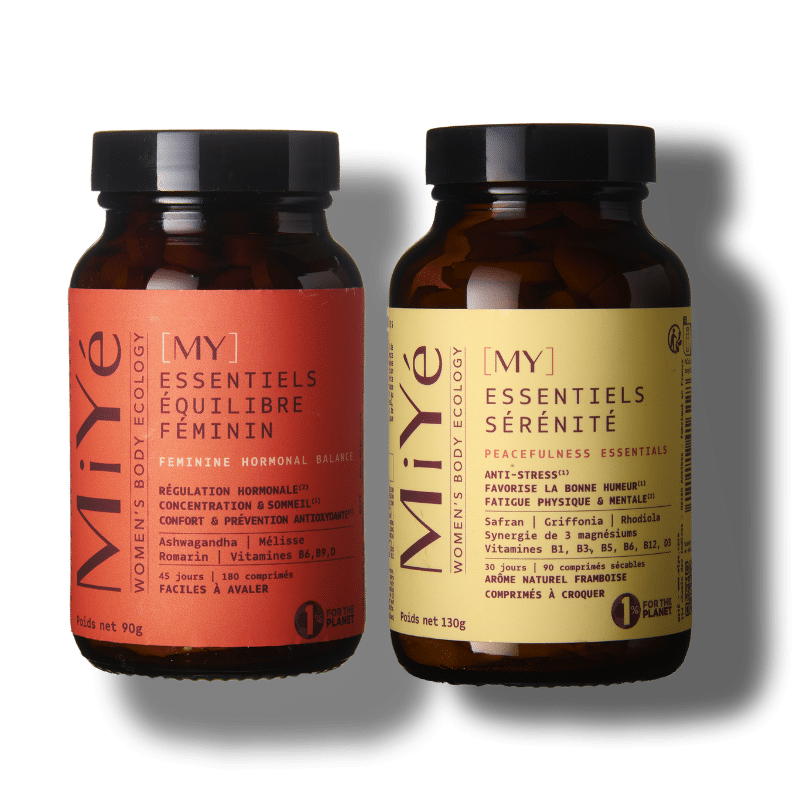
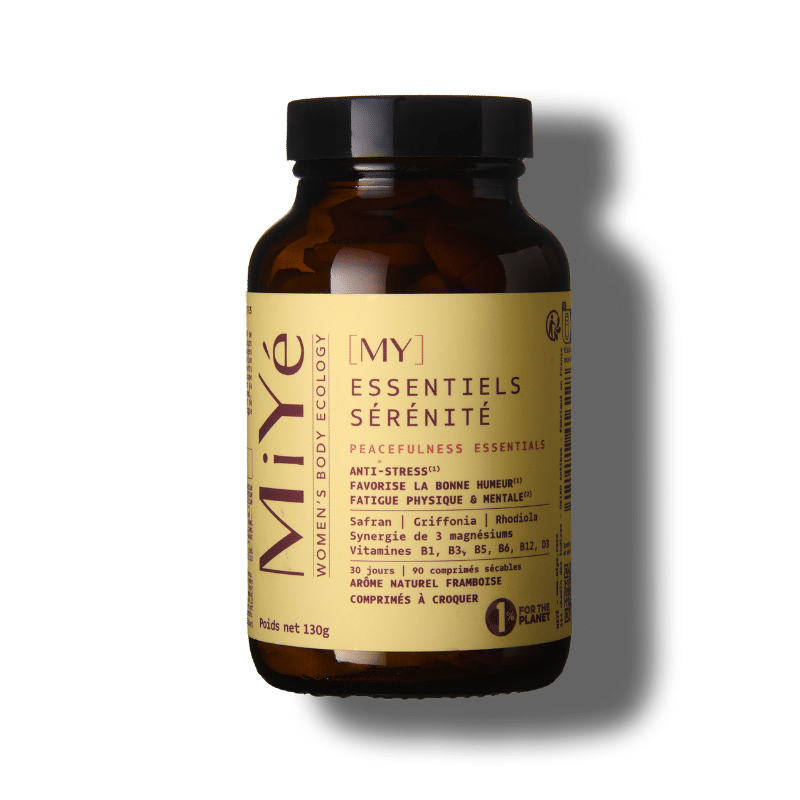
[MY] SERENITY ESSENTIALS was formulated to support a nervous system under daily strain.
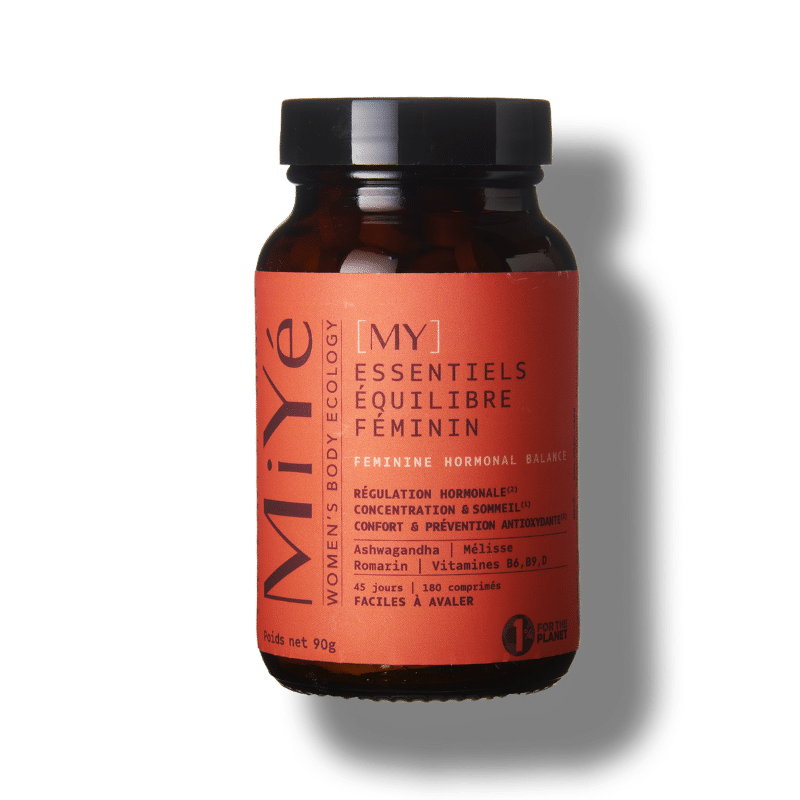
[MY] WOMEN'S BALANCE ESSENTIALS was formulated to support the hormonal imbalances behind emotional and physical discomfort.
How to choose a quality mood-support supplement
Selection criteria: organic, vegan, and free from endocrine disruptors
Traceable, transparent sourcing of active ingredients
A formula free from phytohormones and suspected endocrine disruptors
Capsules ideally of plant origin
Organic certification wherever the active ingredients allow it
Dosage and bioavailability: what really makes the difference
An underdosed active ingredient serves little purpose, even if it appears on the label. Bioavailability, meaning the body's actual ability to absorb and use a nutrient, matters just as much as the dosage listed. Look for forms of magnesium known for good absorption, such as bisglycinate.
The importance of clinical testing and traceability
A trustworthy brand should be able to account for the origin of its active ingredients and its formula's compliance with European food supplement regulations. Transparency on these points is an essential signal of trust.
Mood-support supplements and the female cycle: a specific approach
The female body goes through cyclical hormonal variations with no equivalent in men. A formula designed specifically for these needs, rather than a generic supplement, allows for an approach more consistent with your physiology.
Usage tips and good practices for lifting your mood
When and how to take your mood-support supplement
It is generally taken with meals, to optimise nutrient absorption and limit digestive discomfort. Always refer to the product insert for the exact dosage.
Recommended course length for visible effects
A course of several weeks is generally needed to allow the body to rebuild its nutritional reserves. The first noticeable effects usually appear after 3 to 4 weeks of regular use. Consistency matters more than rushing the results.
A varied, balanced diet: the foundation of emotional wellbeing

Omega-3s (oily fish, nuts and seeds) to support the nervous system
Legumes and whole grains, sources of magnesium and B vitamins
Staying properly hydrated, often overlooked but essential for energy
Cutting back on refined sugar and stimulants, which heighten mood swings
Pairing supplements with healthy habits: sleep, physical activity
Sleep and regular physical activity remain the strongest pillars of emotional balance. No supplement, however well formulated, can make up for a chronic lack of sleep or movement.
If your low mood comes with mental fog, our article on menopause and brain fog may help. And if fatigue mainly shows up around your period, see our article on period-related fatigue.
Expert tip: every woman experiences her hormonal shifts differently. To identify your specific needs, take our free hormonal profile quiz.
Frequently asked questions about mood-support supplements
Can a mood-support supplement replace medical treatment?
No. A food supplement supports an overall healthy lifestyle; it is never a substitute for medical advice or a prescribed treatment. If low mood persists, consult your doctor.
How long before I notice effects on my mood?
Effects vary from person to person and depend on the active ingredients involved. Generally allow 3 to 4 weeks of regular use before noticing a change, alongside suitable lifestyle habits.
Can several food supplements be taken at the same time?
It depends on the formulas and their respective dosages. Ask a healthcare professional for advice to avoid any risk of overdosing on certain nutrients.
Are mood-support supplements suitable for every woman?
Not automatically. Needs vary with age, hormonal cycle, and any underlying conditions. Medical advice is recommended if you are unsure.
Are there side effects with mood-support supplements?
It depends on the active ingredients and individual sensitivity. Some adaptogenic plants are not recommended alongside certain ongoing treatments. Always read the product insert and ask for advice if you are unsure.
Can a mood-support supplement be taken during pregnancy or breastfeeding?
Pregnancy and breastfeeding call for particular care. Do not take any food supplement during these periods without prior approval from your doctor or midwife.
We are not qualified to substitute for medical practice; for any health-related question, we recommend reaching out to your healthcare professional or treating physician.
Scientific sources
-
EFSA - Approved health claims on magnesium and B vitamins:
https://www.efsa.europa.eu/en/topics/topic/nutrition-and-health-claims -
ANSES - Food supplements, regulatory framework and safety monitoring:
https://www.anses.fr/fr/content/compl%C3%A9ments-alimentaires -
PubMed - Effects of extract of ashwagandha root in reducing stress and anxiety in adults:
https://pubmed.ncbi.nlm.nih.gov/23439798/


Share:
Beyond Collagen: How to Help Skin Restart Its Regeneration?