




SUMMARY
- Key takeaways
- Collagen is not the starting point
- 1/ Protecting the skin barrier: the key to cell regeneration
- 2/ How to naturally strengthen your skin barrier
- 3/ Fibroblasts: the true architects of the dermis
- 4/ Biomimetic peptides: the messengers of skin firmness
- 5/ Could firmness also depend on movement and the fascia beneath the skin?
- 6/ Why facial self-massage plays a key role
- A holistic approach to regeneration
- Sources


Key takeaways
Skin firmness does not depend on a single collagen boost, but on the proper functioning of the mechanisms that produce it.
An intact skin barrier is the first condition for healthy cell regeneration.
Fibroblasts, the true architects of the dermis, produce collagen and elastin: their activity can be supported daily.
Biomimetic peptides act as messengers that speak the skin's own natural language.
Tissue movement, through fascia work and self-massage, also contributes to skin quality and density.
When the first signs of ageing appear, collagen is often the main suspect. We look to produce more of it, to preserve it, sometimes even to replace it. Yet collagen is not the starting point of skin firmness. It is, rather, the consequence.
Skin that keeps its density over time is, above all, skin whose biological mechanisms continue to work harmoniously. Fibroblasts capable of producing the supportive proteins it needs. A skin barrier strong enough to protect it from external aggressors. Mobile, well-vascularised tissue. An environment that allows cells to communicate effectively with one another.
The good news? Skin already has all the resources it needs to repair itself. The goal is not to do the work in its place, but to give it the means to keep doing that work.
Collagen is not the starting point
When it comes to skin firmness, collagen is often presented as the main culprit behind skin ageing. Yet it is more the consequence of a set of biological mechanisms working properly than the problem itself.
Collagen is indeed one of the most important proteins in the dermis. It contributes to the skin's resistance, suppleness and density. But its presence depends above all on the activity of fibroblasts, the cells responsible for producing it, as well as on the environment in which they operate.
With age, repeated UV exposure, oxidative stress and hormonal fluctuations, this balance becomes more fragile. Fibroblasts gradually become less active, repair mechanisms slow down, and the renewal of supportive fibres becomes less efficient.
1/ Protecting the skin barrier: the key to cell regeneration
For several decades, anti-ageing strategies focused mainly on cell renewal. Repeated exfoliation, microdermabrasion, frequent cleansing or heavy use of acids sometimes led to neglecting an essential element: the skin barrier.
Located on the surface of the epidermis, this barrier is not simply a protective layer. It is a true ecosystem made up of cells, lipids (notably ceramides, cholesterol and fatty acids), as well as a microbiome bringing together bacteria, yeasts and other beneficial micro-organisms. Together, these elements help maintain skin balance.
Its role is multiple: limiting water loss, protecting the skin from environmental aggressors, maintaining a balanced microbiome and supporting the proper functioning of repair mechanisms. When it is compromised, insensible water loss increases, skin becomes more sensitive and diverts more resources toward defence, to the detriment of its renewal functions.
Ceramides play a central role in this function. Naturally present in the stratum corneum, they make up a significant part of the lipid cement that holds epidermal cells together. Several studies have shown that formulas enriched with ceramides help restore barrier function and improve skin comfort over the long term.
Skin regeneration therefore does not begin only in the dermis. It also begins at the surface, thanks to a barrier able to fulfil its role effectively.
2/ How to naturally strengthen your skin barrier
Preserving your skin barrier starts with a few simple daily habits. Contrary to popular belief, cleansing the skin excessively does not improve its quality. On the contrary, over-cleansing, especially when combined with water that is too hot or harsh products, can weaken the hydrolipidic film and disrupt the balance of the skin microbiome. Gentle cleansers, ideally enriched with relipidating agents or postbiotics, help respect this fragile ecosystem instead.
The quality of the skin barrier also depends on broader factors. Insufficient sleep, repeated UV exposure or a chronic inflammatory state can impair its ability to renew itself properly. Diet also plays an important role: sufficient intake of protein, omega-3s, zinc, and vitamins A, C, D and E helps maintain more resilient, better-hydrated skin.
On the cosmetic ingredient side, certain actives stand out for supporting barrier function. Postbiotics help balance the microbiome and strengthen the skin's resistance to external aggressors. Biomimetic ceramides reinforce the lipid cement that holds the epidermis together, while plant-derived squalane helps preserve the skin's suppleness and imperviousness. Oat extract rich in beta-glucans rounds out this approach with its soothing properties and beneficial action on barrier function.
3/ Fibroblasts: the true architects of the dermis
At the heart of the dermis live the fibroblasts. These cells play an essential role in maintaining the quality of skin tissue. They are the ones that produce collagen, as well as elastin and certain components essential for deep skin hydration, such as hyaluronic acid. Over time, their activity slows down. Oxidative stress, UV radiation, low-grade chronic inflammation and hormonal changes can gradually reduce their efficiency. This is why the most modern strategies no longer aim to replace what is missing, but rather to support the work of these cells so they can continue to carry out their function.
Supporting fibroblast activity starts with lifestyle habits that favour tissue regeneration. Sleep plays a central role: it is during the night that the skin activates much of its repair and cell renewal processes. A diet rich enough in protein is also essential, since fibroblasts need amino acids to produce collagen and elastin. Vitamin C is another key element, as it is directly involved in the synthesis of collagen fibres. Sun protection also remains one of the most effective habits for preserving fibroblast activity. Regular physical exercise, thanks to its positive effects on blood circulation and tissue oxygenation, also appears to help maintain an environment favourable to cell function.
Conversely, excess sugar can accelerate skin ageing through a process called glycation. Sugar molecules bind to supportive proteins such as collagen and elastin, making them stiffer and less functional. On the skincare side, certain actives are particularly interesting for supporting the work of fibroblasts. Biomimetic peptides act as messengers capable of stimulating certain repair mechanisms. Vitamin C helps protect against oxidative stress while supporting collagen synthesis. Niacinamide helps strengthen barrier function and limit low-grade chronic inflammation. Plant-derived pro-retinol supports cell renewal while respecting the skin's natural rhythm.
In addition, certain nutrients consumed as part of a balanced diet or suitable supplementation, such as collagen peptides, vitamin C or omega-3s, are today attracting growing interest for their ability to support the mechanisms involved in skin tissue quality.
4/ Biomimetic peptides: the messengers of skin firmness
Among the most interesting actives in this approach, peptides hold a special place. These short chains of amino acids act as true biological messengers. In the body, they naturally take part in communication between cells. Certain peptides used in cosmetics reproduce these natural signals and can interact with the mechanisms involved in maintaining skin firmness.
In particular, they signal to fibroblasts that it is time to boost collagen or elastin production. Others help limit the premature breakdown of existing fibres by acting on certain enzymes involved in their degradation. This ability to convey information rather than impose direct action is what makes them unique.
Peptides fit perfectly within a biomimetic logic: they do not force the skin to react, but instead use a language it already recognises. By sending signals similar to those naturally present in tissue, they help create an environment favourable to repair and renewal mechanisms. This approach is particularly relevant for skin weakened by ageing, hormonal changes or repeated exposure to environmental stress factors.
As with fibroblasts, the quality of these mechanisms also depends on the resources available to the body. The natural synthesis of peptides and supportive proteins relies on a sufficient supply of amino acids, notably glycine, proline, hydroxyproline and lysine. These are found mainly in protein-rich foods such as fish, eggs, dairy products, meat, and dietary collagen.
On the skincare side, peptides often work in synergy with other antioxidant actives such as vitamin C or certain plant polyphenols. By limiting the oxidative stress responsible for breaking down supportive fibres, these actives help preserve the environment fibroblasts need to function well and to maintain collagen quality over time.
5/ Could firmness also depend on movement and the fascia beneath the skin?
Skin does not exist on its own. Beneath it lies a complex network of connective tissue, muscles and supportive structures that contribute to its appearance. Among them, fascia is attracting growing interest today. Long considered a simple anatomical covering, it is now recognised as a genuine mechanical communication network running through the body.
Fascia surrounds muscles, organs and various tissue structures. Rich in collagen, it takes part in transmitting tension, tissue mobility and their ability to adapt. It also forms a pathway for blood and lymphatic vessels, playing an important role in fluid circulation and exchanges between tissues. Over time, lack of movement, certain repeated tensions or natural ageing can change its suppleness. Tissue then becomes less mobile, exchanges less fluid, and some areas can appear more rigid. The face is no exception to this logic.
Recent research shows that connective tissue responds to mechanical stress and movement. Without claiming that fascia alone controls collagen production, its mobility helps maintain an environment favourable to cell function and to the overall quality of tissue. Firm skin, then, is not simply skin rich in collagen. It is also skin supported by mobile, supple and dynamic tissue.
This view lies at the heart of the work of Nathalie Dendura, a facialist specialising in supporting facial tissue. During our Instagram Lives dedicated to fascia, one idea kept coming up: tissue needs movement to stay vital. The quality of the skin therefore depends not only on the actives applied to it, but also on the mobility of the structures that support it.
6/ Why facial self-massage plays a key role
The growing interest in facial massage techniques is not just a beauty trend. It reflects a better understanding of the role of movement in tissue quality. Contrary to a common belief, "hydrating" fascia is not simply a matter of drinking more water. To keep their suppleness and ability to adapt, fascia mainly needs to be mobilised regularly. Self-massage helps bring movement back to areas where tension tends to build up. It supports tissue mobility, helps facial comfort, and contributes to maintaining harmonious tissue exchanges. Performed gently and regularly, it can help skin look more rested, more supple, with better-defined facial contours.
This approach broadens the way we think about skin ageing. Skincare products bring the skin useful actives, but movement also plays a part in tissue balance.
Not all techniques work the same way. Fascia work mainly aims to release tension and support fluid circulation, particularly lymphatic. Face yoga engages the underlying muscles more directly to help preserve their tone. Other, more superficial techniques, such as tapping or gentle pinching, aim to stimulate microcirculation and awaken surface tissue.
To explore these approaches further, Nathalie Dendura's book "La beauté du visage", as well as those by Sylvie Lefranc and Virginie Parée, offer interesting insights into the links between movement, tissue and facial ageing.
A holistic approach to regeneration
Helping skin restart its own collagen synthesis mechanisms cannot be reduced to the action of a single active ingredient. It is a systemic approach, aimed at supporting the whole skin ecosystem.
This starts with stimulating fibroblasts, key dermal cells involved in the production of collagen, elastin and the extracellular matrix. Certain families of actives, such as biomimetic peptides, have shown an ability to act as biological signals capable of modulating cell activity and supporting the synthesis of dermal components. Regeneration also involves restoring and protecting the skin barrier. Biomimetic lipids, particularly ceramides, help strengthen the cohesion of the stratum corneum and limit insensible water loss, a condition essential to an optimal cellular environment. Several dermatological studies have highlighted the link between skin barrier integrity, low-grade chronic inflammation and impaired tissue repair processes.
Finally, the quality of skin tissue also depends on systemic and mechanical factors: hydration, oxidative stress, but also microcirculation and the organisation of connective tissue. Recent scientific literature also explores the role of movement and mechanical stress on the extracellular matrix and fibroblast activity, suggesting an indirect but real influence on overall dermal quality.
In this logic, regeneration does not rely on a one-off correction, but on a favourable environment that allows the skin to fully express its own self-repair capabilities.
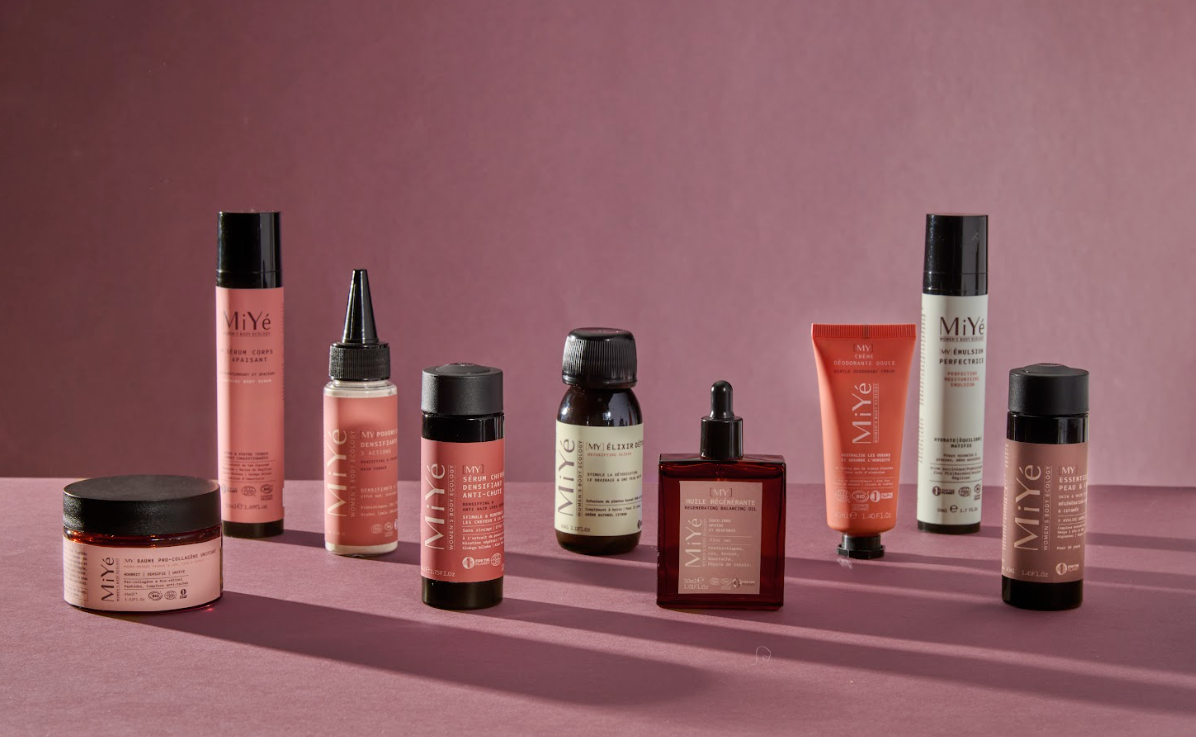
MiYé's skin regeneration strategy is built on a holistic approach combining microbiome support, skin barrier restoration, dermal matrix stimulation and systemic support. This approach is reflected in complementary ways across the different products in the range, each acting on a specific level of the cutaneous and biological mechanisms involved in regeneration:
- [MY] Regenerating Oil with postbiotics: acts on skin microbiome balance and barrier function, helping restore a more stable, more resilient skin terrain against inflammatory and environmental imbalances.
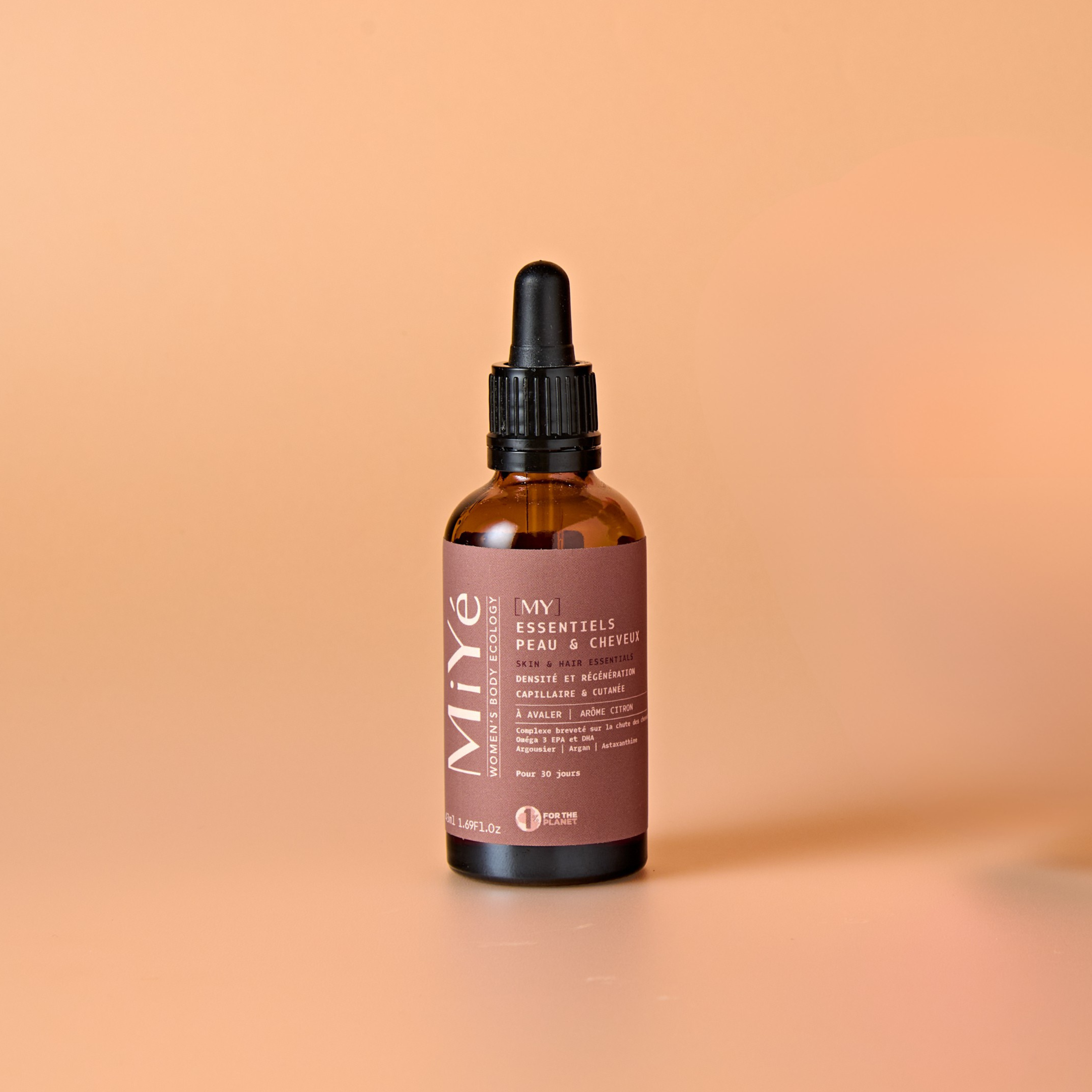
- [MY] Skin & Hair Essentials: internal support for skin and its appendages (hair, nails), providing cofactors involved in skin structure, oxidative stress and overall tissue quality.
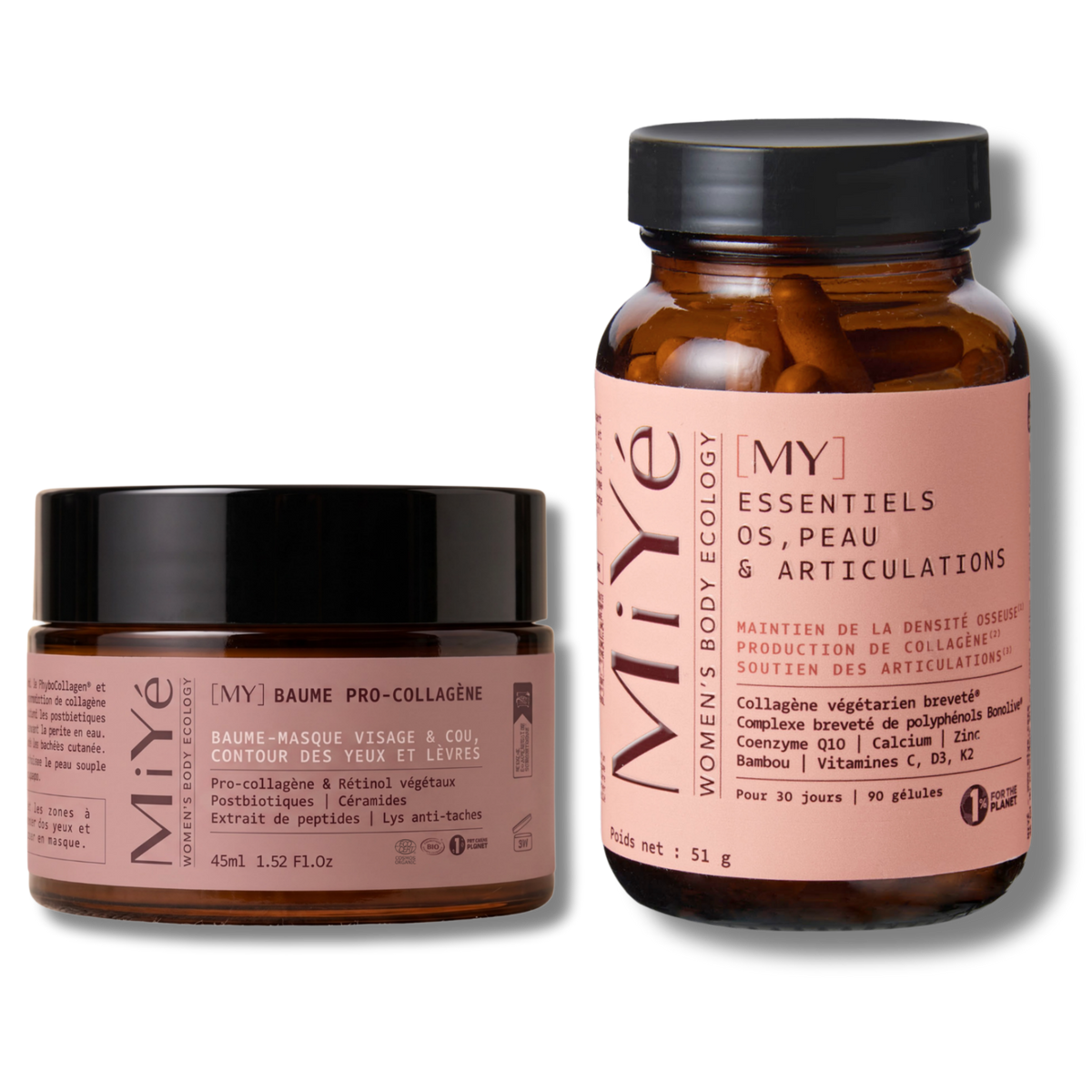
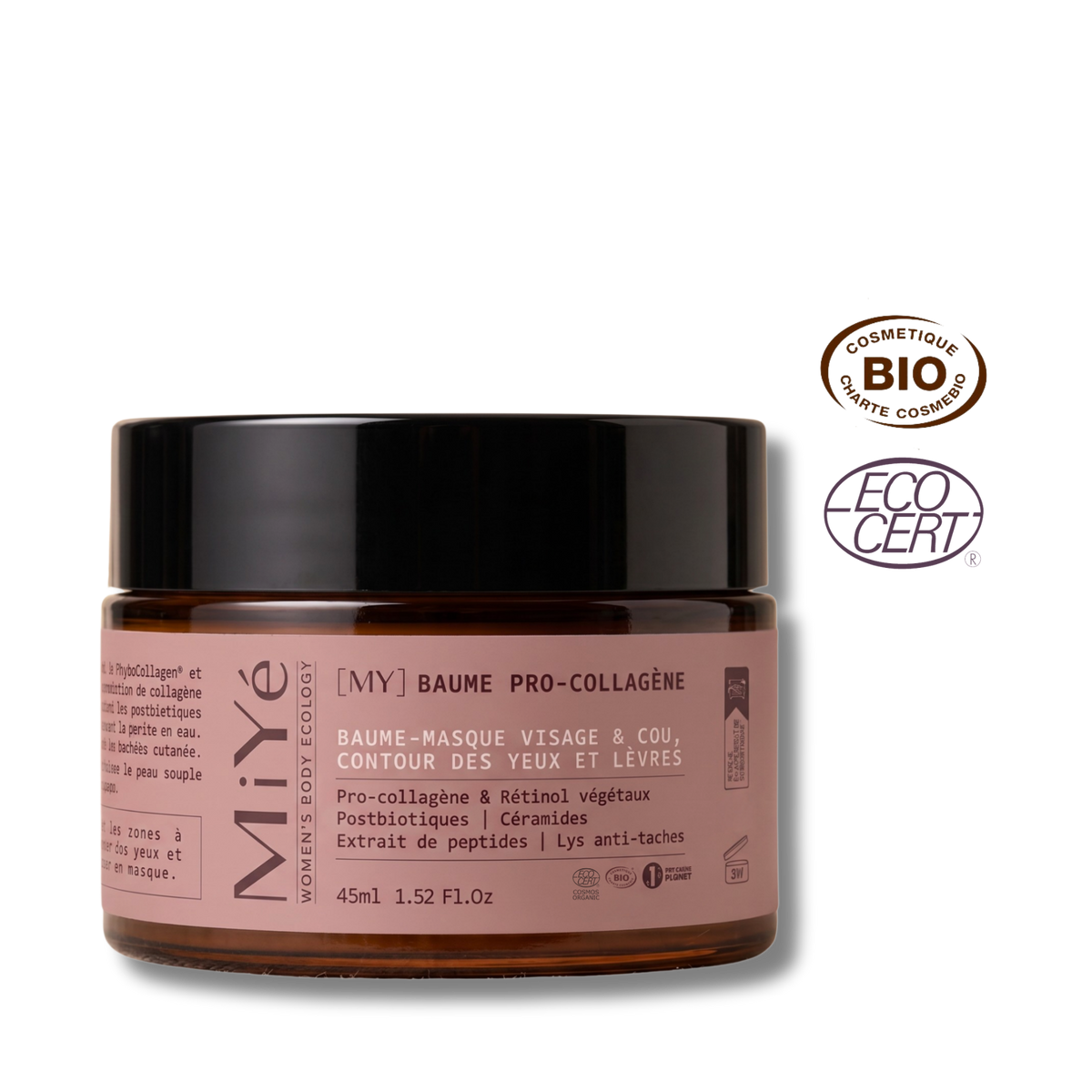
- [MY] Pro-Collagen Unifying Balm: works topically on dermal density, barrier function and skin tone evenness, via biomimetic actives (peptides, ceramides, postbiotics) targeting fibroblasts and the extracellular matrix.
- [MY] Essentials Bones, Skin & Joints: a comprehensive systemic approach acting on the body's deeper structures, simultaneously supporting bone density, joint comfort and skin quality via patented actives, eggshell membrane collagen, antioxidants and mineral cofactors.

![[MY] Essentiels os peau et articulations, à l'achat individuel](http://www.miye.care/cdn/shop/files/1_82157749-d687-4d44-9eb8-3cdec6cb929a.png?v=1782986916&width=1875)
Share:
Silent Metabolic Losses: The Invisible Transformations of Menopause
Biomimetic actives: what if your skin already knew the best routine?