





SUMMARY



Key takeaways:
Skin renews itself constantly, and its nutrient needs increase with age, stress and hormonal changes
Antioxidants (vitamin C, zinc) and essential fatty acids support skin structure and radiance
An in & out approach combines internal support and topical action to reactivate the skin's natural collagen production
Allow 2 to 3 months of regular intake to see results, which covers several skin renewal cycles
Supplements, diet, sleep and stress management work together: no capsule can replace a holistic approach
Why take a food supplement for your skin?
The limits of diet alone for skin beauty
In theory, a varied diet covers your skin's needs. In practice, modern lifestyles complicate things: cooking methods that degrade vitamins, depleted soils, meals eaten on the go, restrictive diets.
There is also a biological reality: the skin is not a priority organ. When intake is insufficient, the body directs nutrients to vital functions first. Skin, hair and nails come last. This is precisely where targeted supplementation makes sense.
Signs that your skin needs extra nutrients
Certain signals can point you in the right direction:
-
A dull complexion that persists despite rest
-
Skin that feels dry or tight all year round
-
A loss of bounce and elasticity
-
Recurring blemishes, often following your cycle
-
Slower healing than before
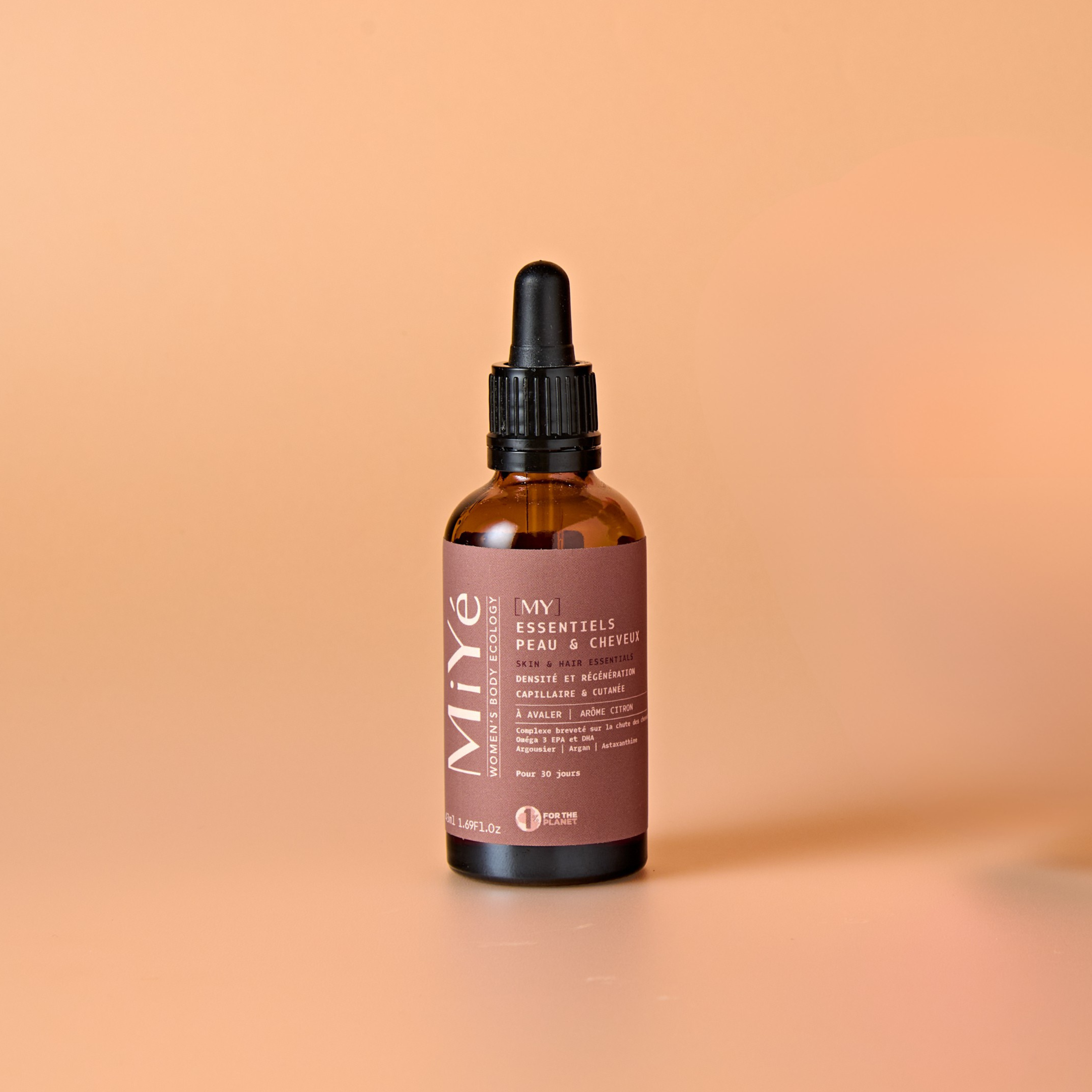
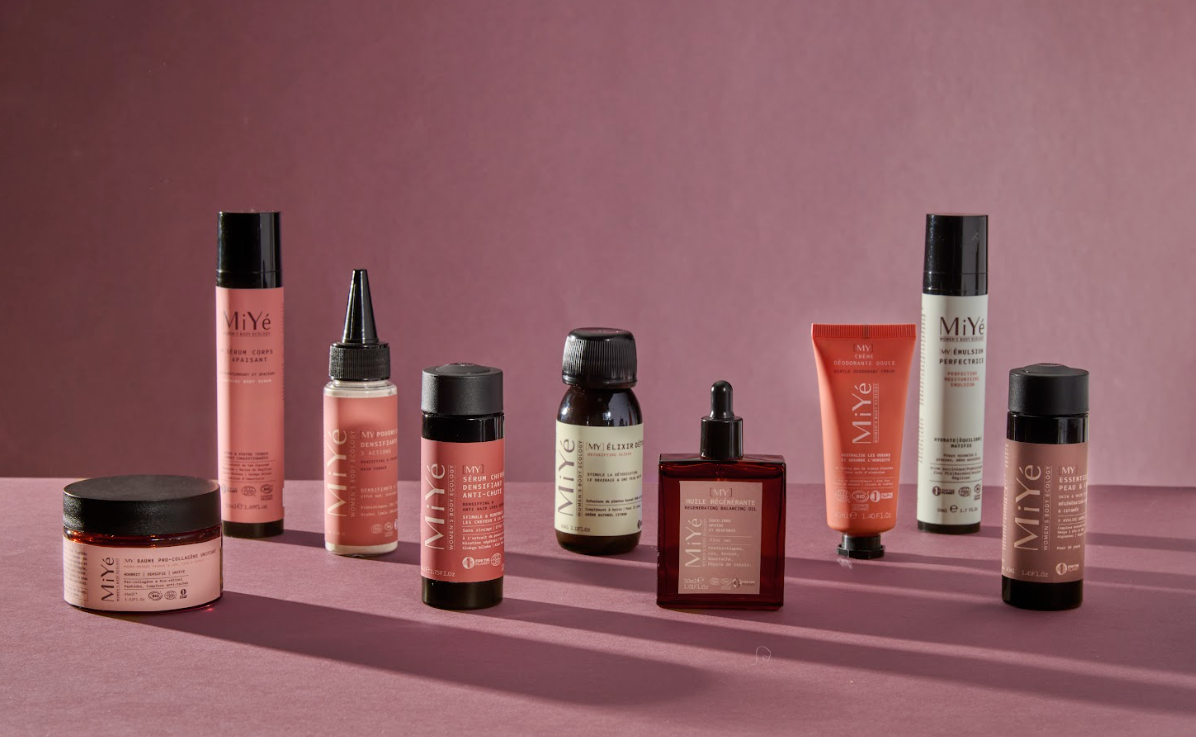
To meet these needs, MiYé has designed two targeted supplements: [MY] Skin & Hair Essentials to support skin beauty from within, and [MY] Bone, Skin & Joint Essentials to support skin health, bone density and joint integrity.
The role of hormones in skin health
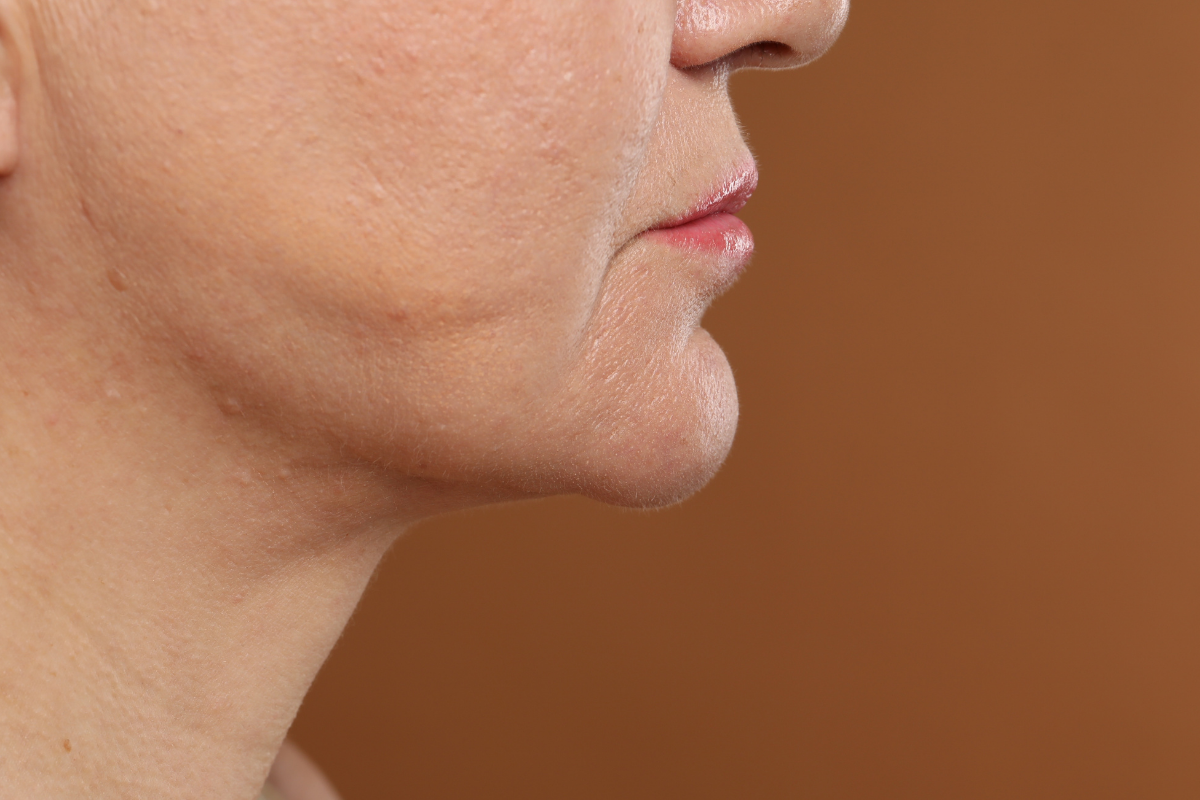
For women, skin lives to the rhythm of hormones. Estrogens support collagen production and skin hydration: as they decline in the run-up to menopause, skin often becomes thinner and drier.
Conversely, certain hormonal fluctuations stimulate sebum production and encourage breakouts, especially before your period. To learn more about this mechanism, read our article on the role of hormones in skin imperfections.
The best active ingredients for radiant skin
Vitamins C, E and zinc: the foundation
This is the strongest trio from both a regulatory and a scientific standpoint. Vitamin C contributes to normal collagen formation for the normal function of the skin. Zinc contributes to the maintenance of normal skin. Vitamin E contributes to the protection of cells from oxidative stress. These claims are officially authorized in Europe.
Antioxidants help the body cope with everyday stressors: pollution, UV rays, smoking, stress. All of these factors accelerate skin aging.
[MY] Skin & Hair Essentials combines antioxidants (vitamins C, E, zinc) and essential fatty acids to support skin beauty from within, with no phytohormones or suspected endocrine disruptors.
Essential fatty acids: borage oil and omega-3s
Lipids are the building blocks of the skin's protective film. Borage oil, rich in gamma-linolenic acid, is traditionally used for the comfort of dry skin. Omega-3s (small oily fish, rapeseed oil, walnuts) contribute to a balanced intake of essential fatty acids, which the body needs but cannot produce on its own.
Skin that constantly feels tight is often skin that lacks good lipids, from the inside as well as the outside.
Pro-collagen and hyaluronic acid for hydration and density
Collagen is the skin's structural protein: it gives skin its firmness and density. Its natural production gradually declines from your thirties onwards. Did you know? Up to 30% of our collagen can be lost within the 5 years following menopause.
There are two complementary strategies to support collagen, and they work even better together: an in & out approach.
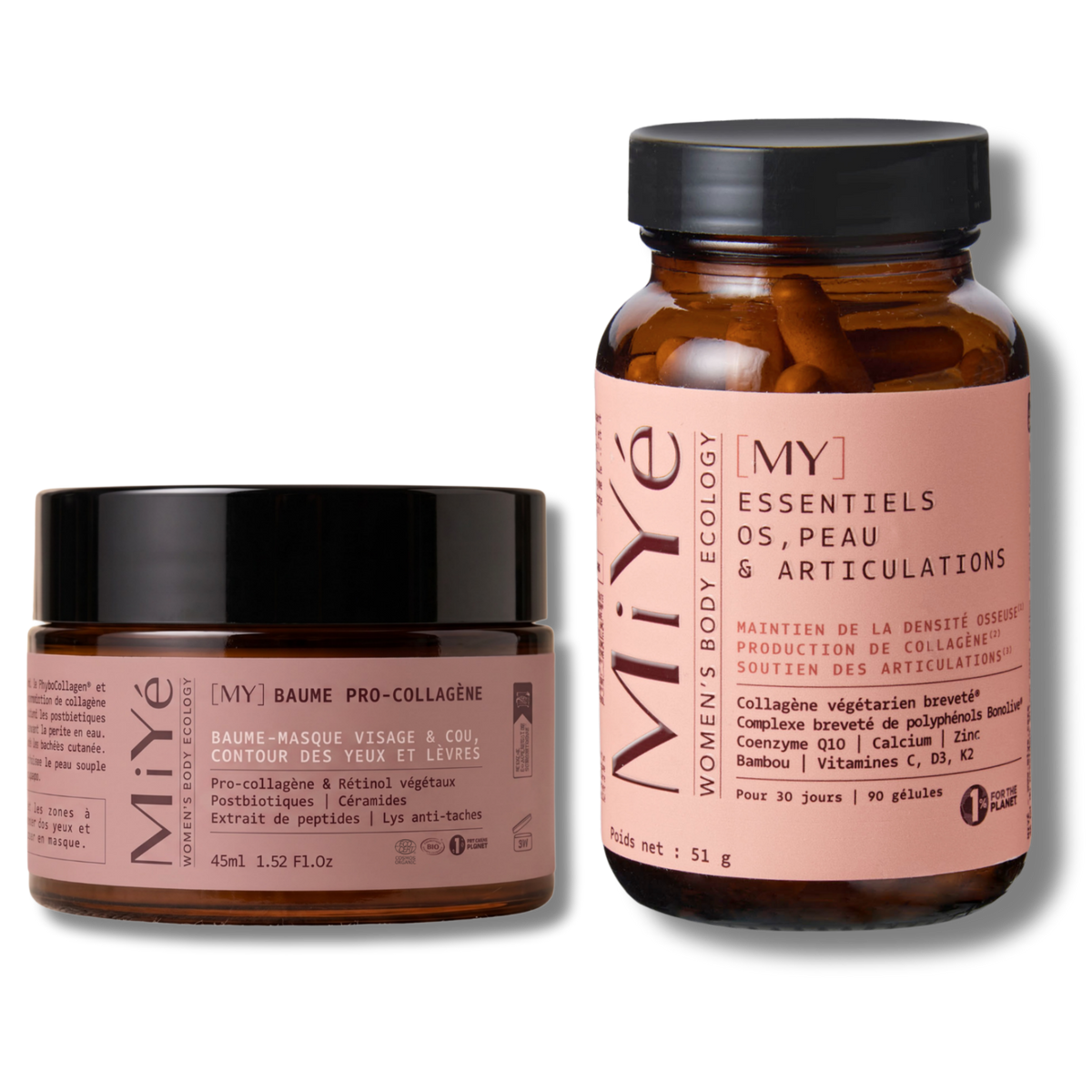
Internally (in), [MY] Bone, Skin & Joint Essentials combines native collagen from eggshell membrane (types I, V and X) with other targeted ingredients to support bone density, skin health and joint integrity. It is an alternative to conventional hydrolyzed marine collagen, with the advantage of supporting several systems at once.
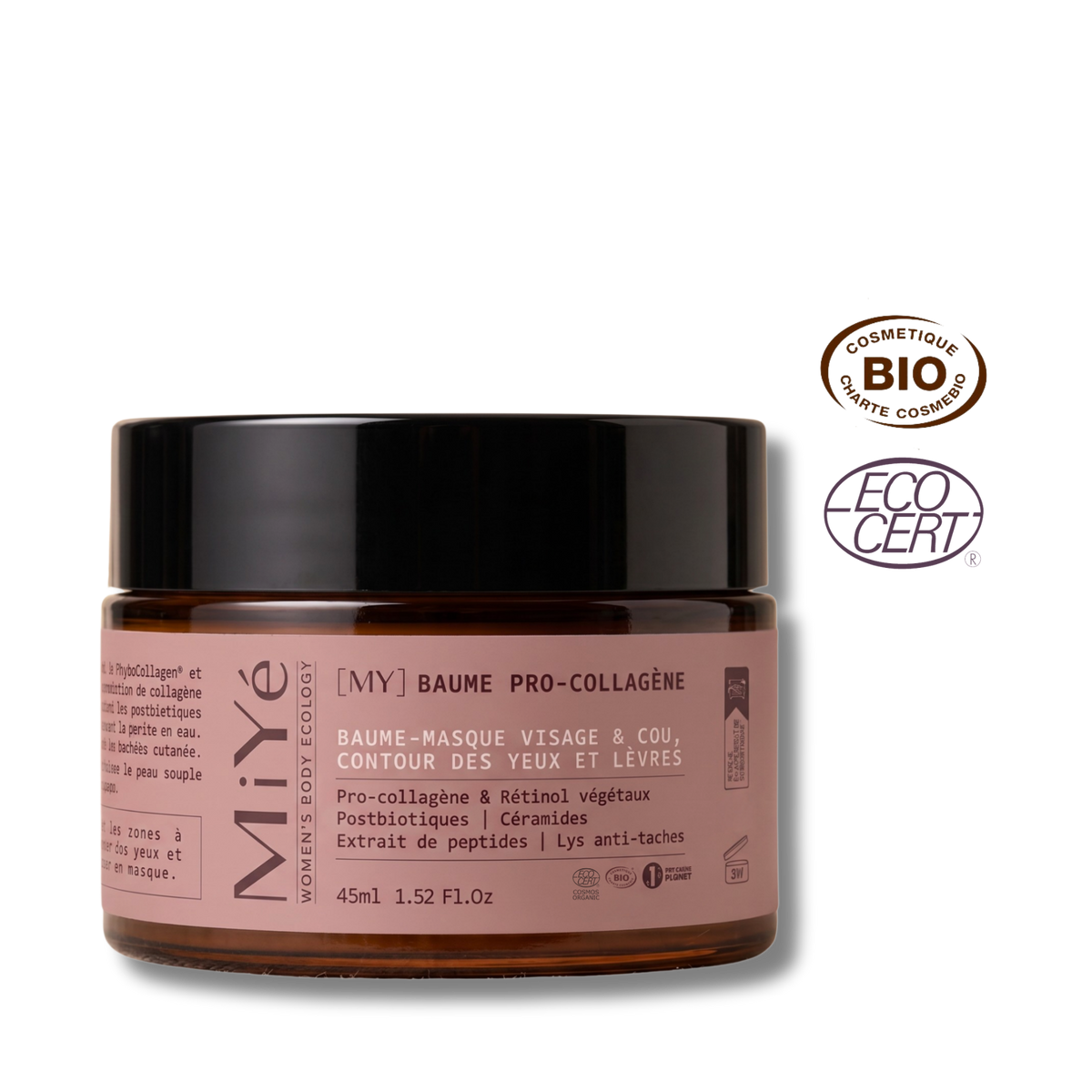
Externally (out), pro-collagen acts directly on the skin to reactivate its own regeneration mechanisms, rather than supplying a ready-made protein. [MY] Pro-Collagen Unifying Balm thus reactivates the skin's collagen production while restoring its protective barrier.
Together, these two approaches, lasting internal support and targeted topical action, offer a complete in & out response to support skin firmness and density over time.
Hyaluronic acid, naturally present in the skin, acts like a sponge that holds water in the tissues. Taken orally, it is also being studied for the comfort of dry skin. For collagen and hyaluronic acid, no European health claim has been validated to date.
Probiotics and the gut-skin axis
This is one of the most dynamic areas of research: the gut-skin axis. An imbalanced gut microbiota could be reflected in the quality of your skin, notably through inflammation. Lactic ferments are being studied for their contribution to the balance of the intestinal flora.
To explore this fascinating connection, read our article on the link between microbiota and skin.
How to choose a food supplement for your skin?
Identify your skin type and specific needs
Dry skin does not have the same needs as blemish-prone skin. Before choosing, take a close look at your skin: is it lacking hydration, firmness, radiance? Do your skin concerns follow your cycle? This helps guide your choice of ingredients and avoids buying at random.
Choose natural and organic formulas
Check these criteria before buying:
-
Naturally sourced active ingredients, with organic certification whenever supply chains allow
-
A formula free from phytohormones and suspected endocrine disruptors
-
Capsules ideally of plant origin
-
A short ingredient list, with no unnecessary additives
Check traceability and clinical testing
A reputable brand should be able to justify the origin of its ingredients and the compliance of its formula with European regulations. Favor patented and clinically tested ingredients whose efficacy has been assessed at specific dosages. Explore our full range of food supplements and read the detailed product pages to compare ingredients, dosages and composition according to your specific needs.
Understand dosages and bioavailability
An underdosed ingredient is of little value, even if it appears on the label. Bioavailability, meaning the body's ability to actually absorb a nutrient, matters as much as the stated dosage. For collagen, for example, the form matters: hydrolyzed collagen and eggshell membrane do not have the same composition, and their doses cannot be compared directly in grams.
Expert tip: unsure about your real needs? The free online MiYé hormonal profile test helps you identify imbalances that may be reflected in your skin.
How to use food supplements for your skin?
Recommended program length to see results
The epidermis, the outer layer of the skin, renews itself in about 4 to 6 weeks. A program of at least 2 to 3 months is therefore needed to see visible results. Patience and consistency are your best allies.
The best time of day to take them
Always follow the manufacturer's directions. As a general rule, taking them with a meal supports absorption, especially for fat-soluble ingredients such as vitamin E or fatty acids. Consistency matters more than timing: make it part of a daily ritual.
Combinations to favor or avoid
Some ingredients work in synergy: vitamin C naturally goes hand in hand with collagen, as it supports its formation. On the other hand, avoid combining several products containing the same vitamins or minerals, so as not to exceed recommended intakes. If you are taking any medication, ask your pharmacist for advice.
Food supplements and your topical skincare routine
Inside and outside go hand in hand. Supplements nourish the skin in depth, while topical care protects and hydrates the surface. Pair your program with a suitable routine from our natural face care for a complete approach.
Complementary habits for beautiful skin
Daily hydration: water and herbal teas
Skin is made up of about 70% water. Drinking regularly throughout the day, around 1.5 liters of water and unsweetened herbal teas, supports skin hydration from within. A simple habit that is often overlooked.
An anti-inflammatory diet for your skin
Your plate and your complexion are connected. Favor colorful vegetables rich in antioxidants, small oily fish, nuts and seeds, and fiber that nourishes the microbiota. Limit fast sugars and ultra-processed foods, which can sustain low-grade inflammation that is unfavorable to the skin.
Stress management and its impact on your complexion
Chronic stress raises cortisol, a hormone that can stimulate sebum production and weaken the skin barrier. Breathing exercises, cardiac coherence, a walk outdoors: a few minutes a day can be enough to set off a virtuous circle, visible all the way to your face. The skin's protective barrier also deserves attention: discover how to preserve your skin microbiome.
Restorative sleep and skin regeneration
Skin regenerates most actively at night. Insufficient or poor-quality sleep quickly shows on the face: drawn features, dull complexion, dark circles. Aim for regular sleeping hours and a cool, dark bedroom to support this nighttime work.
A complete skincare routine: supplements, topical care and tools
Food supplements and topical care work better in synergy. To go further, add a gentle facial massage brush to your routine: it helps stimulate skin microcirculation and prepares the skin to receive your skincare.
For women going through a hormonal transition (perimenopause, menopause) or concerned about their joint health, also consider complementary joint support: [MY] Bone, Skin & Joint Essentials combines ingredients for bone density, skin health and structural integrity, a holistic supplement when several systems need support.
Frequently asked questions about food supplements for skin
How long does it take to see visible results?
Allow 4 to 6 weeks for the first effects and 2 to 3 months for lasting results, which covers several skin renewal cycles. Regular intake is key.
Can you take several supplements at the same time?
Yes, as long as you avoid duplicate ingredients and excessive intake of vitamins and minerals. If in doubt or if you are taking any medication, ask your pharmacist for advice.
Do food supplements have side effects?
At recommended dosages, side effects are rare. Follow the stated directions and read the precautions for use, especially if you are pregnant, breastfeeding or have an allergy (to eggs for eggshell membrane, to seafood for marine collagen).
Can they help with hormonal acne?
Supplements do not replace medical advice for established acne. Some nutrients, such as zinc, contribute to the maintenance of normal skin and can be part of a holistic approach. To understand this phenomenon, read our article on hormonal acne in adult women.
Food supplements should not replace a varied and balanced diet or a healthy lifestyle.
We do not aim to replace medical practice. We advise you to consult your healthcare professional or general practitioner for any health-related question.

![[MY] Essentiels os peau et articulations, à l'achat individuel](http://www.miye.care/cdn/shop/files/1_82157749-d687-4d44-9eb8-3cdec6cb929a.png?v=1782986916&width=1875)
Share:
Mood-Boosting Supplements: How to Naturally Restore Emotional Balance and a Positive Mindset