






SUMMARY
- Progesterone and Estrogen: The Hormonal Duo You Need to Know
- What Are the Signs of Low Progesterone?
- How to Support Your Progesterone Levels Naturally?
- PMS or Lack of Progesterone: How to Tell the Difference?
- The Natural Decline of Progesterone Levels During the Menstrual Cycle
- Progesterone Levels: What Are the Reference Values?
- The Impact of Progesterone Deficiency on Daily Life
- How to Support Hormonal Balance Naturally?
- FAQ
Key Takeaways
Progesterone deficiency is a common cause of hormonal imbalance in women, often called luteal insufficiency, which occurs when progesterone production is too low after ovulation.
Estrogen and progesterone work as a pair, so a drop in progesterone can disrupt this balance and promote estrogen dominance.
Low progesterone levels can trigger various symptoms, such as irregular cycles, more intense PMS, mood swings, or fertility challenges.
Several factors can explain this drop, notably age, chronic stress, certain medications, or lifestyle-related hormonal disruptions.
Rebalancing hormones often requires a comprehensive approach, including lifestyle habits, stress management, and tailored nutritional support to restore hormonal harmony.
Progesterone and Estrogen: The Hormonal Duo You Need to Know
A hormone level is always evaluated in relation to another hormone. For example, estrogen and progesterone work as a duo; the slightest imbalance in one inevitably leads to an imbalance in the other. Progesterone deficiency and estrogen dominance consequently lead to similar symptoms and hormonal disruption.
What Is Progesterone and What Is Its Purpose?
Progesterone is a crucial hormone in the female reproductive system. It is produced in the ovaries and plays an important role in regulating the menstrual cycle. A lack of progesterone can lead to a hormonal imbalance, which can cause various symptoms, including irregular periods, hot flashes, night sweats, mood swings, weight gain, and a decreased libido.
Progesterone levels naturally decline as menopause approaches, which can lead to a hormonal imbalance. However, other factors can contribute to a progesterone deficiency, including stress, obesity, and certain medications. Treatments for a progesterone deficiency vary depending on the underlying cause. In some cases, lifestyle modifications may be enough to correct the imbalance. For instance, weight loss or stress management can help increase progesterone levels. In other cases, medical support may be necessary, such as hormone replacement therapy (HRT).
If you think you might be experiencing a progesterone deficiency, it is important to consult your healthcare professional to guide you on the path to recovery. Do not let a hormonal imbalance control your life – take back control with the help of healthcare professionals who are there to help you feel your absolute best!
What Are the Signs of Low Progesterone?
There are a variety of symptoms that can indicate a low progesterone level. These include:
- Irregular or absent periods
- Heavy bleeding during periods
- Mood swings
- Anxiety
- Depression
- Fatigue
- Headaches or migraines
- Weight gain
- Bloating
- PMS symptoms
How to Support Your Progesterone Levels Naturally?
Only a doctor can prescribe progesterone supplementation. Outside of any prescription, certain lifestyle factors are associated with a better overall hormonal balance.
- Nutrition plays a genuine role: an adequate intake of zinc (oysters, pumpkin seeds, legumes) and vitamin B6 supports progesterone production. Magnesium helps reduce stress, which is one of the primary factors of hormonal imbalance—cortisol and progesterone share the same precursor, pregnenolone.
- Chronic stress management is probably the most underestimated tool. Constantly high cortisol levels "steal" hormonal precursors at the expense of progesterone; this is what some researchers call the "pregnenolone steal."
- Body weight is also important: a fat mass that is too low or too high disrupts the estrogen/progesterone balance.
PMS or Lack of Progesterone: How to Tell the Difference?
Premenstrual Syndrome (PMS) is a well-known condition affecting many women. However, how can you differentiate the symptoms of PMS from a lack of progesterone?
Understanding that PMS and a lack of progesterone can present similar symptoms is essential, even though their causes and implications differ. PMS manifests through a variety of physical and emotional symptoms that typically occur one to two weeks before the start of each menstrual period. These symptoms include hot flashes, bloating, headaches, as well as mood swings, depression, anxiety, anger, and irritability.
Conversely, a lack of progesterone, also called luteal insufficiency, can cause similar symptoms, including painful and heavy menstruation, menstrual cycle disorders, and mood variations.
The distinction between these two conditions is based on their timing and their specific impact on the menstrual cycle. While PMS is primarily due to the hormonal fluctuations of estrogen and progesterone during the luteal phase, a progesterone deficiency is often linked to insufficient production of this hormone after ovulation. This deficiency can unbalance hormones, causing symptoms that persist even after periods begin.
It is important to emphasize that some women can suffer from both PMS and a lack of progesterone, making diagnosis and treatment more complex.
The Natural Decline of Progesterone Levels During the Menstrual Cycle
The menstrual cycle is marked by constant hormonal variations, among which progesterone plays a fundamental role. To grasp the natural decline of this progesterone rate, it is vital to understand its evolution throughout the cycle.
The follicular phase, which begins with menstruation and ends at ovulation, is characterized by a particularly low, almost non-existent progesterone level. During this period, estrogens are predominant, preparing the uterus for a potential pregnancy.
Ovulation is induced by a sudden spike in luteinizing hormone (LH), leading to the formation of the corpus luteum in the ovary. It is from this moment onward that progesterone is secreted in larger quantities. The progesterone level rises rapidly during the luteal phase, peaking around 7 to 10 days after ovulation.
If no fertilization occurs, the corpus luteum, having a limited lifespan, begins to regress. Consequently, progesterone production progressively declines.
This reduction in the progesterone level is a natural mechanism that causes the shedding of the endometrium, thereby triggering menstruation. This process generally takes place 14 days after ovulation, with the luteal phase varying between 11 and 16 days.
It is essential to emphasize that this natural decline in progesterone levels is normal and indispensable for the smooth running of the menstrual cycle.
However, an abnormally sharp or early decrease in this rate can signal luteal insufficiency, a hormonal disorder that can have significant repercussions on reproductive health.
Causes of Progesterone Deficiency
Many different factors can contribute to a progesterone deficiency. One of the most common causes is simply aging. As women approach menopause, their bodies begin to produce less and less progesterone. This natural drop in progesterone levels can cause a hormonal imbalance and all its associated symptoms.
However, other factors can lead to a drop in progesterone levels, including:
- Stress: Excess stress can lead to a decrease in all hormones, not just progesterone. This is because exhausted adrenal glands will break down progesterone into cortisol to maintain sufficient cortisol levels. If you are feeling stressed, it is important to find healthy coping mechanisms, like exercise or yoga. Reducing stress levels can help increase progesterone production.
- Being overweight: Being overweight or obese can also lead to a decrease in progesterone levels because fat cells produce estrogen. Losing weight can help increase progesterone production and correct the hormonal imbalance.
- Certain medications: Some medications, including birth control pills, can lower progesterone levels. If you think your medication might be causing a hormonal imbalance, talk to your healthcare professional about alternative options.
Progesterone deficiency is a common cause of hormonal imbalance in women of all ages.
Causes of a Natural Drop in Progesterone Levels

Luteal phase: After ovulation, one of a woman's ovaries forms the "corpus luteum". It functions to produce natural progesterone hormone after ovulation. In the first part of the cycle, the lining of the uterus develops thanks to estrogen and luteinizing hormone in order to prepare the uterus for fertilization. In the event that the ovaries do not produce enough progesterone, there will be a deficiency of certain hormones that are produced thanks to progesterone. This is when luteal insufficiency is observed during this phase, which can lead to the various symptoms mentioned above.
➜ QUIZZ Determine your hormonal profile
Progesterone Levels: What Are the Reference Values?
Understanding the concept of a "normal" progesterone level is essential for identifying and treating hormonal imbalances. Concentrations of this hormone fluctuate considerably depending on the menstrual cycle and the woman's life stage.
In the follicular phase, which precedes ovulation, progesterone levels are traditionally low, varying between 0.47 and 7.85 nmol/L (i.e., 0.15 to 2.50 µg/L).
As ovulation approaches, these levels begin to rise, falling between 1.57 and 17.1 nmol/L (equivalent to 0.50 to 4.50 µg/L). It is during the luteal phase, post-ovulation, that progesterone reaches its peaks, with values typically between 17.2 and 85 nmol/L (or 5.50 to 27.00 µg/L).
During pregnancy, progesterone levels climb significantly, oscillating between 267 and 700 nmol/L toward the end of pregnancy.
At menopause, progesterone levels fall back to low thresholds, often below 1.57 nmol/L (or 0.50 µg/L).
It is essential to emphasize that these values can vary from one individual to another and that progesterone production is pulsatile, causing fluctuations throughout the day.
To identify luteal insufficiency or other hormonal abnormalities, it may be necessary to take several samples at different times in the cycle to obtain a complete overview of progesterone levels.
These values are provided for informational purposes, based on reference ranges commonly cited in medical literature. They may vary depending on the laboratory, testing methods, and equipment used. Only your doctor or laboratory biologist can interpret your results based on your personal situation.
The Impact of Progesterone Deficiency on Daily Life
A low progesterone level is a sign of poor ovulation quality in women, resulting in lower fertility and thus a hormonal imbalance. But beyond fertility problems, this lack of progesterone can also have repercussions on all of daily life, particularly on:
- On sleep: If the progesterone level is insufficient, sleep is affected with nighttime awakenings and insomnia, which can trap us in a vicious cycle of stress and permanent fatigue. Its role as a sleep-inducing hormone is the cause of greater fatigue, especially during the luteal phase.
- On mood: Given its role as a natural antidepressant, low progesterone levels can cause deficits in concentration and memory capacities, in addition to facilitating mood swings, anxiety, and depressive moods in some women.
- On appetite: The effect of progesterone on the dopaminergic system is definite, and if the brain finds itself deficient in dopamine, it will seek to compensate by pushing us to eat more to try to diminish this sensation of chronic fatigue.
How to Support Hormonal Balance Naturally?
Adaptogenic plants, which provide natural support in contexts of chronic stress, are recognized for their role in balancing the nervous system (rhodiola, ashwagandha, lemon balm...). An intake of zinc and vitamin B6 also contributes to normal hormonal regulation.
You should also increase your consumption of good fatty acids (oilseeds, rapeseed oil...) and your intake of vitamin C.
All of these ingredients are present in several products in the MiYé range, notably the dietary supplements [MY] WOMEN'S BALANCE ESSENTIALS and [MY] SERENITY ESSENTIALS.
These dietary supplements are not a substitute for medical advice.
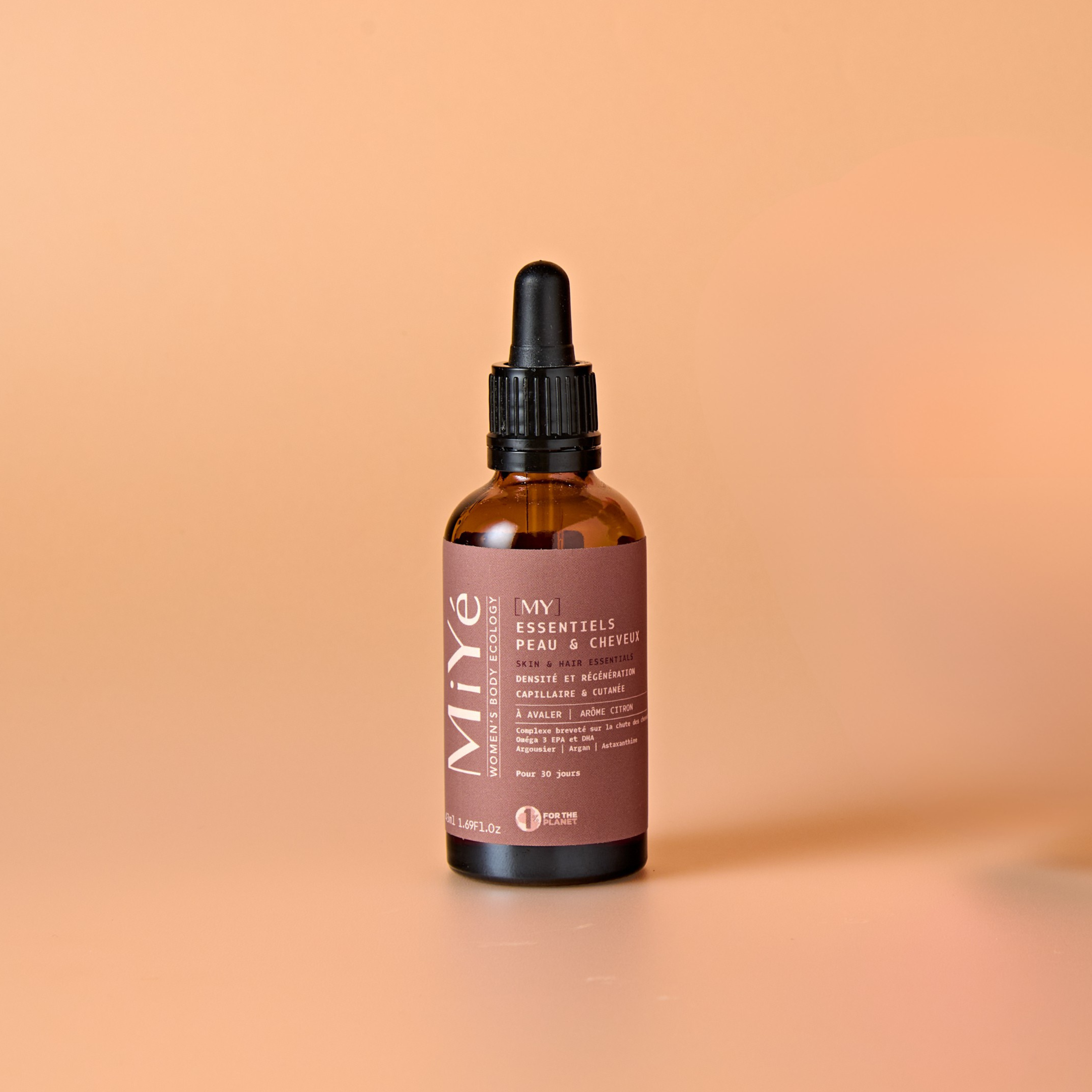
That is why we created MiYé, which means "good friend" in Provençal—a well-being brand tailored to female cycles that supports women in an expert, natural, and caring way, with minimal contraindications, at key stages of their hormonal life. We have developed a range adapted to the female metabolism to help our body naturally find its state of balance during these periods of hormonal disruptions, built around 3 main pillars: Physical comfort, mental well-being, and the state of the skin and hair.
Find the feel good pack on miye.care/en
FAQ
What are the signs of low progesterone?
A lack of progesterone often manifests as irregular cycles, marked premenstrual syndrome (pain, irritability), mood swings, or difficulty conceiving.
Spotting (minor bleeding), fatigue, decreased libido, or increased anxiety can also be observed.
How can I increase my progesterone levels?
To support progesterone naturally, it is important to:
- reduce stress (which increases cortisol at the expense of progesterone)
- improve overall lifestyle (sleep, diet, physical activity)
In some cases, supplements or medical supervision may be necessary to rebalance hormone production.
What is the treatment for low progesterone?
Treatment depends on the cause, but it is often based on:
- progesterone supplementation (oral, vaginal, or injectable)
- managing associated disorders (thyroid, ovulation, etc.)
For example, certain hormonal treatments like micronized progesterone are prescribed in specific cases (cycle disorders, fertility, etc.).
Why are my progesterone levels low?
Several factors can explain low progesterone levels:
- chronic stress
- ovulation disorders or anovulation
- polycystic ovary syndrome (PCOS)
- thyroid disorders
Poor ovulation is one of the main causes, as progesterone is produced after ovulation.
Sources:
-
INSERM – Menopause and hormonal variations
https://www.inserm.fr/dossier/menopause/
➤ (explains the drop in progesterone and its effects on the cycle) -
MSD Manuals – Menstrual cycle and female hormones
https://www.msdmanuals.com/fr/accueil/problèmes-de-santé-de-la-femme/biologie-du-système-reproducteur-féminin/cycle-menstruel
➤ (role of estrogen and progesterone in hormonal balance) -
Ameli.fr (Assurance Maladie) – The menstrual cycle
https://www.ameli.fr/assure/sante/themes/cycle-menstruel/definition-et-caracteristiques
➤ (key role in menstrual cycle regulation) -
Elsan – Progesterone: definition, role, and imbalances
https://www.elsan.care/fr/pathologie-et-traitement/maladies-gynecologiques/progesterone-definition-causes-traitement
![Pilulier [MY] Essentiels équilibre féminin sur fond transparent](http://www.miye.care/cdn/shop/files/Visuels-shop-25.png?v=1747987949&width=800)
![Flacon avec pompe [MY] Sérum corps apaisant avec macaron meilleur produit bio 2024 et écocert](http://www.miye.care/cdn/shop/files/Visuels_shop_82.png?v=1773304790&width=1000)
Share:
How can I live better with my PCOS?
Do I have excess cortisol? How does stress affect our health?