




SUMMARY
Beyond Collagen: How to Help Skin Restart Its Regeneration?
Read more
Silent Metabolic Losses: The Invisible Transformations of Menopause
Read more

Native 3rd Generation Collagen: More Than a Collagen, a Complete Biological Matrix
Read more
Biomimetic actives: what if your skin already knew the best routine?
Read more
MyCelsius x MiYé: a complementary approach to living better with hot flushes
Read more

Energy supplements: the guide to choosing according to your hormonal profile
Read more
How to Stop Taking the Pill? The Complete Guide to a Smooth Hormonal Transition
Read more
Menstrual migraine: understanding and relieving headaches related to menstruation
Read more

Heavy legs and heat: the hidden role of hormones and natural remedies
Read more

Herbal Medicine and Menopause: Which Plants Really Work?
Read more
How to Know If You're Menopausal: Symptoms, Age and Tests
Read more
Menopause and Weight Gain: Causes and How to Regain Balance
Read more
Postbiotics: Benefits, Role and What You Need to Know
Read more

The 4 types of PCOS: how to identify yours to live better with it
Read more
Period Blood Color: What Does Your Flow Reveal Each Month?
Read more
Fatigue Before and During Your Period: Causes and Natural Solutions
Read more

Why are my periods getting worse ? Causes and natural solutions
Read more

Menopause and brain fog: What is brain fog ?
Read more

What are the best positions to relieve menstrual pain ?
Read more
Adenomyosis and Bloating: Understanding and Managing This Symptom
Read more

Hot Flashes Without Menopause: Causes and Natural Relief
Read more

Recognizing the early signs of menopause and learning to live better with them
Read more
How to relieve your bloating naturally and effectively ?
Read more
Endobelly: When endometriosis causes a bloated stomach
Read more

Why do you experience nausea before and during your period?
Read more
Indigestion: Natural and effective home remedies
Read more
Bloating before menstruation: hormonal causes and solutions
Read more

Why do we talk about the "big belly syndrome" in women ?
Read more
Hormonal belly in women: understanding and taking action
Read more
Stress and bloating : the impacts on your well-being
Read more

Bloated and Hard Stomach: Causes and Natural Relief
Read more
How to naturally hydrate dry skin during menopause ?
Read more
How to treat senile xerosis and moisturize your skin ?
Read more
Dry skin: causes, signs and effective solutions
Read more

How to manage hyperestrogenism and rebalance your hormones?
Read more

Organic Ashwagandha KSM-66: What are the benefits of this renowned extract?
Read more
What role does magnesium play in metabolism and weight gain ?
Read more
Dark Spots: Which Active Ingredient for an Even Complexion?
Read more
What are the positive effects of creatine on women's health ?
Read more
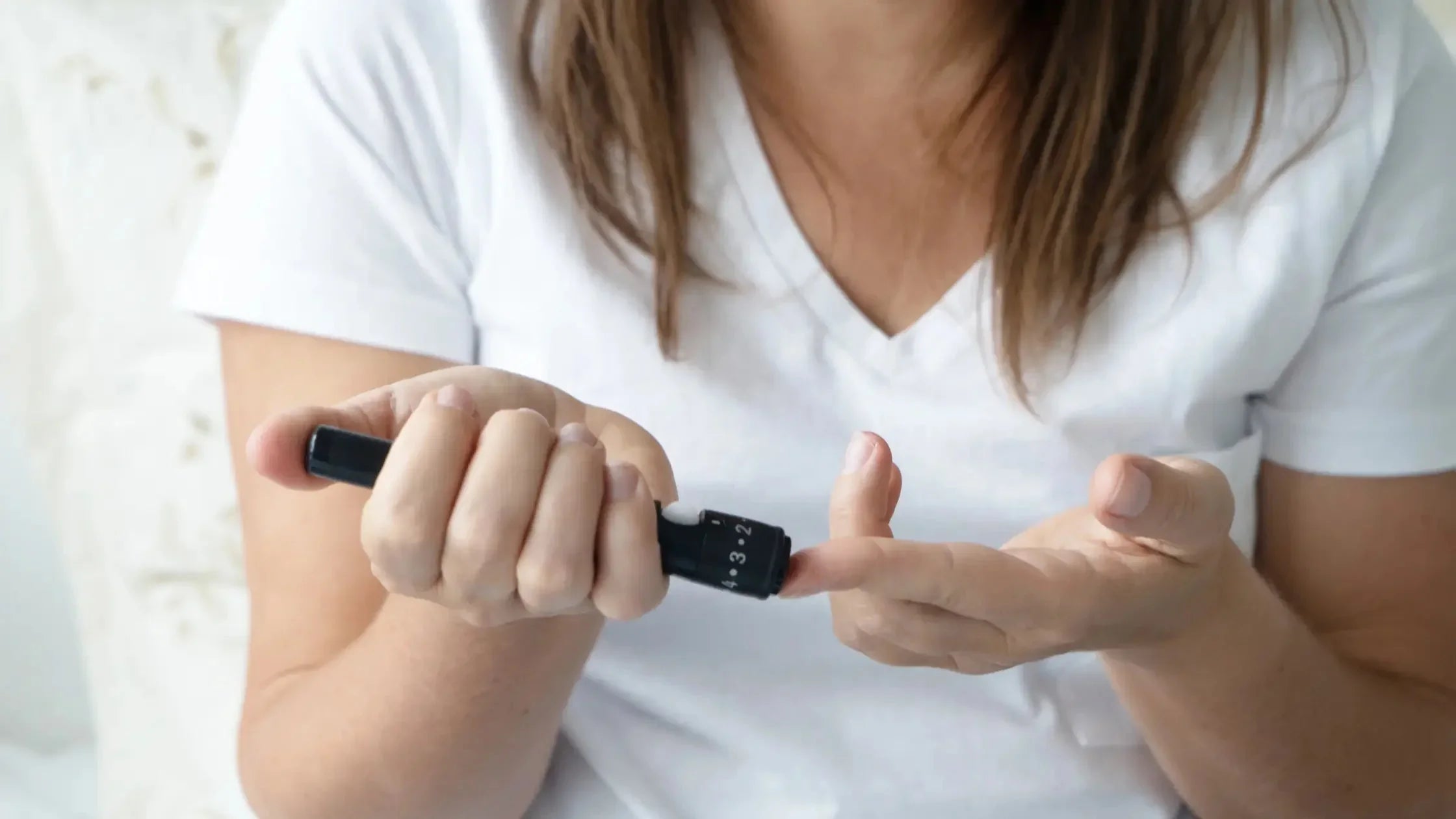
Insulin Resistance and Hormonal Disorders: Causes and Solutions
Read more
Sun and skin aging: prevent, understand, repair effectively
Read more
Hormonal spots on the face: understand, prevent and treat naturally
Read more

What are the most common deficiencies in women ?
Read more

Facial sunscreen: when should you apply it ?
Read more

Are moisturizers with SPF as effective as sunscreens ?
Read more

Sun Effects on Skin: Understand, Prevent and Enhance at Any Age
Read more
How to choose the right sunscreen: SPF, mineral vs. chemical filters
Read more
What is a woman's basal metabolic rate? We explain everything.
Read more
What is the link between microbiota and skin ?
Read more

How to Prepare and Protect Your Skin for the Sun Naturally
Read more
What are endocrine disruptors?
According to the American Society of Endocrinology, endocrine disruptors are natural or synthetic compounds which, through environmental exposure or inappropriate exposure during development, alter the hormonal system and homeostasis (= balance) that enable our bodies to communicate with and respond to their environment.
These substances, which may be present in pollutants, can affect the synthesis, transport, activation and degradation of hormones, thus contributing to various adverse effects on human and animal health.

We can be exposed to endocrine disruptors by several routes, including the digestive route (ingestion of contaminated food), the pulmonary route (inhalation of toxic substances) and the cutaneous route (absorption through the skin).
What are the different effects on our health?
Contrary to the belief that “the dose makes the poison”, endocrine disruptors can have harmful effects on our health, not according to their quantity, but according to the period of exposure. In other words, even low doses of endocrine disruptors can cause health problems when they are present during critical periods of development.
The absorption of a chemical into the body depends on a number of factors, such as its lipophilicity (affinity for fats), the surface area in contact with the body, blood flow in the area of exposure and the thickness of the tissues involved.
According to the Institut de Recherche du Bien-être, de la Médecine et du Sport Santé, the recommended standards for the percentage of body fat in the general population aged 20-29 are 12-15% (up to 20% according to the authors) for men and 22-25% (up to 30% according to the authors) for women. Most endocrine disruptors have a strong affinity for fatty tissue. Women are therefore more exposed to them.

How do endocrine disruptors work?
In addition, the differences in the sexual hormonal system between men and women also need to be taken into account. According to Robert Barouki, Director of Research at the French National Institute for Health and Medical Research (Inserm), most endocrine disruptors have the ability to mimic oestrogens and therefore bind to their receptors. As oestrogens play a key role in regulating the female hormonal system, exposure to substances that mimic these hormones can have harmful consequences for women’s health.
These endocrine disrupters can upset the natural hormonal balance, potentially increasing the risk of developing breast cancer, one of the most common cancers in women, or developing endometriosis, PCOS (polycystic ovarian syndrome) or early ovarian failure (around the age of 40). What’s more, exposure to endocrine disruptors during pregnancy can have consequences for the development of daughters in utero. Endocrine disruptors can interfere with the formation and normal functioning of the female reproductive organs, which can have a long-term impact on women’s health and fertility. In fact, they can have repercussions over several generations by affecting the germ line (the line responsible for the formation of gametes and genetic transmission from one generation to the next).

What’s more, many endocrine disruptors such as phthalates and parabens are present in our beauty routine. A study carried out on a small group of healthy women showed that stopping the use of cosmetics containing phthalates and parabens for 28 days led to changes in the expression of genes involved in the development of breast cancer. These results suggest that these endocrine disruptors could play a role in modulating susceptibility to breast cancer. Nevertheless, further research is needed to confirm these results and determine their real clinical implications.
The difference between men and women when it comes to pollutants and endocrine disruptors
In addition to biological differences, women also face socio-economic disparities that make them more vulnerable to endocrine disruptors. For example, women account for 70% of the working poor, which puts them at greater risk of poverty. People living in precarious conditions are more likely to be exposed to pollutants, particularly those present in food and air, because of less suitable housing conditions.
Finally, certain professions in which women predominate, such as cashiers, hairdressers and cleaners, are particularly exposed to these contaminants. According to the French National Institute for Statistics and Economic Studies (INSEE), 90% of cashiers are women, and seven out of ten cleaners are women. These jobs can involve frequent exposure to chemicals found in cleaning products, cosmetics or food products, increasing the risk of exposure to endocrine disruptors.
For example, the cashiers were handling tickets containing bisphenol A, which is considered a high-risk endocrine disruptor because it mimics the effects of oestrogen by binding to its receptors. Its use is now banned.

The notion that women are more affected by pollutants than men needs to be qualified, as Robert Barouki, head of the metabolic biochemistry department at Hôpital Necker-enfants malades and professor at Université Paris Cité, points out. The impact of pollutants can vary according to the type of pollutant and be different for men and women. For example, in sectors such as construction, where men are over-represented, they are exposed to chemicals such as asbestos.
In addition, a study carried out in the Occitanie region revealed that exposure to a mixture of pesticides has greater metabolic repercussions in men than in women, according to Hervé Guillou, Research Director at INRAE (Institut national de recherche pour l’agriculture, l’alimentation et l’environnement).
However, outside of work, women are actually more exposed to contaminants once they return home. By spending an average of 3 hours and 26 minutes a day on domestic tasks such as cleaning and shopping, they are more exposed to the harmful substances found in household products.
In conclusion, endocrine disruptors are a major concern for human health. Women are particularly vulnerable to these substances because of their affinity with fatty tissue and their specific hormonal system. Exposure to endocrine disruptors can lead to fertility disorders, diseases of the reproductive system and other health problems, with potential impacts spanning several generations. The socio-economic disparities faced by women increase their vulnerability to pollutants. In addition, endocrine disruptors in cosmetics, such as phthalates and parabens, can also have adverse health effects, notably by increasing susceptibility to breast cancer. It is therefore crucial to raise awareness, regulate and control the use of these substances in order to protect the health of women and the general public. Measures must be taken to reduce exposure to endocrine disruptors and promote safer alternatives in beauty products and the environment.

Caroline LANSON, co-founder of the Miyé brand, is passionate about plants and well-being: she has over 20 years of experience in developing skincare and food supplements in various laboratories and has also trained in naturopathy.
![[MY] INTIMATE MOISTURIZING BALANCING GEL 50ML](http://www.miye.care/cdn/shop/files/Visuels_fiche_produit_gel_initme_50_ml_nouvelle_formule.jpg?v=1783431604&width=2025)
Share:
What is the HTVE® (Extrait Végétal Haute Technologie) process ?
What are the different types of contraception ?