
SUMMARY






Chance, the podcast by Laura Pouliquen
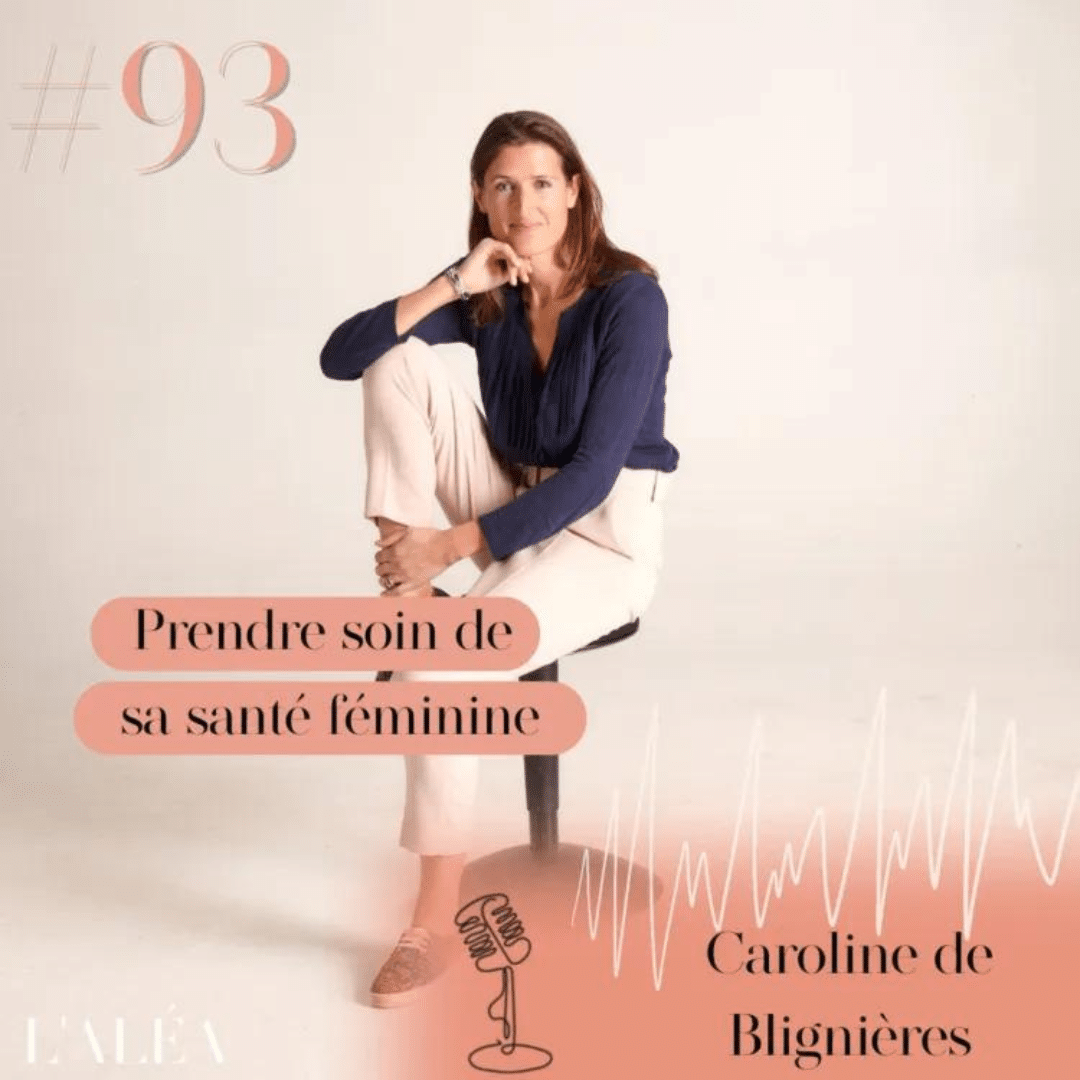
How to take care of your women's health? With Caroline De Blignières, founder of Miye
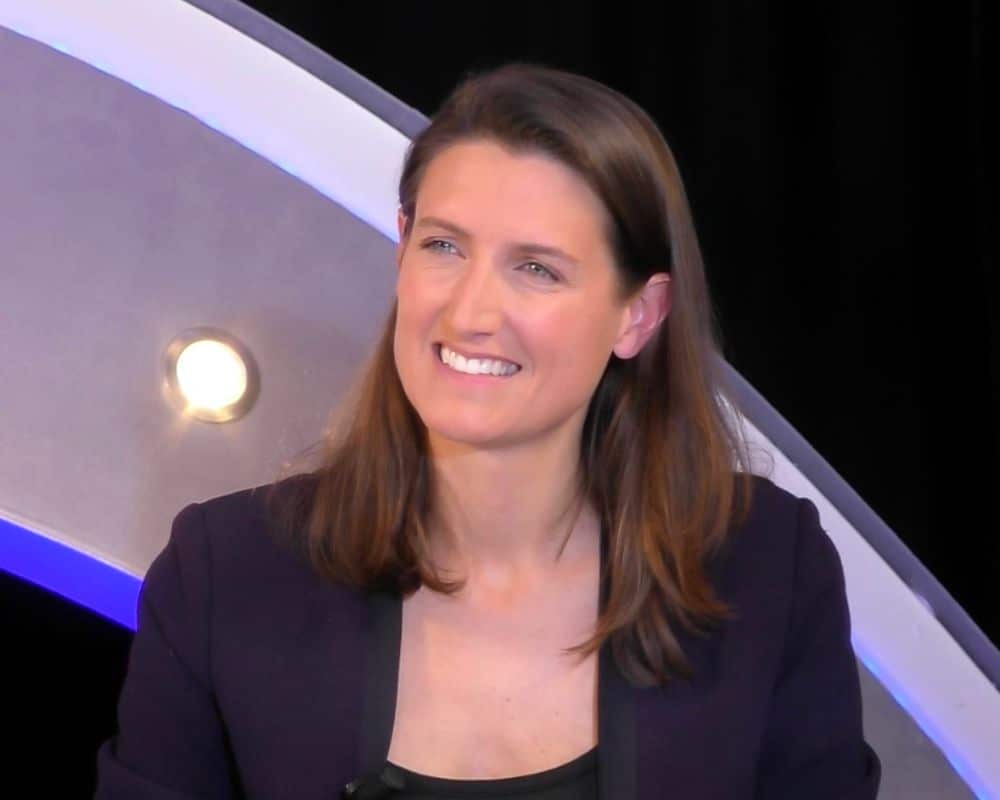
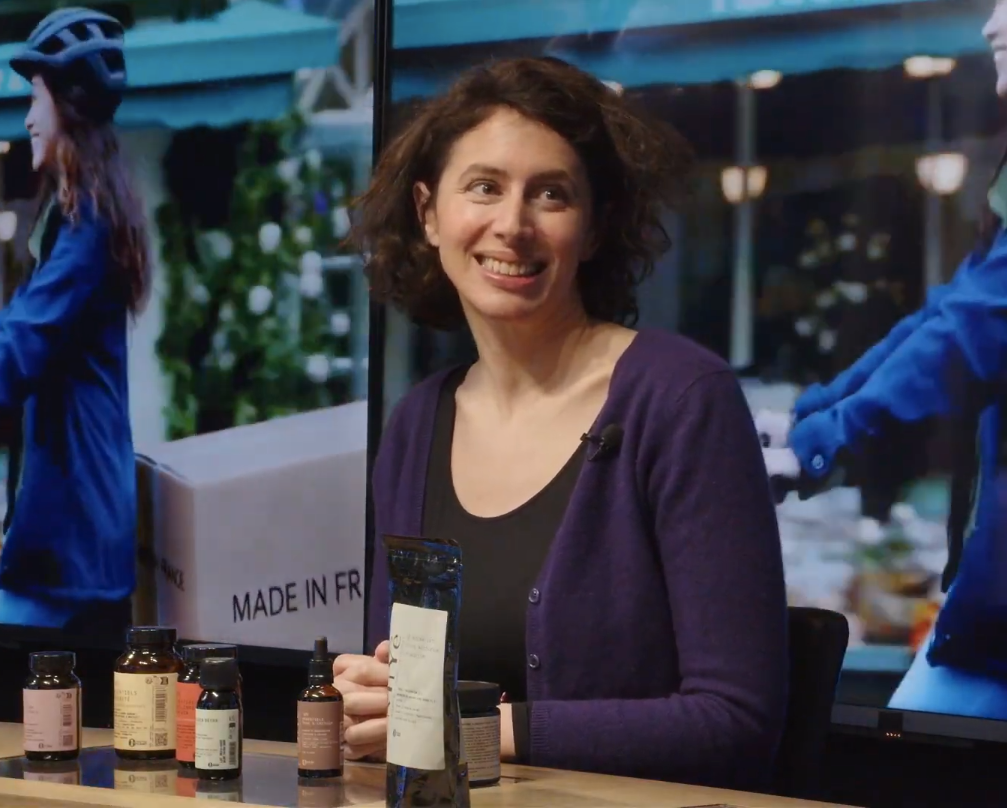
Laura: <…> Our health and 75% of our hormonal balance depend on our lifestyle. Mood swings, weight loss or gain, fatigue, digestive issues, lack of libido, and hormonal imbalances take many forms at all ages and will affect almost every woman at some point in her life, regardless of her status. This truth is hard to hear, but it's true. These imbalances, still too often taboo, mainly stem from stress, a sedentary lifestyle, or exposure to endocrine disruptors. Becoming aware of this is the first step to taking action. Caroline de Blignières founded MiYé, a natural expert brand adapted to the female cycle, developed with a committee of experts. Together, we discuss her journey, her life change to become a wellness entrepreneur, her difficulties and, conversely, her greatest victories in her entrepreneurial adventure. We also discuss how hormones work, her recommendations for maintaining hormonal balance, and the main misconceptions we still hear far too often about women's health. This is an essential episode to break the taboos. To become active participants in our own health in order to succeed and achieve our dreams, good morning Caroline.
Caroline: Hello Laura, I'm delighted to be with you today. How are you?
Laura: Well, listen, at the end of this busy year, can you introduce yourself to those who don't know you yet?
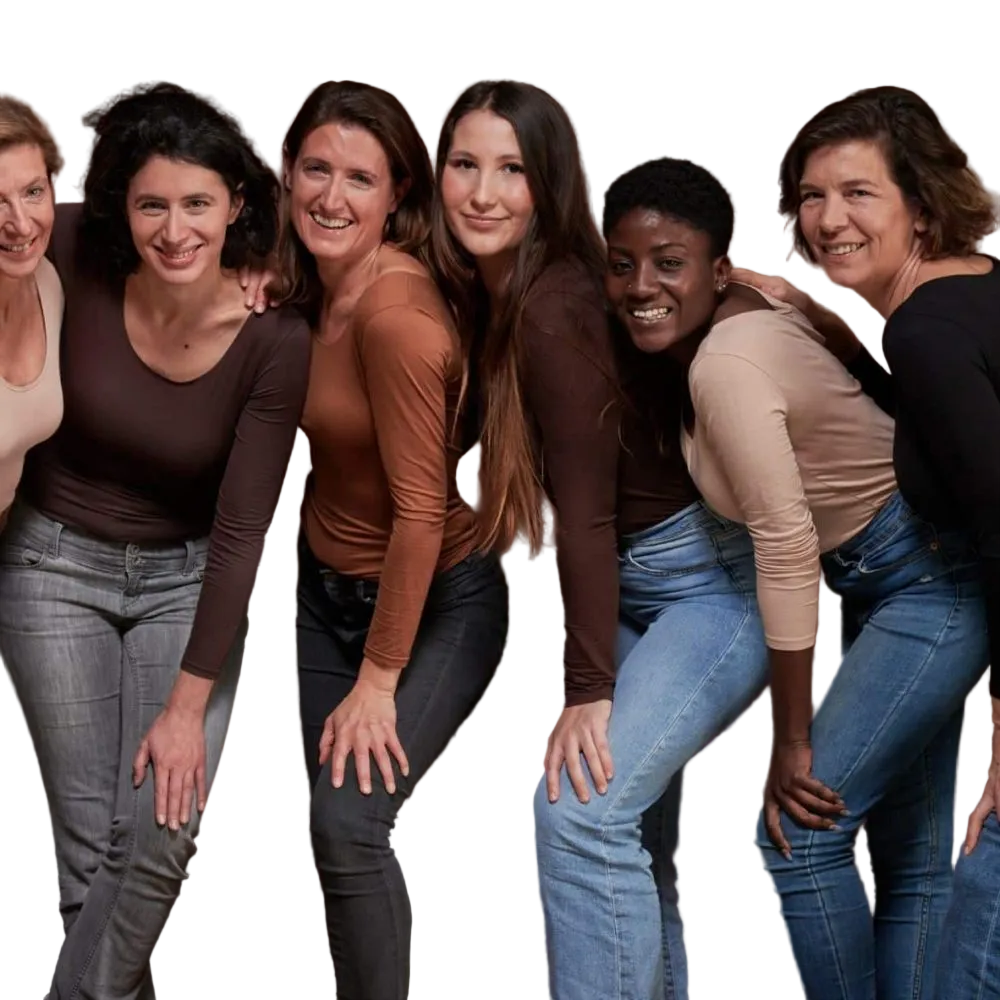
Caroline: So, my name is Caroline, and I'm the co-founder of MiYé with Anna, who is my BFF (just kidding!), but also my very good friend since high school. We've known each other for a long time, and we decided to create MiYé, which means "good friend" in Provençal. It's a brand dedicated to female hormonal balance, so the idea is to support women with expert solutions from puberty to menopause, and above all, to do it like a good friend. We'll be tackling taboo subjects: we'll talk about vaginal dryness, mood swings, postpartum—all the usual stuff—but above all, with transparency and kindness, keeping in mind that women can confide in you like a close friend and support them through these stages of life, which aren't always easy.
Laura: Very well, you do it extremely well, thank you. I've known you for a few months now. Before getting to the heart of the matter, can you explain the highlights of your journey and your story so that we can get to know you better?
Caroline: Before MiYé, to put it simply, I've always been obsessed with beauty and well-being. I don't know if it's because I had a grandmother who was a pharmacist, but there's always been this obsession with testing lots of things and making products that would make people feel good. So I worked for over 15 years in the wellness and cosmetics industry, specifically dietary supplements and cosmetics. I worked in France and abroad for small and large brands. Actually, when I came back from Dubai, where I spent a few years, I had a kind of epiphany. I think it was a mix of a midlife crisis around forty, a need to find meaning, how I wanted to live well with my three children, what I truly wanted to do deep down, and what I really wanted to dedicate my energy to. I had this moment where I wanted to align myself and find a project that was completely aligned with what I wanted to do. Every time I say a project is aligned, it's usually a project that keeps us up at night when we start racking our brains; that's a very good sign. I've always worked in the organic sector since 2006, so very early on. Therefore, I've always been educated about endocrine disruptors, environmental pollution, and how we can try to have a more ethical world, freer from toxins that disrupt hormonal balance. And that's where the MiYé project was born, after moving to the south of France with my three children following a somewhat chaotic return to Paris.
Laura: You launched this project and it's interesting, I was going to talk about you going to Dubai in 2015 and starting to work there, can you explain to me what you observed there that made you turn towards wellness?
Caroline: Ultimately, I realized there was a huge gap between countries in terms of perceptions of natural products, pollution, and the relationship to skincare. For example, in Dubai, a very striking fact was that women could invest a lot of money in makeup, especially eye makeup, and then lingerie, clothes, and bags, while on the other hand, they would buy their day cream in supermarkets. It might be a bit simplistic to say this, but the more mature an economy is, the more it will focus on issues of skincare, pollution, and understanding what's happening in our bodies. These new markets were flooded with this kind of culture; there really wasn't one. And that struck me. Above all, there was also this need to return to more natural things after my return from Dubai. I really needed to live in nature again, to reconnect with nature, with the children asking every day: "Is that real grass? Is that real snow?" Yeah, yes, yes, it's true, there might have been a bit of a common thread, but it's true that above all, I think that moving, stepping out of your comfort zone, losing your bearings, also gives you the feeling that anything is possible. In France, we also have a mindset that's often quite cautious, very analytical; we take our time analyzing things at work, and that's very noticeable. We're often told, "You're very analytical, bravo!" But on the other hand, there's sometimes a lack of risk-taking, of an entrepreneurial spirit, of valuing instinct a little. And I think it's these two concurrent phenomena that sparked this desire. And then there are the famous synchronicities that I strongly believe in because returning to Paris was complicated, a bit chaotic to be honest. I no longer wanted to live in Paris, no longer wanted to raise my children in Paris, even though I'm a true Parisian through and through. And what's quite surprising is that the moment my project started to mature, saying... I'm going to start by offering support for alternative medicine. I've thought a lot about products, but I really need to do what I know how to do. Then I met someone at a dinner who specialized in organic intimate gels and had a super active ingredient that was revolutionary. And then at the next dinner, three days later, I don't know, some event occurred. I came home, and I had a series of synchronicities that really pushed me to update this project because you always hesitate a little when you're in the comfort of a job and the carpets of big companies, but I don't regret it because it was keeping me up at night.
Laura: Always listen to synchronicities, I really believe in them. Can you explain the first steps in setting up this business? Caroline: Well, the first step, I think the longest, the most thankless, and at the same time the most essential, is when you're at home asking yourself all these questions. And to give you a bit of background, I left Paris at the end of 2019, just before the first wave of COVID. We had just settled in, it was great because we had space, but then you find yourself working on a project in the context of a global crisis, where you start working alone and you're cut off from everything, even an office, and you work a little in the evenings. You start to wonder: does this really make sense? Is it really necessary to maintain my hormonal balance in the middle of this health crisis? And in fact, these are very fragile moments where there's a lot of questioning, and we're going to question the meaning, the mission, what makes us different? What am I going to bring to the table? I think Covid has exacerbated this in terms of demands, and at the beginning, well, you're all alone, so to speak. So what's funny is that Anna, who had encouraged me to embark on the project because, obviously, we communicated a lot, introduced me to various potential partners with whom it didn't work out until she joined me during a crisis of meaning during the Covid crisis and finally decided to resign. But at the beginning, you're very alone, you're completely in a state of constant questioning, you have a lot of work, there's nothing concrete, it's extremely thankless, but I think it's a necessary step to know if we're going to see the project through because this project is a marathon, you have to maintain it, so obviously there are many more things. I really like the operational side, for example, I really like seeing things come to life, I really like developing a team, seeing people engaged by the brand are huge satisfactions, but this moment of intense doubt is extremely important to explore, not to brush it aside, because I think it really forms the very foundation of the project and sometimes in entrepreneurship we tend to go a little too fast on a business plan before really exploring the meaning and the why and how, what, what I bring and what you have found, let's say the easiest and the most difficult so far in the implementation and even in the continuity of the project, so the most difficult thing to start with is being alone. I thought I was a bit of an antisocial person, someone who needed to be alone to recharge, so I started working completely alone. I was alone on the project for almost a year, and it was actually quite tough. I don't know if it was a combination of COVID and everything, but I really needed to connect with others, to relieve stress. Anna was there to help, but for example, the day we got our first intern with Anna, it changed our lives. So you shouldn't underestimate the power of teams. And I think we're definitely stronger as a duo in entrepreneurship, I'm convinced of it. I have a lot of admiration for solo entrepreneurs because I think it changes everything. It's already complicated to manage both professional and personal life; you really need to surround yourself with people who are doing what you're doing, people you can talk to, share your victories, your failures, everything. Then, don't hesitate to even have, as they say, an intern or an apprentice. Many people tell me, "Oh yes, but that creates a constraint, I work from home." Well, I started working from home, in my own house, and my amazing apprentice, Nina, who now works with us, started working in my bedroom at my desk. And it went incredibly well; it created bonds. There's also a wonderful closeness from the beginning, which is quite fantastic. So you shouldn't hesitate because it changes your mindset all of a sudden. You have to communicate about your brand, and you're confronted with reality. And the easiest way to get back into the cycle—and ultimately, I think this is a recurring theme in my experience—is really to be able to reconnect more with your energy. Because obviously, we work a lot in entrepreneurship, but there's still a certain kind of freedom that we have more of than in a salaried position, and as a result, sometimes we have conflicting energies. We can be having a day where... We tell ourselves, "This is really not the day I want to do tedious things, like dealing with bills and all that. I want to communicate, to see people, I want to brainstorm." And actually, we can ride these slightly cyclical energies much more than in real life. We can better balance the different spheres. This means that the perfect day doesn't exist. In the morning, you have your amazing sphere with your children, you take the time to chat, to do an exercise. After your workday, everything goes well, it's perfect. Then in the evening, you do your yoga and it's a wonderful day. But on the other hand, when you have a big day, for example, this week's marathon in Paris, well, I come home and I think, "Okay, there's, I don't know, one day during the week I'll pick up my children from school, I'll recover, I'll have a day where I go out for lunch, make my calls, go for a walk, go to the beach." And actually, we can... Rebalancing. We have this freedom and we must take it because the number 1 cause of problems in entrepreneurship, or rather of businesses that fail, is the burnout of the entrepreneur, so first and foremost you, your reserve, it's a marathon and I think that entrepreneurs often forget this, but you have to protect yourself in the middle of this chaos.
Laura: Absolutely, MiYé's mission is to help women take control of their well-being and their natural cycle, and before we get into that more technical part, let's talk about hormones. I personally want to tell you that I'm a huge fan of the brand. I've had postpartum pain for four years. Now, with MiYé, I've finally found a solution to help me understand these symptoms, and then to gradually reduce them, so thank you so much for that. Could you start by explaining very simply what hormones are and how they work?
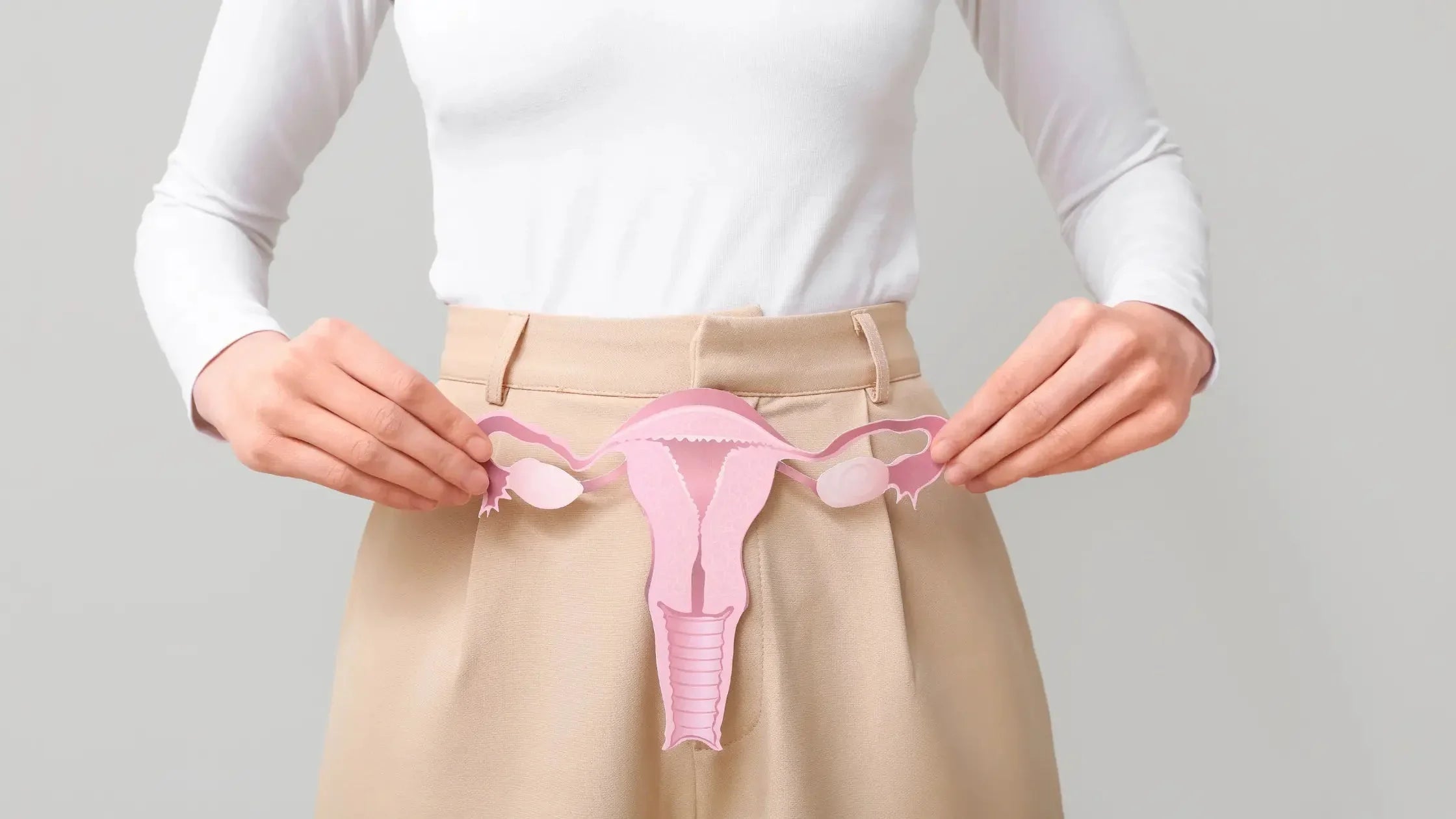
Caroline: Yes, well, hormones shouldn't be reduced to just sex hormones, which is a common misconception. They act throughout the entire body; they're what we call the body's messengers. In Greek, "messengers" means messengers, and so there are both sex hormones and neurotransmitters, which affect mood. There are also hormones linked to the thyroid and pituitary glands. There are a huge number of hormones circulating in the body, so it's a large systemic system, somewhat like the gut microbiota, which obviously affects digestion, but also the metabolism of nutrients and mood. We're really dealing with the two major systemic systems of the body. This means that as soon as one hormone is out of balance, the whole hormonal symphony is disrupted. So, for example, today in our environment, we are all increasingly stressed—that's a fact, all studies show it—cortisol and norepinephrine, which are really the stress hormones, tend to be produced too constantly. And stress is the number one enemy of hormones because it disrupts the entire hormonal function because a hormone is always considered in relation to another. We often say estrogen in relation to progesterone; we look more at a ratio between the two than at just the level of an isolated hormone. It's actually quite complicated to measure. Several disorders come from a bad hormonal balance, such as breast pain or acne. Sometimes it's quite unknown; we don't necessarily know that it comes from a hormonal problem.
Laura: Can you tell me about the main disorders of menopause and their symptoms?
Caroline: Yes, plus for us it was fun, we also felt that there was a code of silence around menopause which is gradually opening up and uh the first food supplement we launched, feminine balance, was supposed to be a food supplement only for menopause and in fact digging deeper we wanted an approach to returning to a state of balance, that is to say, really looking at the root causes, often in hormonal approaches. People say, “Oh, you must be lacking estrogen, we'll give you an estrogen suppository.” These are approaches I call crutches, or phytohormones, like the famous soybean sprouts or blond hormone, which are given as a supplement. Our approach was completely different because we said, “Ultimately, it's a natural phenomenon. For example, if hormones drop during menopause, the body is designed for that. If there's a sudden drop after childbirth, the body is designed for that too. So what's happening in the body that makes us feel unwell? Especially when you have two women in endocrinology with the same hormone levels, one will have a lot of hot flashes, night sweats, and will have a really hard time, while another woman with the same hormone levels will be perfectly fine. So, hormone testing isn't that precise. It's more of a science of symptoms, a real science.” Lifestyle. Endocrinology and the main symptoms we find, whether around perimenopause or premenstrual syndrome, are really this chronic inflammation. That is to say, there's a hormonal imbalance that creates inflammation in the body because as soon as the symphony is disrupted—inflammation—it can mean pain, congestion. You were talking about tender breasts, so be careful, tender breasts and acne or blemishes are multifactorial. Sometimes it's not hormonal, but it's true that there are many blemishes in adulthood, starting around 35-40 years old. There are more and more of them, especially around the jaw, a bit cystic, on the upper back, the upper chest. In short, this type of adult blemish is very often hormonal. And in fact, we realize that this inflammation occurs when there are hormonal imbalances. A little bit brutal. Well, the liver is the main organ for recycling hormones, so we had to treat the liver a lot, try to give the body a boost so it could better absorb these somewhat abrupt hormonal fluctuations. And then, of course, all the underlying work—we'll talk about that later, I think—but there's physical exercise, diet, which is super important. But what's really interesting, and this is why we created a range that addresses intimacy, breast pain, and mood swings, is what often makes women realize, because women are the first to not recognize these symptoms. It's seeing these symptoms together, but it's risky. You launch a product for intimacy, a hormonal balance product, a hair product, and people don't understand anything. And then women try it, and they say, "But I understand now! I was losing my hair, I had mood swings, bloating," and... It is the act of grouping these clusters of symptom indicators that makes sense.
Laura: Actually, it's very well done on your website, we see all the symptoms clearly written and also on your website you offer a diagnosis that I did to define a hormonal profile, her hormonal profile.
Caroline: And for me personally it's funny because my gynecologist had told me about it in Dubai, two of the suggested products are for symptoms that can be linked to estrogen dominance, so an unbalanced ratio between estrogen and progesterone, and so it was a reminder of what I had already been told.
Laura: But can you shed some light on this subject for women who come across this kind of term?
Caroline: And your gynecologist was already well-educated because some of them don't know. And if you want to talk about estrogen dominance, well, it's not quantified because it's not a pathology per se; we're in this gray area. But when I talk to gynecologists and endocrinologists, they estimate that more than 70% of women are in a state of estrogen dominance. And very often, endometriosis or PCOS, which we talk about more and which affect at least 10% of women, are also linked to hyperestrogenism. So what exactly is it? Let's talk about stress: the number one factor in hormonal imbalance. In fact, you should know that cortisol is originally produced by the adrenal glands. The adrenal glands are the small glands located just above the kidneys, and when we are in a state of chronic stress, cortisol is essential for life. However, we can't live like Buddha, without stress; it doesn't exist. In fact, it's better to absorb these moods and mood swings, which function better, than to try to repress emotions. We are not little Buddhas. On the other hand, when negative stress is too high all the time, it means we are constantly under tension. Often, women have hectic professional lives; we come home to find everything to do, we constantly have to organize, there's a lot of mental load, and we tend to exhaust our adrenal glands. This happens very often in women after the first baby or around the age of 30, and it's actually due to this somewhat excessive production of cortisol. While cortisol is made to function in waves and will cause the adrenal glands to become exhausted, in these cases, the body's resource, because if we don't have cortisol, we die, we can't live without cortisol, will be to degrade progesterone into cortisol, and as I was saying earlier, since estrogen is always measured by progesterone, when you have to degrade progesterone into cortisol as a survival reflex of the body, well, in fact, you accentuate the fact that you have too much estrogen compared to progesterone, and estrogens are the hormones of stimulation, so it's the one we will cut, especially when it comes to cancers, because the hormones that stimulate the proliferation of cells are somewhat stimulating, if I summarize. And progesterone is the calming hormone, so you enter a vicious cycle where you further stimulate the system, so it's really a vicious cycle, and often estrogen dominance results in breast pain, slightly congested breasts, water retention. Estrogen is the hormone that makes you swell and stimulates, so it will be all these little congestion pains: calves, bloated stomach, breasts, mood swings, sleep problems, irritability, often very, very linked to estrogen dominance.
Laura: but it's good to know that too because for example breast pain was a symptom I didn't know about and which immediately made me think of cancer because we hear that cancer can also cause that.
Caroline: In the end, it's not really related, because I was very afraid of that, you know, ethically speaking. I didn't want to say, "If you have breast pain, don't worry, take MiYé cream." So, to be honest, that was the first question I asked a gynecologist: "Well, can we still talk about these pains?" He said, "Yes, it affects a lot of women," and he really reassured me by saying, "Actually, very few breast cancers cause breast pain. The signs are really all the ones we talked about during Breast Cancer Awareness Month: discharge, a deformed nipple, but very, very rarely pain." And that reassured me, but it can still happen, so in any case, it doesn't change the fact that you should get screened and tested. But it's really not a dominant sign, and very often the signs are much more subtle, so you have to look for them when they're silent. And the rare times there is pain, it's apparently in very advanced stages, so you should never wait for that, obviously. But just to come back to these breast pains, often from congestion, with breasts that swell a little, that are more tense, harder than usual. When you're in that state, a bit like your stomach doesn't suddenly gain weight for 10 days a month, it's actually your stomach that's a little tense, a little hard, you have the impression that it's full of air. Well, that's it, it's very often congestion pain, but you always have to investigate further, of course.
Laura: That's very good to know. We've talked about stress. Can you tell me about the factors responsible for hormonal problems?
Caroline: Well, obviously stress is number one, so there are lots of things to do, including breathing exercises, meditation, yoga, and anything that really helps with breathing. It's a magical foundation because when you work on it properly, you integrate it into your life, and it really allows you to cope with many situations. There's the key aspect of diet, and here I really want to demonize sugar because it's a major hormonal disruptor, whether it's PCOS, perimenopause, or anything else. In fact, insulin resistance, in particular, is created by excess sugar, and we know we eat far too much sugar, which is very bad. So, we need to reintroduce good fats because good fats are what nourish hormones, and therefore it's very important to consume omega-3s, rapeseed oil, and oily fish rather than small fish because omega-3s really have a huge impact on mood, and without them, the body can't properly produce hormones. So, at one point, we demonized fat in the 80s, and now it's really simple sugars that are the number one enemy. Then, reintroducing fiber is also extremely important because we don't even consume 50% of our daily intake normally, and finally, exercise. And I'm going to emphasize exercise because it seems counterproductive. I hate the rhetoric that says, "During your period, you shouldn't do anything, especially stay home, lying in bed with a hot water bottle," or during menopause. We do it because it's like it's normal to feel bad and unable to do anything, but we're not supposed to be stuck. Let's talk about this cyclical aspect again; we can harness it, it can be fantastic. There are so many great things to gain from it. So, the older we get, the more we experience these things, the more we can do things differently. We can focus more on stretching and all that, but the body needs to move, and when it moves, we also reduce inflammation and oxidative stress. We calm stress; it really has an impact on all levels. We feel better in our own skin. You should never stop moving, especially during perimenopause. Strengthening, finally, is really incredibly important.
Laura: Does walking count as being active?
Caroline: Yeah, and it's already impacting the brain, stress, and more. We're getting into it more and more now; before, we only talked about the aesthetic side of sports. Now, I know that even when I'm stuck on an idea, getting some fresh air, going for a 20-minute/half-hour walk, reactivates a lot of areas in the brain, and when we come back, our ideas are much clearer. We're talking more and more about walking meetings and all that; I make the girls at the office go for a little walk. We're lucky to have the forest right below the office, but it's really incredibly important; it has a huge impact on the brain. And yes, walking is very important, especially with age, and for women, we tend to lose bone density. So, we need to get micro-impacts to strengthen our bones, like when we had back pain. Before, people would say, "Well, you have back pain, don't move, stay still." Well, actually, we say the complete opposite today, and that's the problem: a sedentary lifestyle is one of the number one enemies of health. So, move, move, move! Take calls while walking, for example. I think office life is going to change a lot, especially with more remote work. Standing desks aren't necessarily the best idea, but moving less, having walking meetings, having living spaces—we're more likely to move around. We're not sitting all day, so we get outside, get up regularly, it's really very important. There are many offices now that incorporate yoga, Pilates and all that, it's essential at all levels.
Laura: I'd like to talk to you again a little bit about stress, so we can really focus on this rather major societal phenomenon, let's face it, can you explain in a little more detail the effects of stress on the body and how we can concretely act on the cortisol level to reduce it.
Caroline: So, the effects will be this imbalance and inflammation, as you understand, because when we secrete too much cortisol for too long, stress is never a problem if it's isolated. We all experience a lot of stress one day; it happens to everyone, we get stressed, it's part of life. Stress is bad when we experience negative stress for too long—those things that keep us from sleeping. We always feel a little overwhelmed, constantly tense. When our reflexes are too developed, when we can't let go, that's not good. It means that when we subject the body to chronic stress for too long, it's not good, and that's very characteristic of our societies. The first piece of advice is really exercise. There are many people for whom it works very well. It means getting fresh air in winter, especially now that our days and hours of sunlight are very limited. Well, the sun is extremely important. It's in northern countries, where they hardly get any sun, that sunbathing is mandatory, and vitamin D is extremely important for maintaining mental well-being; we need it. As for food, there are plenty of foods that promote a good mood. There are amazing molecules in them; we work with saffron in particular, it's an absolutely magical ingredient. There are studies that show saffron is more effective than many antidepressants, and it's often prescribed during antidepressant withdrawal. So there are really natural foods that don't have these effects—we're not talking about placebos, we're talking about real, serious studies. Then there's tryptophan, for example, which is found in bananas, milk, and dark chocolate. There are also many ingredients that boost these "happiness molecules." And then we were talking about it earlier, really breathing, balancing your spheres, I think it's very important in fact we are often chronically stressed when you have a fear that we haven't identified or when we feel stuck in a pattern and the fact of opening up possibilities to say well, well, I really need to have a fairly developed social sphere, in any case I need that and even if I have a lot of work I'm still going to go to my party, I'm still going to do that, I need to refocus on my family, it's very important to keep that in mind because I think it's a life balance and uh I don't know if you've seen the book Good Life which came out recently.
Laura: Uh, no.
Caroline: So, I recommend this to everyone. "The Good Life" is the synthesis of a longitudinal study that lasted over 80 years in the United States on the key factors of happiness. It's incredibly rare to have followed over 700 people who remained with their descendants for over 80 years in the same study, and we see that happiness really isn't about money at all. We suspected as much, but money does have a huge influence on happiness when you really don't have enough, when you're always at the end of the month wondering how you're going to make ends meet, and you're worried about every penny. Yes, but once you've passed that stage, incremental wealth doesn't matter much, whether you're a multi-billionaire or middle class. On the other hand, social relationships—even small talk, as they said—mean rediscovering those little conversations, going for a walk with your baker, whoever it may be, and then the fact To exchange, to communicate, to find meaning—in fact, human beings first and foremost need social relationships and meaning. This is absolutely huge because we can't have a perfectly fulfilling love life and all that our whole lives, but we can always seek beauty, meaning, and alignment, and these really seem to be the key factors for happiness, and ultimately, for reducing stress, which is also emphasized. I don't know if you've seen the documentary "The Blue Zones" on Netflix.
Laura: Oh no, I didn't see it.
Caroline: It's incredible. An American journalist is doing a study on five areas of the world where people live to be 100, and he explains why. He analyzes the factors that contribute to their longevity, and there's a lot of what you're saying; social connections are one of the main foundations. There are social connections, getting involved in associations, and then of course diet and physical exercise, but it's really fascinating.
Laura: If we talk a little about the composition of the products, MiYé offers skincare and dietary supplements that are, I remind you, natural, organic, and vegan, made in France without phytohormones or suspected endocrine disruptors. Endocrine disruptors are a real issue, and I know from our discussion that you pay close attention to the composition of your products, particularly the combination of different ingredients and essential oils. Could you elaborate on the main ingredients you use and their benefits?
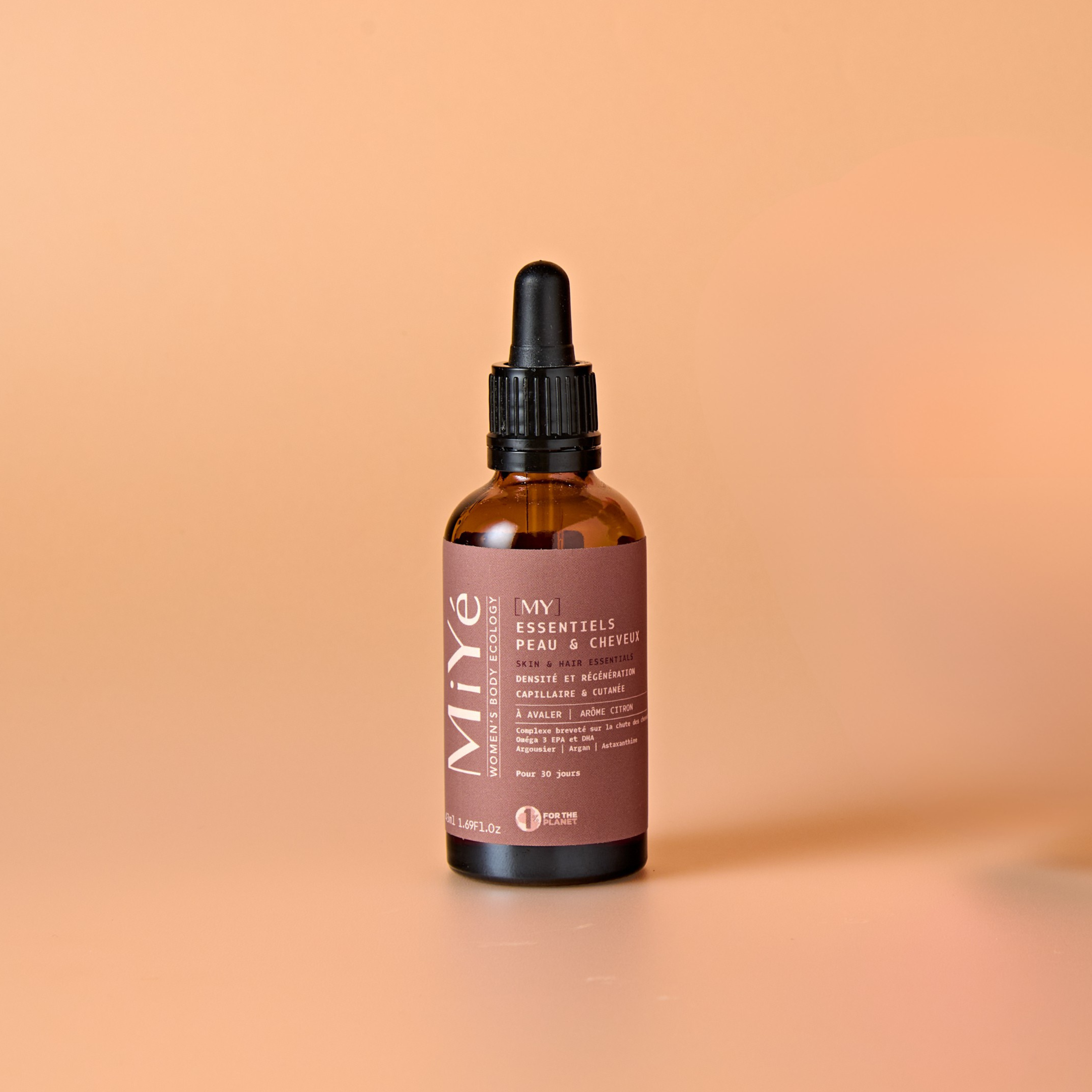
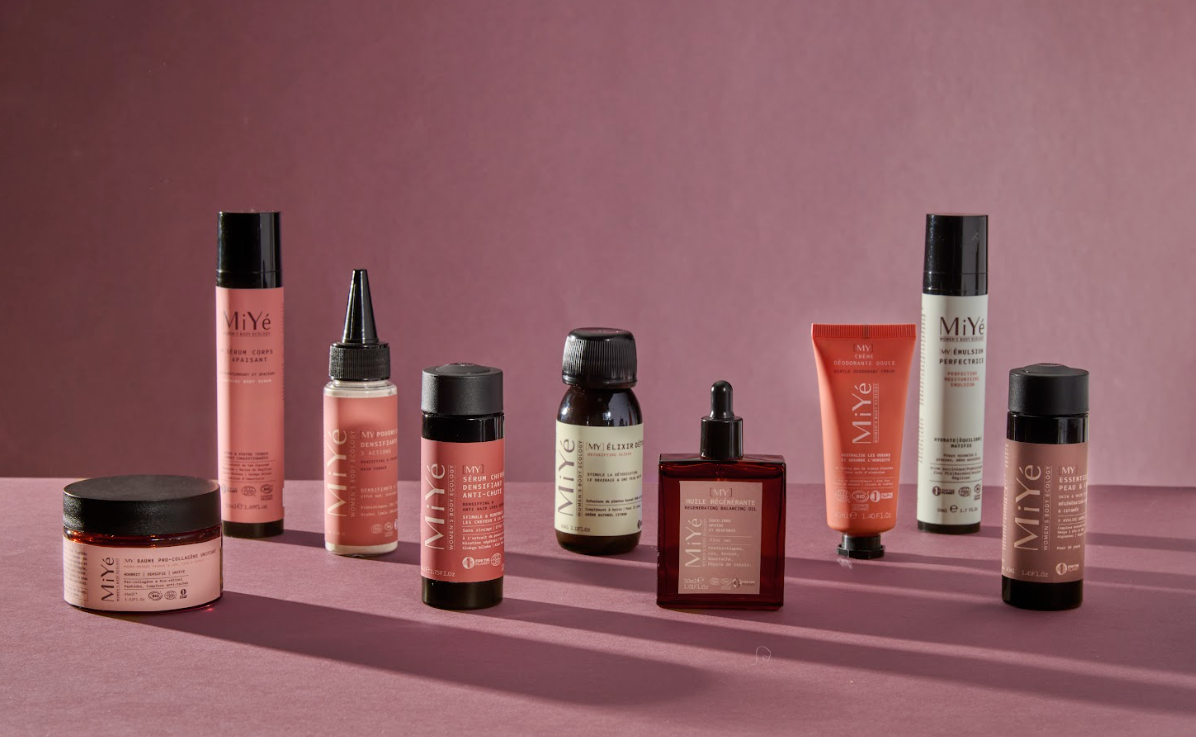
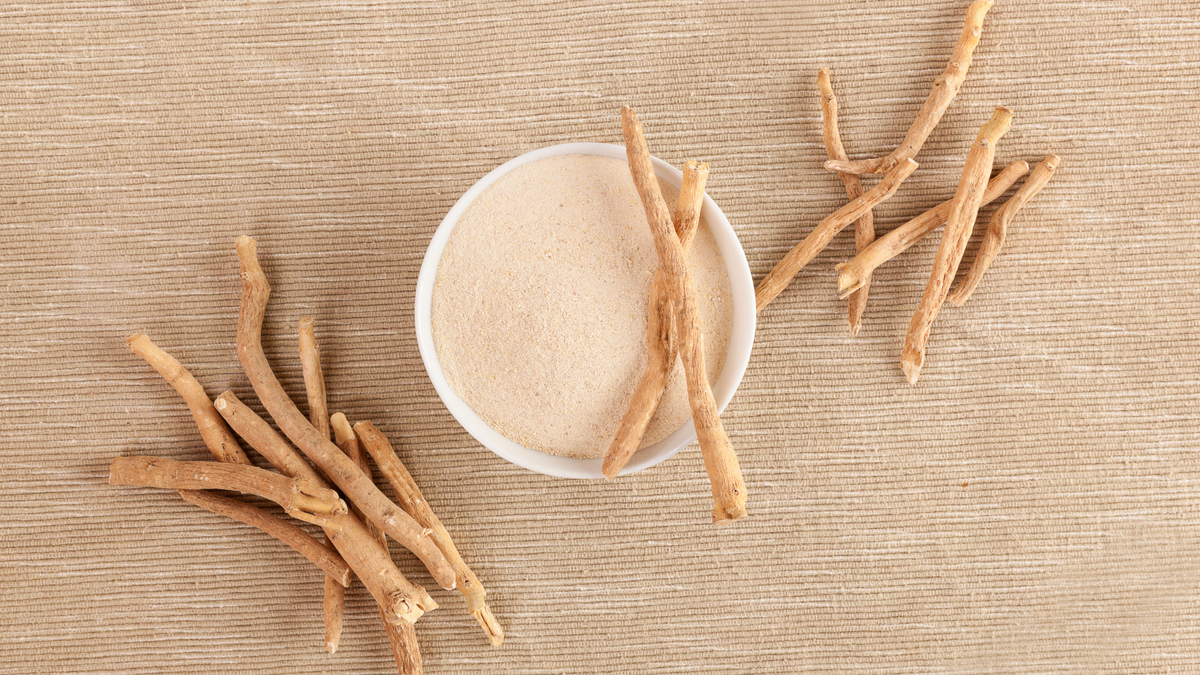
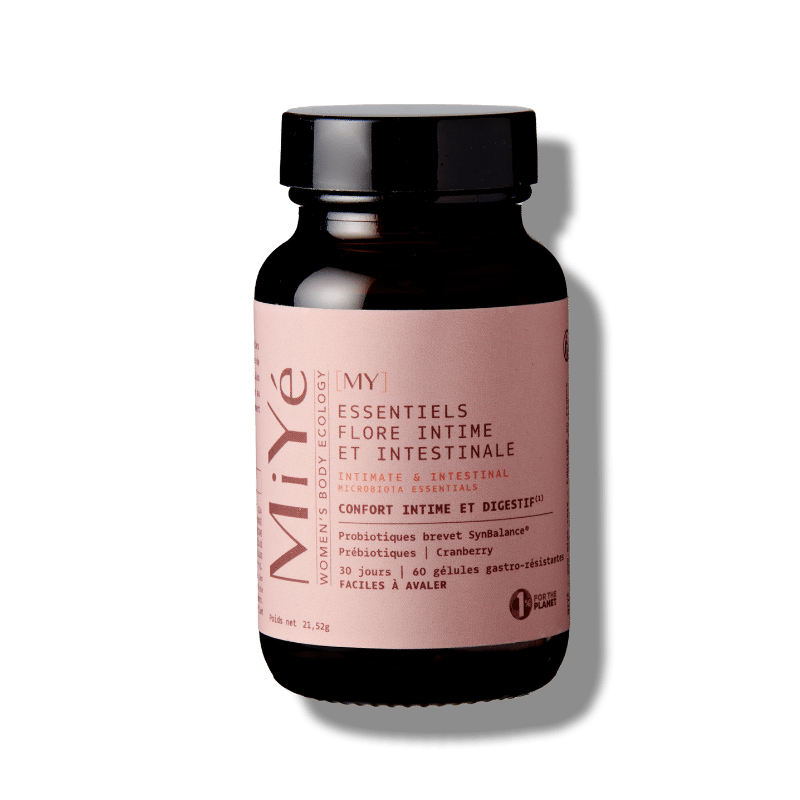
Caroline: Uh, yes, so our approach is very simple. The foundation is that we support women who have health conditions, so for example, we're extremely careful. We know we're dealing with a vulnerable population, we know that cancer isn't always diagnosed right away, and there are women who are on hormone therapy, or women who are being treated for thyroid problems that keep exploding. It takes an average of 7 to 10 years to identify polycystic ovary syndrome or endometriosis, so we start from the principle that there must be as few contraindications as possible, and that's extremely important. Because, for example, with hormonal treatments, we saw a lot of things involving hormones or phytohormones that are actually prohibited for quite a few categories of women, particularly those with a history of breast cancer. Obviously, and finally, many products are based on essential oils because essential oils have great power, but essential oils also have many things I don't like, such as potential allergens. Furthermore, many essential oils, even lavender, are now considered suspected endocrine disruptors. So, since our aim was to help the body return to a state of balance without toxins that interfere with hormonal balance, we adhere to a very restrictive charter regarding composition. For example, we only use natural fragrances; therefore, no essential oils. We prohibit them; we are extremely careful about the ingredients and minimize contraindications. We look at ingredients that work well together and in the right dosage, we often have adaptogenic plants, I really like that, you should know that out of more than 20,000 medicinal plants there are only 20 that are identified as adaptogens and these are often the plants on which we have the most perspective, the most studies and I find that super interesting in terms of the cycle because these plants are the ones that will adapt the most to the needs of the body so sometimes we can have cycles where we have almost too much energy, too much irritability, we are too up and then sometimes we are completely down. This fatigue, and plants like Ashwagandha and Rhodiola, have the ability to be either energizing when you lack energy, or calming and regulating when you have too much, when things are overwhelming. These are plants that have been studied extensively, with a lot of long-term data, which I really like because they are well-established and work well together. Then we mainly try to see how we can help. For example, lemon balm is very useful for abdominal cramps; it's somewhat antispasmodic and calming. We also look at sleep problems during menstruation, for instance, to see how they manifest. Is it difficulty falling asleep, or is it more about waking up during the night or waking up too early? Well, often it's more about waking up during the night or waking up too early, so it's not going to be the same type of plants as those for falling asleep. So, it's really a delicate task to analyze the symptoms, what's happening in the body, and then try to choose plants with the fewest contraindications, without phytohormones, precisely to suit all the different needs, and then to create the best combinations. You see, for example, magnesium, I love it, I've been taking magnesium for years. It has a lot of effects on me, and so we really wanted to create a super magnesium supplement. We recommend alternating the forms, using three different forms of magnesium. Well, it's just common sense, really. We sit down with experts on one side, and with women on the other, and we look at what's easy to take and what works best.
Laura: I just finished my box of magnesium, and I really saw a before and after, honestly. Could you tell me a little bit about endocrine disruptors and your relationship with them?
Caroline: Yeah, it's a big topic, actually it's one of my basic neuroses, it's the reason why I launched MiYé, for me it's this invisible threat that has always worried me a lot because we were talking about estrogen dominance earlier, we talk a lot about endocrine disruptors, which we know less about, so endocrine disruptors are what we will find in household products, in plastics, in plastic packaging, in cosmetics too, and which will potentially interfere with our endocrine system. The endocrine system is made up of hormones, and the problem is that over 70% of these endocrine disruptors are estimated to be xenustrogens. This means they specifically target estrogens, so today, when we look at the warmest areas, the pollution hotspots, we can see a feminization of fish, for example, where the waters are somewhat contaminated by certain types of factories rich in endocrine disruptors. Breast cancer is also increasing in men, rising from 1% to 2%.
Laura: I heard recently, I don't know if it's true, but men have estrogen but much less estrogen.
Caroline: So, this means we're targeting precocious puberty in girls, which has advanced by two years in a single generation. So, we're inevitably seeing a sharp increase in things like thyroid and breast cancer—we're reminding you, we've seen a tenfold increase in 30 years. So, thankfully, treatment and screening are improving, but a tenfold increase in 30 years means there's exposure, meaning environmental exposure, which inevitably plays a significant role. Endocrine disruptors are also strongly suspected in the context of polycystic ovary syndrome and endometriosis. I've recently seen phthalates linked to premature births; there are more and more premature births. I read a study recently that said that by lowering the phthalate level by 5%, we could reduce the number of premature births, so there are still some suspects who no longer seem to be there, increasingly strong decrees passing in pharmacies in 2022, we were supposed to display in intimate products, products that contained endocrine disruptors, there is not much happening, there is no standard, there is no label. We're rather vague about the 90% natural ingredients, while nobody cares; what matters is what's not in a product, not the 2% because I add a little aloe vera powder and that's it. And in fact, I think this is a real societal issue because when you see the inertia, even for children's toys containing aloe vera, we know it's very bad, especially during periods like puberty, early childhood—all those times when organs are developing—and yet there's an absolutely insane regulatory inertia on this subject. I always hear, "Yes, but it's the dose that makes the poison," and we have regulated doses, but that's not even true. With endocrine disruptors, there's a U-shaped curve; sometimes you can be underexposed, sometimes overexposed, and when you see what's happening... Finally, all the stats at the thyroid level, early puberty, and so on, it's dangerous; we have increasingly longer periods of life exposed to hormones. An environment that is very much subject to hormones.
Laura: I advise everyone to filter tap water. You were talking about health practices; in particular, there are activated carbon filters which are practically the only ones that are effective on hormones.
Caroline: But you should know that when you're using hormonal contraceptives and all that, you're releasing it into the wastewater, down the toilet, and today Veolia isn't able to filter out hormones. So, in fact, we end up ingesting more and more hormones through tap water, and we haven't really defined a threshold, but there's an accumulation. So I think it's very important to be aware of this, and the few remaining traces are filtered out by activated charcoal. It's important to know that endocrine disruptors are a very recent science; the term was coined in the 90s, so it's very recent. And we're also realizing that leave-on cosmetics, meaning those that remain in contact with the skin for a long time, are a problem. The skin is the body's largest organ, so it has a very large surface area, and we've found that sorting our cosmetics has a significant impact on the levels of endocrine disruptors in urine, so it's not at all insignificant. Household products, well-ventilated...
Laura: Well, there's a lot to do, but it's a subject we should talk about even more because now we know, we can't say we don't know anymore. What are you personally doing to try and...?
Caroline: Ah, I've been obsessed for a very long time, but then there were times when I actually fell into very strong eco-anxiety, to tell you the truth, so you have to know how to live in this time, we can't live in a cave, far from the microplastic particles that we breathe every day. My definition is to start pragmatically, to filter the water, uh, when we have the chance to renovate our apartment and all that, rather put parquet floors, tiles, than carpets, especially not linoleum, things rich in aldehydes, the furniture and try as much as possible to take durable materials, rather raw wood, rather than agglomerated wood. We know there are lots of endocrine disruptor particles, especially in children's bedrooms, which we breathe in a lot. After all, it's quite simple, but good ventilation is also important because it's what stagnates that will be emitted, particularly from the soil and all that. We always know that indoor pollution is worse than outdoor pollution. And then, obviously, I'm careful about what I put on my skin and what we ingest. That means it's the same for vegetables; we don't have to eat everything organic, it's very expensive, and so on. But there are websites that explain it very well. There's always the same "dirty dozen," which refers to the most contaminated foods. Typically, apples are a great ingredient; it's always better to eat fruit, but with apples, it's really better to buy organic. Today, we have a choice in stores; we can do that. I think it's become quite widespread. Broccoli, for example, is relatively uncommon. Impact means crops that require relatively few pesticides or absorb relatively few, so we can look at it, we can make pragmatic choices, but really, let's say food, water, and be careful about what we put on our skin, especially when we are pregnant, we can talk about it, but I know that from my first pregnancies I forbade myself anything that was a little risky, I didn't wear perfume, nail polish, or essential oils, so please, those kinds of multi-essential oil sprays should be avoided, yeah, not to mention them, but yeah, they are dangerous, that's it. So, the principle of caution applies, and children too, because we were talking about adolescence and other things, using very pure, raw products, saying, for example, sweet almond oil and all that, there's no need for that. But when I see these cosmetic ranges for children, it bothers me a bit because even if some try to do things right, well, still, up to a certain age, the more raw and the less, the better. And during adolescence, be careful with salicylic acid. Salicylic acid is in 90% of anti-acne and anti-blemish treatments and is a known endocrine disruptor found in 90% of formulas. That's why we used succinic acid instead, which is just as effective. But it shocks me a bit that all teenagers are using that, and adolescence is often a risky period because it's really the time when we're in the middle of development, very subject to hormones, and on top of that, if we start to... In sophisticated makeup and beauty routines, it's worth educating your teens. We can't say we didn't know; there are simple things like basic clay masks, hazelnut oil, simple and inexpensive things you can make that will properly educate your daughters, much better than sophisticated products that have no place at this age.
Laura: Very well, uh, there is a lot of advice on your blog, especially on your Instagram account, but if we're just talking about premenstrual syndrome, sorry, which can be very painful both mentally and physically, there are scientific explanations for this, can you tell us how we can act on it?
Caroline: Well, yes, recently, because ultimately there were relatively few studies on these premenstrual syndromes. I think there's really a revolution happening in women's health because the number of studies was shocking compared to studies on erectile dysfunction in men; it was a ratio of 1 to 1000, it was mind-boggling. And in fact, today, for example, it's very well-defined because, as you were talking about the mental aspect, it's even more complicated to say, "I'm not feeling well mentally" because it's hormones. When it affects the mental state, it's almost the symptom we laugh about ironically, but we ultimately have a lot of trouble putting a real name and diagnosis to it. And today, it's proven that there are even premenstrual dysphoric disorders, so they're really quite pronounced. That means we're really dealing with mini monthly depressions that are linked to a decrease in the receptivity of dopamine receptors. and serotonin, so these are the hormones that will play a role in particular in motivation and well-being, which is caused by the hormonal drop at certain times of the cycle, particularly the drop in estrogen, and so we are observing all these phenomena, and so if there is this, it means that logically when we know that we tend to, I was really in the sadness and heightened sensitivity team, well, in fact, when we can play on dopamine, well, with the famous, you see, magnesium product, the super magnesium that we have worked on, it really works, it's just plants that are recognized to be precursors of dopamine and serotonin. You have griphonia, 5-HVTP, so basically saffron and rhodiola, we're really going to work on improving the production of and sensitivity to these molecules, and suddenly—I'm not saying we'll change our lives, see everything in black and white, become everything in pink—but at least during those periods when we don't recognize ourselves anymore, when we ask ourselves, "Why am I so sensitive? Why am I taking this? Why do I feel sad? I feel better, all my friends... I don't feel like myself, I don't feel like myself, what's going on?"—and that worries us. But at least this will let all that go. It means we have bad news, it will remain bad news, but we'll smooth it out and we'll be able to recognize ourselves, and that's what's extremely important. The limit is there; we're not going to erase, we'll never erase the cyclical aspect. However, we'll be able to cope with it much better without going to that stage where we can disconnect because we feel so bad.
Laura: Yes, absolutely, and this is important. Before we finish with the little hunger questions, can you go back to the main misconceptions you hear about women's health that make your hair stand on end?
Caroline: There are a lot of them, well, we're starting to talk about it in hushed tones, but it's normal to be in pain, so it's one of the first posts we made on MiYé. Unbearable, well no, it's never normal, and uh, well, you shouldn't stay when you're in pain, you have to take action, you shouldn't say to yourself, well, today I'm not feeling well and I'm going to stay stuck at home, I don't find that logical, uh, the preconceived ideas, well, it's the same thing, that is to say, saying we have to suffer, in fact, Mother Nature and all that, but no, but that's terrible because when you look at it on a societal scale, you read books, books on menopause are super interesting. Social acceptance, there are societies, tribes where it is highly valued, so indeed there are times in the cycle when we are more sensitive. The Americans, who are very pragmatic, wrote a book called "In Flow" where you will see that, well, in this phase: your luteal phase, you will be more sociable, more open to others, so it is advised to do events, to go towards others and exploit this strength, whereas in your follicular phase you will tend to be more sensitive, so it is perhaps more the time to look, well, we have energies that vary during the cycle, but I think we also have this very feminine side, we have a multiplicity of energies and facets which is really a potential to use, so we should never, whether in premenstrual syndrome, postpartum or otherwise, feel really limited, there are phases of life. We have a body that is capable of doing and absorbing extraordinary things and that will go through different states of balance with sometimes a little roller coaster in the middle but it's natural, these are transitions and states of balance so there is never any condemnation. When I hear women say that's it, I've had children, I can't do trampolines anymore, I can't do that anymore and all that, never in my life, not at all. The body re-educates itself, it adapts, so we should always be well and we are never condemned as women.
Laura: Great, if we finish with a few closing questions, the idea is to answer them without thinking too much. What's your biggest personal or professional lesson from the last few years?
Caroline: Well, my biggest professional lesson is definitely MiYé because I can tell you, with the kind of comments we faced at the beginning when launching the brand—luckily we also had strong support, and I thank those people—it was really like, "Well, it's impossible, it'll never work. You're not going to talk about hormones to women, nobody knows what they are. Plus, you're launching in different sections, so you'll never get distribution." And then, just fears, fears, fears expressed. It was really a brand that Anna and I had in our gut, very instinctive, and we had so many people telling us, "Well, not like that, it won't work. You have to create a customer persona, it has to be a 20-year-old woman, or a 50-year-old woman," and so on. And we didn't want to go down that road. And today, we're still happy because the brand is taking off, we're getting great feedback, and above all, it's being accepted for what it is. It's very Transgenerational, you see, we have just as many 25-35 year olds as 45 and over, and that was a marketing counter-factor. It's the complete opposite of what you're taught in marketing, so for me that's still a great victory, let's say, because it's instinct.
Laura: Can you recommend a resource that inspires you, like a book or a podcast?
Caroline: So, the book that really opened my eyes to this was *The Sex of Health* by Alison McGregor, which is quite brilliant. She's an American doctor who, along with others, was the first to point out that medicine was very dogmatic and that the evaluation criteria, the studies, and all that, were perhaps not differentiated enough between men and women. Basically, the difference between a man and a woman was weight: 60 kg for a woman, 75 kg for a man. And today we realize that hormonal variations, in particular, have a huge impact, even on the metabolism of paracetamol. We're even going so far as to require a certain number of women in clinical trials because we have generic drugs that increase the risk of diabetes by 70% in menopausal women—absolutely crazy stuff. So there's a huge amount of work to be done in women's health, and reading this book makes you realize how recent these issues are and how, yes, the symptoms typically... The feminine aspect hasn't been explored that much, you know.
Laura: A failure you experienced and a lesson learned?
Caroline: Uh, a failure, well, for example, we could say the association at the beginning, maybe my return to Paris which was a little chaotic, or precisely, well, back with the three children, I have a little bit of trouble getting used to Paris again, trouble finding my meaning in my work, so yes, I think that these periods of strong questioning are also things that allow you to mature, other projects that allowed me to launch MiYé because you have to say it's always a mix of all the emotions, you have to use them, uh, frustration, anger, you have to know how to recognize it and identify it too, to create something from it, these are energies that can serve your routines to stay well physically and mentally and not exceed your limits despite the work that it requires. Entrepreneurship, well, the joy of entrepreneurship is surrounding yourself with people you like, you know, choosing what you do. So I'll never work with people I don't like again, like you sometimes do in a company. So working as a team is a pleasure, surrounding yourself with the right people is great, and we're very careful to address any issues quickly, to have positive energy because that's huge. And as I was saying earlier, it's something I'm applying more and more, which wasn't true at the beginning, but in the first year I was almost nervous at the end of the first year, so now I don't do it anymore. It's about balancing things out. I mean, when I have a week of the Paris Marathon, you can be sure that the following week I'll have a nice afternoon, go out, do my sport or have drinks with friends, and I'm very careful about that. So, when planning, you know, the periods when I've worked a lot and all that, well, I'm going to take the TR in return and I'm going to plan things with friends, sporting events, and I think it's super important to impose that on yourself even if it may seem a little artificial at the beginning because that's really what makes it last.
Laura: What would you say to those who want to embark on a project that is close to their heart but don't dare?
Caroline: If it's keeping you up at night, go for it. Seriously though, it's really true because I don't want to lie, entrepreneurship is often portrayed in a sugar-coated way, it's tough, and you explain it very well in your podcasts and everything. There are some pretty dizzying moments, you're kind of alone with yourself, the stakes aren't the same as when you're an employee, and you really have to, because that's the goal. There are people who really want to be entrepreneurs, but the ultimate goal is still to contribute something that you're passionate about, and so I talk a lot about this principle. First of all, the idea that you're really working on this, that you're ready to dedicate a lot of energy, that's the main thing, I think.
Laura: And we'll finish with the ritual question of this season's podcast: what does becoming an actor in your own life mean to you?
Caroline: Well, becoming an actor in your life, I think it's really about this notion of alignment. It means that we always tend to feel trapped in patterns, telling ourselves that we have to do it this way, that we have a loan, that we live there, that we can't move. In fact, we create a lot of fears for ourselves, and I think that when we are guided more by our hopes and what we want to do than by our fears, we make big leaps, and often we have to consider the worst-case scenario, the best-case scenario. There's always this in-between, but we mustn't be afraid. We limit ourselves so much by these fears. So, being an actor in your life means overcoming your fears a little and trying to be as aligned as possible because life is a continuous learning process. Thank you very much.
Laura: This episode is now over, we hope you enjoyed it.

![Tube [MY] Sérum densifiant anti-chutes pour cheveux, et ses macarons finaliste du prix d'excellence de la beauté marie-claire, bio et Ecocert](http://www.miye.care/cdn/shop/files/Visuels_shop_85.png?v=1773305224&width=1000)
![Flacon en verre [MY] Huile Régénérante et ses macarons : finaliste prix d'excellence de la beauté Marie-Claire, Bio et EcoCert](http://www.miye.care/cdn/shop/files/151_1.webp?v=1775138766&width=600)
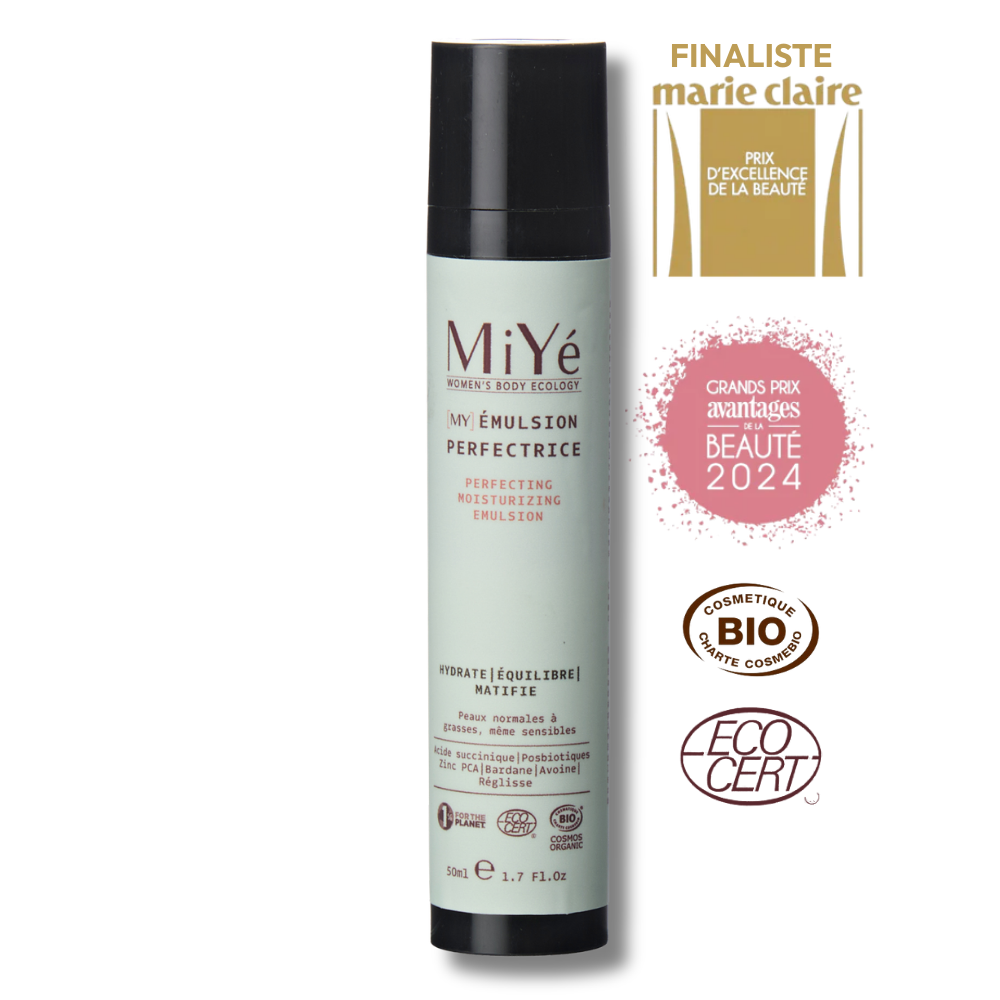
![Flacon avec pompe [MY] Sérum corps apaisant avec macaron meilleur produit bio 2024 et écocert](http://www.miye.care/cdn/shop/files/Visuels_shop_82.png?v=1773304790&width=1000)
Share:
What are the benefits of saffron ?
What are the differences between organic and traditional cosmetics?